The Strait of Hormuz is a narrow stretch of water that dictates the survival of modern industrial economies. Every day, roughly 21 million barrels of oil pass through this 21-mile-wide chokepoint. When tensions between Washington and Tehran flare, the global market reacts with a predictable, frantic rhythm. Traders bid up prices, insurance premiums for tankers skyrocket, and the Pentagon shifts carrier strike groups. But the current anxiety over a total closure of the strait ignores a grimmer reality. The danger isn't a sudden, permanent blockage of the waterway, which would be an act of economic suicide for Iran as much as a blow to the West. Instead, we are seeing the birth of a permanent state of low-level "gray zone" warfare that makes the old rules of maritime trade obsolete.
The world is desperate to keep Hormuz open because there is no viable Plan B. While pipelines across Saudi Arabia and the United Arab Emirates exist, they can only handle a fraction of the volume currently moved by sea. If the strait stops, the world stops.
The Geography of a Chokepoint
The tactical reality of Hormuz is a nightmare for logistics. At its narrowest point, the shipping lanes are only two miles wide in either direction, separated by a two-mile buffer zone. These lanes sit entirely within the territorial waters of Oman and Iran. This isn't the open ocean. It is a crowded hallway.
Iran has spent decades perfecting an asymmetric strategy designed specifically for this terrain. They don't need a blue-water navy to challenge the U.S. Fifth Fleet. They use thousands of fast-attack boats, sea mines, and shore-based anti-ship missiles. In a high-intensity conflict, the goal for Tehran wouldn't be to "win" a naval battle in the traditional sense. The goal is to make the cost of insurance and the risk of hull loss so high that commercial shipping companies refuse to enter the Persian Gulf.
Why the Total Closure Narrative is a Distraction
Most analysts focus on the "Doomsday Scenario" where Iran sinks a massive tanker to block the channel. This is unlikely. Iran relies on the strait for its own survival. Even under heavy sanctions, Tehran exports a significant amount of crude and fuel oil, primarily to China. Choking off the strait would alienate their only remaining powerful ally.
The real threat is the "Slow Bleed." By seizing individual tankers or using drones to harass ships, Iran creates a risk premium that never goes away. This strategy allows them to dial the pressure up or down based on diplomatic needs without triggering a full-scale regional war. It forces the U.S. and its allies to commit massive, expensive naval resources to escort missions, a task that drains budgets and wears down crews.
The Insurance Trap
When a tanker is seized or attacked, the primary shock isn't felt at the gas pump—at least not immediately. It is felt in London, at the headquarters of the major maritime insurers. War risk premiums can jump by double or triple percentages in a single afternoon. For a Suezmax tanker carrying a million barrels of oil, these costs add millions to the bottom line of a single voyage.
Ultimately, the consumer pays this "security tax." We have reached a point where the physical flow of oil might continue, but the economic cost of protecting that flow is becoming unsustainable.
The China Factor and the Shift in Leverage
For years, the U.S. acted as the de facto guarantor of the Strait of Hormuz. The logic was simple: American energy security depended on stable Middle Eastern prices. That logic has shifted. The United States is now a net exporter of oil and liquefied natural gas. While a price spike still hurts American voters, the country is no longer physically dependent on Persian Gulf barrels in the way it was in 1979 or 1990.
The burden of a Hormuz closure now falls most heavily on Asia. China, India, Japan, and South Korea are the primary customers for the oil moving through that water. This creates a strange geopolitical vacuum. The U.S. provides the military muscle to keep the lanes open, but it does so to protect the energy supply of its primary economic rivals.
Beijing's Quiet Calculus
China is playing a long game. They have signed a 25-year strategic partnership with Iran, providing Tehran with an economic lifeline. In exchange, Beijing expects a level of immunity for its flagged vessels. We are moving toward a bifurcated system where some nations pay for security through military spending, while others buy it through backroom diplomatic deals. This undermines the principle of freedom of navigation that has governed the seas since the end of World War II.
The Technological Arms Race under the Water
The focus on aircraft carriers often misses the most dangerous developments in the region: autonomous underwater vehicles (AUVs). Iran has made significant strides in domestic drone technology, and those lessons are being applied to the maritime environment.
A "smart" mine or a loitering underwater drone is nearly impossible to detect in the shallow, noisy waters of the strait. Traditional minesweeping is a slow, methodical process. If Iran were to seed the shipping lanes with a few dozen advanced, autonomous mines, it would take months for the U.S. Navy to declare the area "safe" for commercial traffic.
- Detection Difficulty: The high salt content and temperature of the Gulf water play havoc with sonar.
- Cost Asymmetry: A drone costing $20,000 can disable a tanker worth $100 million and disrupt a cargo worth another $80 million.
- Deniability: It is much harder to trace an underwater explosion to a specific actor than it is to trace a missile launch.
The Myth of Pipeline Diversion
Whenever the Hormuz threat re-emerges, politicians point to pipelines as the solution. The East-West Pipeline in Saudi Arabia and the Habshan–Fujairah pipeline in the UAE are the two primary alternatives. Together, they have a nameplate capacity of maybe 6.5 million barrels per day.
That leaves nearly 15 million barrels with nowhere to go. There is no rail network, no trucking fleet, and no secret path that can replace the strait. The infrastructure simply does not exist. Relying on pipelines as a "fix" for Hormuz is like trying to empty a swimming pool with a straw. It might feel like you're doing something, but the water level isn't dropping fast enough to matter.
The Failure of Deterrence
The U.S. policy of "maximum pressure" was intended to force Iran to the negotiating table by strangling its economy. Instead, it incentivized Iran to export its instability. By making it clear that if Iran cannot export oil, no one will, Tehran has effectively turned the Strait of Hormuz into a hostage.
This is a failure of modern deterrence. When one side feels they have nothing left to lose, the threat of economic ruin or military strikes loses its teeth. The U.S. finds itself in a cycle of reacting to Iranian provocations, sending more assets to the region, and then watching as Iran waits for the inevitable rotation of those forces to strike again. It is a game of whack-a-mole played with billion-dollar warships.
Global Markets and the New Normal
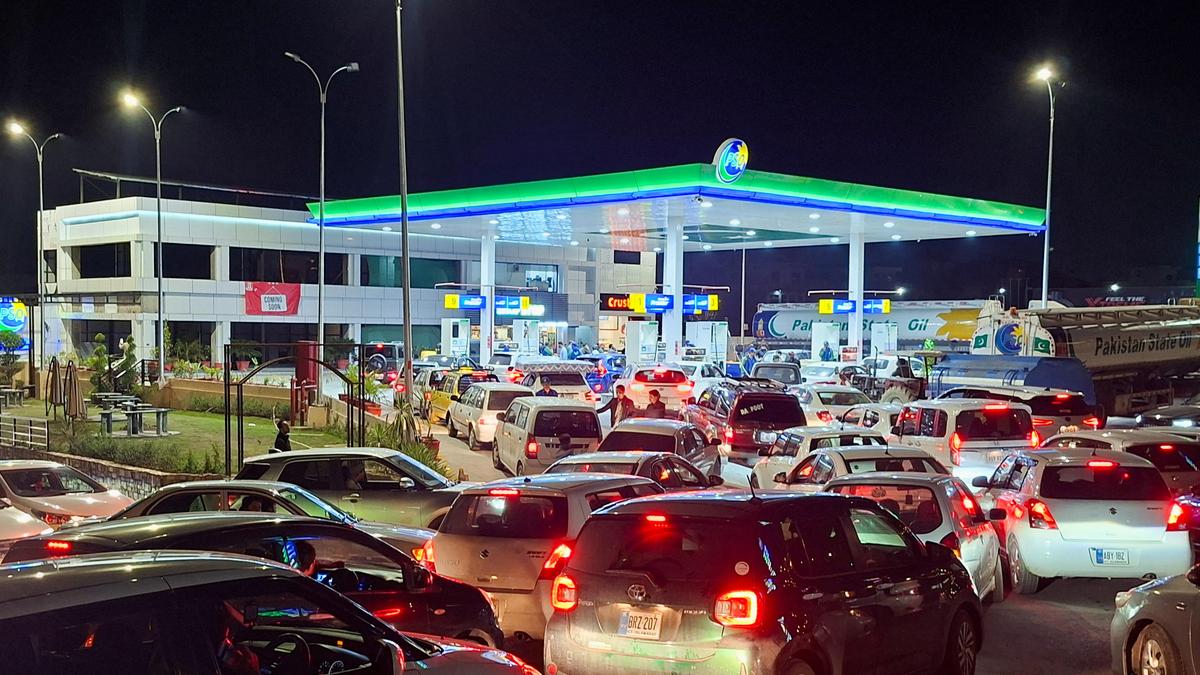
Wall Street has become somewhat desensitized to the rhetoric coming out of the Gulf. We see a $2 or $3 jump in Brent crude when a tanker is harassed, followed by a slow slide back down as the news cycle moves on. This desensitization is dangerous. It masks the structural fragility of the system.
The "Hormuz Risk" is now baked into the price of every gallon of gas and every plastic product on the planet. We aren't waiting for a crisis; we are living in a permanent, low-grade version of one. The anxiety isn't about whether the strait will open or close tomorrow. It’s about the fact that the entire global economy is anchored to a twenty-mile stretch of water controlled by a government that views chaos as its only remaining lever of power.
Energy independence is often discussed as a matter of drilling more wells at home. But as long as the global price of oil is set by the security of a single chokepoint on the other side of the world, true independence is a fantasy. The vulnerability of the Strait of Hormuz is not a problem to be solved; it is a permanent condition of the modern age.
Companies and nations must stop planning for a "return to normal" in the Persian Gulf. There is no normal. There is only the constant, shifting balance of risk in a waterway that has become too small for the ambitions of the powers that surround it. The next time a headline screams about a potential closure, remember that the closure has already happened in the minds of the insurers, the ship captains, and the strategists who know that the era of safe, predictable passage is over.
The most effective way to neutralize the Hormuz threat is to render the strait irrelevant. This requires a massive, multi-decade shift in energy transport and consumption that most nations are currently unwilling to fund. Until that happens, the world remains one miscalculation away from a total economic seizure. Every ship that passes through the strait today isn't a sign of stability; it’s a gamble that hasn't failed yet.