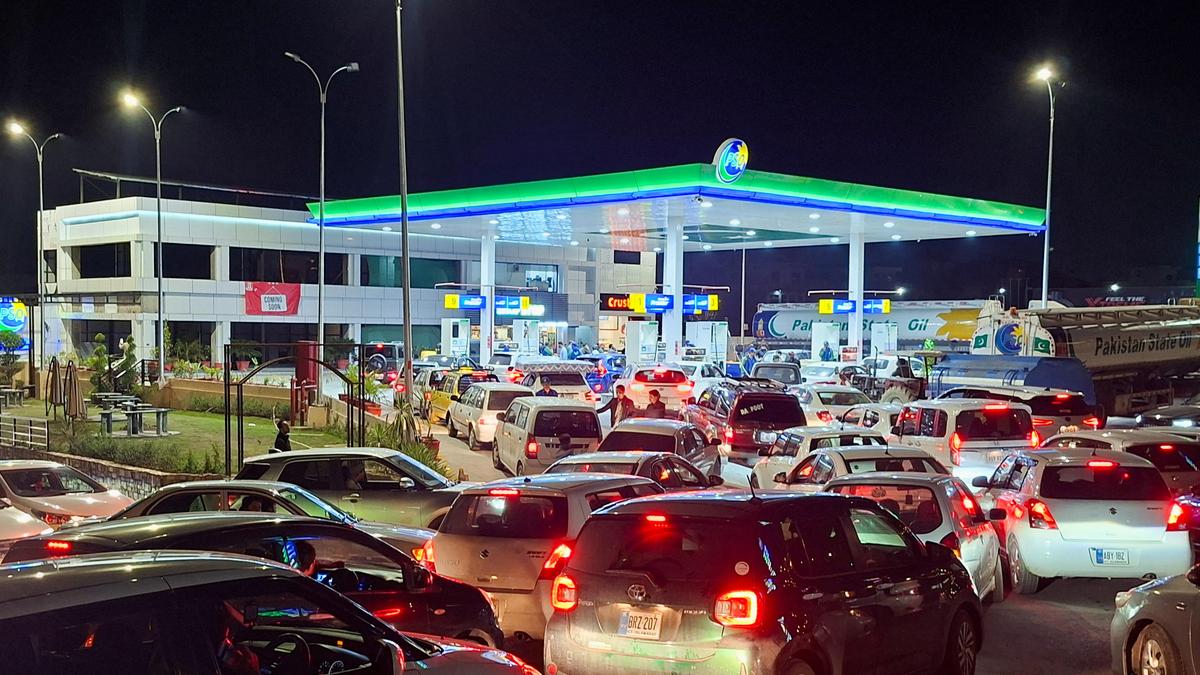
The overnight surge in Pakistan’s fuel prices is not just a market adjustment; it is a direct consequence of a regional powder keg finally catching fire. While the official narrative points to the volatility of the U.S.-Iran war, the reality on the ground is far more clinical and devastating. As of April 3, 2026, the government has authorized a staggering 43% hike in petrol and a 55% jump in high-speed diesel (HSD). These are not incremental increases. They are structural shocks designed to keep a faltering economy from a total liquidity collapse while the Strait of Hormuz remains effectively sealed.
Petrol now sits at Rs 458.41 per litre, a jump of Rs 137.23. High-speed diesel has crossed the psychological barrier of half a thousand, now priced at Rs 520.35. For the average commuter in Karachi or a farmer in the Punjab heartland, these numbers represent a total rewrite of their monthly survival math. The "why" is obvious to anyone watching the Middle East, but the "how" involves a desperate scramble for alternate supply routes and a tax maneuver that most citizens will likely miss in the heat of the moment.
The Hormuz Chokehold and the Alternate Route Gamble
The primary driver is the physical inability to move crude through traditional channels. With the Strait of Hormuz—the transit point for roughly 20% of global oil and LNG—now a primary combat zone in the U.S.-Iran conflict, Pakistan’s usual supply lines have been severed. In response, Islamabad has been forced to utilize "alternate routes," a euphemism for more expensive, longer, and logistically complex shipping through non-traditional ports.
This is not a matter of simply paying more for the same oil. It is about the massive premium associated with high-risk insurance and the inefficiency of rerouting tankers. Petroleum Minister Ali Pervaiz Malik has framed this as a choice between "supply continuity and price shock." Essentially, the state has decided that having expensive fuel is better than having no fuel at all, which would lead to the kind of industrial paralysis that brings a nation to its knees.
The Tax Shell Game
While the global price of Brent crude has spiked roughly 60% since the conflict erupted in late February, the internal price hike in Pakistan is also driven by a significant shift in the Petroleum Development Levy (PDL).
To prevent the diesel price from hitting even more astronomical levels—which would immediately trigger a hyper-inflationary spike in food transport costs—the government performed a fiscal sleight of hand. They slashed the levy on diesel to zero from Rs 55. However, to maintain the revenue stream demanded by international creditors, they hiked the levy on petrol from Rs 105 to Rs 160 per litre.
This means that while the "difficulty" of the global market is real, a substantial portion of the petrol price is a deliberate tax choice. The government is effectively using the petrol-consuming urban middle class to subsidize the diesel-heavy logistics and agricultural sectors. It is a gamble on social stability that may yet backfire.
Emergency Measures and the Ghost of Austerity
The scale of the crisis has triggered a series of emergency interventions that feel like a return to a wartime economy.
- Free Public Transport: Interior Minister Mohsin Naqvi announced that public transport in Islamabad would be free for 30 days to mitigate the shock for low-income commuters.
- Targeted Subsidies: While a mechanism for motorcyclists is still "under review," the Sindh and Punjab governments are scrambling to provide direct relief to small farmers.
- Mandatory Austerity: We are seeing the return of the four-day work week for government offices and the shifting of schools to online models to reduce the national fuel burn.
These are not the signs of a resilient economy managing a temporary dip. They are the desperate flailings of a state trying to manage an 8% increase in petrol and 13% increase in diesel consumption that occurred just last month—a demand spike largely driven by panic hoarding as the war escalated.
The Industrial Fallout
The ripple effect will be immediate. High-speed diesel is the lifeblood of Pakistan’s trucking industry and its agricultural machinery. When diesel goes up by 55%, the cost of moving a crate of tomatoes from rural farms to urban markets does not just go up by 55%; it compounds.
Economists in Karachi are already warning that this will lead to a secondary wave of inflation. If the conflict in the Middle East does not see a de-escalation by the third quarter of 2026, Pakistan’s reliance on the spot market for LNG and crude will likely lead to a new round of planned power blackouts—load-shedding of two to three hours daily is now a distinct possibility for the upcoming summer.
The government’s offer to host peace talks in Islamabad is a noble diplomatic gesture, but it lacks the leverage to move the needle in a conflict between two global powers. For now, the focus is purely on the internal "red line." With the national treasury under immense pressure, the administration has pivoted from subsidizing the public to merely managing their descent into a much higher cost of living.
The current strategy is a holding pattern. By prioritizing supply over price, the state has ensured that the wheels of the economy keep turning, albeit at a much slower and more expensive pace. But as the tax levy on petrol reaches record highs and the diesel subsidy drains the remaining fiscal space, the government is running out of levers to pull. The street protests seen in the last 24 hours are likely only the beginning.
Stop looking at the global tickers for a sign of relief. The real metric to watch is the duration of the closure at the Strait of Hormuz. Until those waters clear, the Pakistani consumer will continue to pay the blood price of a war they have nothing to do with.