Twelve people lost their lives and over three hundred others sustained injuries when a devastating strike hit King Khalid International Airport in Riyadh. The attack shattered any illusions of regional calm and immediately drew a blunt response from Washington. President Donald Trump made it clear that the escalation was unacceptable, leaving the door wide open for direct American military involvement alongside Saudi forces against the Houthi movement.
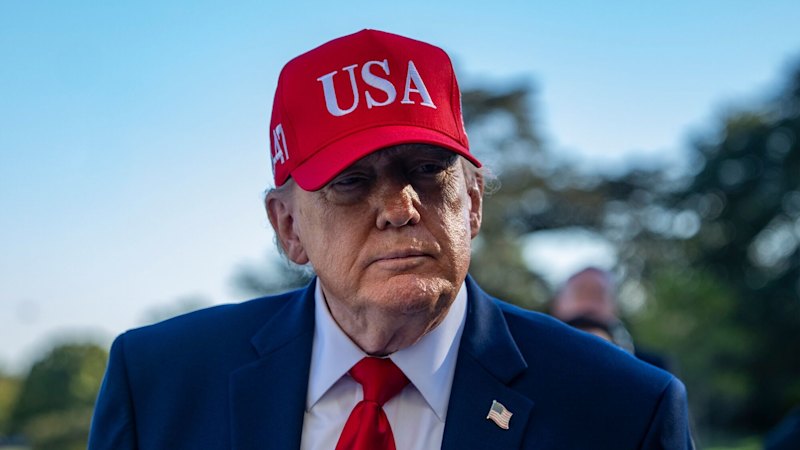
For months, the situation on the ground in Yemen and its borders has been quietly deteriorating. When asked by reporters whether the United States would step past logistical and intelligence support and actively join the bombing campaign, Trump gave a characteristic response. "We may. We're going to look at it," he told the media. That single sentence shifted the geopolitical calculus across the Middle East overnight.
Why This Specific Airport Attack Changes Everything
Previous Houthi strikes over the years often targeted remote energy infrastructure or military installations, but hitting a major civilian aviation hub like Riyadh's international airport crosses a definitive red line. The carnage left behind—including foreign nationals among the dead and widespread structural damage to terminal areas—forced the Saudi-led coalition to label the assault a full-fledged war crime.
Civilians waiting near departure gates suddenly found themselves dodging flying debris as parts of the ceiling collapsed. When a commercial transport hub becomes a battlefield, civilian casualties instantly multiply. That dynamic changes the political pressure on Western capitals. Secretary of State Marco Rubio publicly condemned the slaughter, calling the actions a blatant disregard for human life. Yet condemnation alone won't stop drones and missiles.
The Strain on Air Defenses
Behind the closed doors of defense ministries, a quieter crisis has been unfolding. Saudi Arabia has reportedly run critically low on high-end missile interceptors. Keeping Patriot batteries and other complex defense systems loaded against a steady influx of cheap, Iranian-designed drones is a brutal economic and logistical mismatch.
The kingdom has already reached out to international partners like France, Britain, Pakistan, and Egypt for urgent air defense reinforcement. If Washington transitions from sharing intelligence and targeting data to launching direct kinetic strikes from American assets, it signals that Saudi air defense networks alone cannot fully contain the threat.
What Tehran and the Houthis Are Calculating
The timing of this escalation isn't accidental. The Houthis have steadily rebuilt their capabilities and pushed aggressively along strategic corridors, putting pressure on vital shipping lanes and regional allies alike. By dragging Riyadh deeper into direct kinetic exchanges, the rebel group—and by extension, Tehran—aims to test the limits of American deterrence.
The strategy relies on fatigue. If the conflict drags on, economic disruption follows, energy markets wobble, and international investors get nervous. But a direct U.S. military intervention would radically upend that equation. Instead of fighting a proxy skirmish, the Houthis would find themselves facing the full weight of American air power.
What Happens Next
Diplomatic channels are frantically trying to catch up with the violence. Omani diplomats are pushing for de-escalation, and United Nations officials are warning of a catastrophic regional spillover. But diplomacy requires both sides to want an exit ramp, and right now, both Riyadh and the Houthis are signaling a preference for total escalation.
President Trump is known for moving fast on military decisions when American or close ally interests are violently disrupted. If the White House decides to pull the trigger on active strikes, the war in Yemen will no longer be a localized civil conflict. It will transform into a wide-scale confrontation that draws global superpowers straight back into the heart of the Arabian Peninsula.