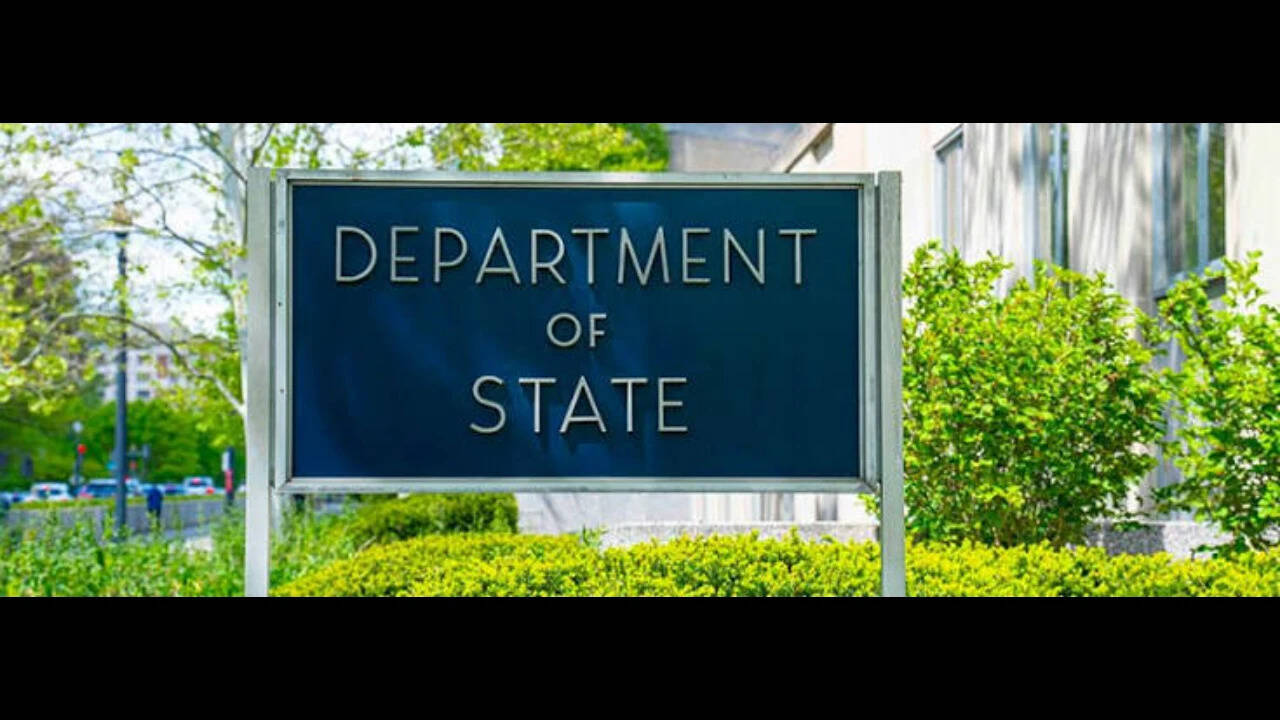
When a sovereign state drops to Tier 3 in the Trafficking in Persons report, the friction generated is rarely purely humanitarian. It is diplomatic, economic, and operational. The recent designation of Hong Kong by the United States Department of State triggered sharp institutional pushback, exposing the friction points between international compliance benchmarks and regional legal architectures. To deconstruct this dynamic beyond the immediate political rhetoric, we must examine the enforcement mechanisms, the compliance criteria, and the structural limitations that govern such state-level evaluations.
The Compliance Architecture
The United States Trafficking in Victims Protection Act establishes a standardized grading rubric for global jurisdictions. Compliance is measured not by absolute intent or policy statements, but by quantifiable enforcement metrics. These metrics follow a tripartite framework: prosecution of offenders, protection of victims, and prevention of future offenses. In other updates, read about: Inside Donald Trump's Long Obsession With the Nobel Peace Prize.
When an administration assesses a special administrative region or a sovereign government, the evaluation focuses heavily on output efficiency. The state must demonstrate rigorous investigative pipelines, high conviction rates, comprehensive victim identification protocols, and dedicated funding streams for shelter and rehabilitation.
In jurisdictions where labor dynamics, migration flows, and immigration enforcement intersect densely—such as major global financial hubs—the mechanics of victim identification become extraordinarily complex. Migrant domestic workers, temporary contract laborers, and cross-border transit populations create high-entropy operating environments for law enforcement agencies. Al Jazeera has analyzed this fascinating issue in extensive detail.
The Institutional Friction Points
The classification of Hong Kong as Tier 3 generated immediate institutional resistance because the designation challenges the local government's assessment of its own legal and operational efficacy. The pushback is rooted in a fundamental divergence of definitions and metrics.
First, local authorities argue that existing legislation, administrative guidelines, and specialized task forces provide a robust defense against forced labor and trafficking. From an operational perspective, the government points to dedicated police units, inter-departmental cooperation, and targeted screening mechanisms for vulnerable incoming travelers.
Second, external evaluators measure success through the lens of systematic judicial outcomes: formal prosecutions, asset seizures, and comprehensive victim support networks that operate independently of immigration enforcement. When authorities prioritize immigration control or deportation over victim-centric protection, external assessment bodies register this as a systemic deficiency rather than administrative routine.
This creates an analytical divergence. The assessing state views low formal conviction numbers as an indicator of systemic enforcement failure. The evaluated state views low numbers as an indicator of low prevalence or effective deterrence. Without a shared empirical baseline for what constitutes unaddressed exploitation, diplomatic friction is guaranteed.
The Cost Function of Downgrading
A Tier 3 designation is more than a diplomatic reprimand. It triggers statutory restrictions that alter the financial and economic calculus of the designated entity. Under the provisions of the Trafficking in Victims Protection Act, governments rated in this lowest tier face potential withholding of non-humanitarian, non-trade-related foreign assistance. Furthermore, the United States government may withhold funding for participation in educational and cultural exchange programs by official representatives or government employees.
While direct financial aid restrictions may have minimal impact on high-income economies, the secondary economic externalities carry significant weight. International financial institutions, institutional investors, and compliance officers incorporate human trafficking ratings into broader environmental, social, and governance risk matrices. A Tier 3 ranking elevates the perceived compliance risk for multinational corporations operating within the jurisdiction, introducing friction into supply chain audits, corporate governance reviews, and capital allocation decisions.
Structural Limitations of the Evaluation Model
The universal application of the Trafficking in Persons tier ranking system suffers from built-in structural constraints that limit its analytical precision.
The model assumes a uniform enforcement capacity across vastly different legal frameworks and administrative traditions. Jurisdictions with distinct common law or civil law systems, unique labor importation models, and autonomous legal arrangements often find themselves measured against standards optimized for federal, centralized nation-states.
Furthermore, the binary nature of the rating system—grouping nations into broad tiers—obscures incremental operational improvements. If a government increases its investigative budget, trains frontline personnel, and refines its victim screening protocols, but fails to achieve a corresponding surge in high-profile criminal convictions within the evaluation window, the tier status may remain static. This creates a moral hazard: governments may prioritize short-term statistical outputs over deep, structural reforms to satisfy annual reporting cycles.
Strategic Outlook
The standoff over Hong Kong's tier placement illustrates the limits of punitive diplomacy in addressing transnational labor exploitation. Reforming enforcement metrics requires moving past political posturing and addressing the operational bottlenecks that prevent effective victim identification in complex migration corridors.
Future compliance adjustments will depend on whether local authorities establish independent, firewalled referral mechanisms for exploited workers that decouple labor protection from immediate immigration enforcement. Until victim reporting is uncoupled from the threat of deportation, investigative pipelines will remain constrained, and external compliance evaluations will continue to reflect institutional impasse.


