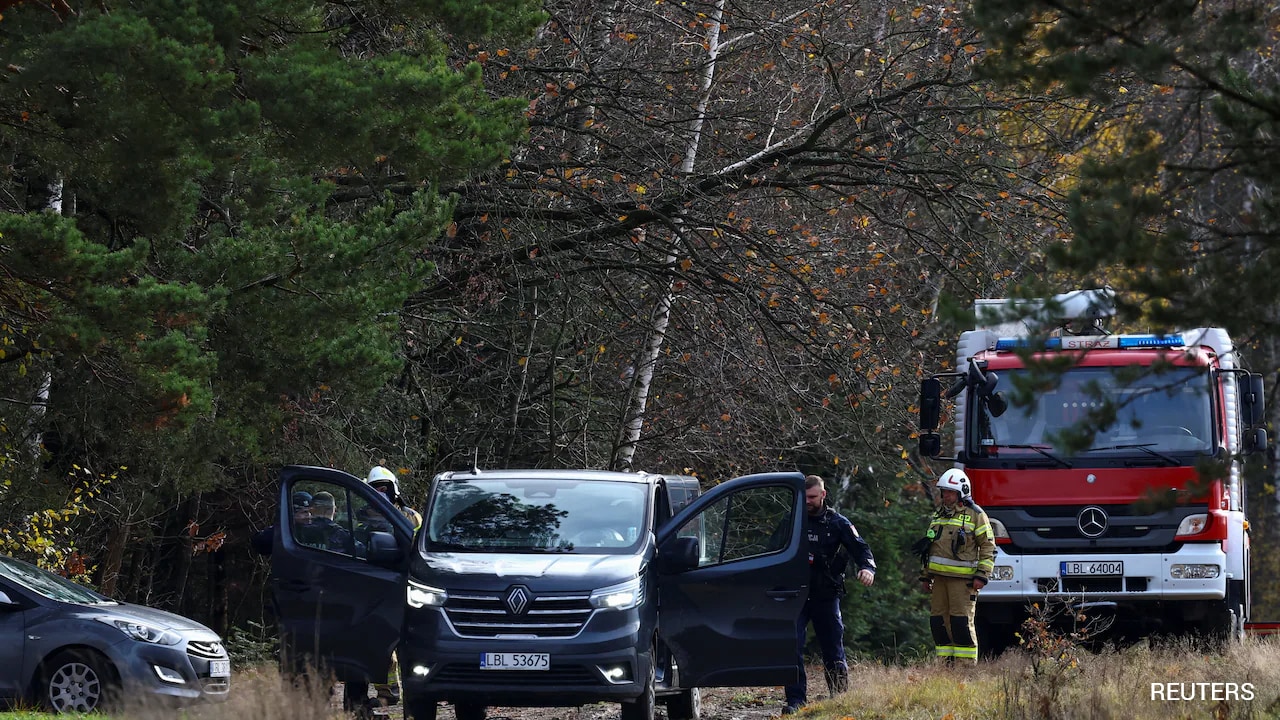
When missiles and drones cross into Polish territory during mass bombardments along the Ukrainian border, NATO capitals face the exact same agonizing dilemma: was it a deadly navigation error, a defensive intercept gone sideways, or a calculated test of Alliance resolve?
Understanding these recurring border incursions requires separating real-time chaos from cold strategic calculus. When high-velocity munitions impact villages near Poland's eastern border, the immediate diplomatic panic centers on NATO's founding principle: an attack against one is an attack against all.
The actual reality on the ground is significantly more nuanced.
Anatomy of Border Missile Incidents
Missiles flying near international boundaries present massive air defense challenges. During major Russian air campaigns against Ukrainian infrastructure, cruise missiles like the Kh-101 and Kalibr routinely maneuver close to the Polish frontier to evade Ukrainian radar coverage.
Three distinct operational scenarios explain how munitions end up on NATO soil:
- Misfired Air Defense Systems: Interceptors fired by Ukrainian ground batteries (such as S-300 systems) targeting incoming Russian threats can suffer guidance failures or self-destruct mechanism malfunctions. The November 2022 explosion in Przewodów, Poland, which tragically killed two agricultural workers, was confirmed by Western and Polish prosecutors to be a stray S-300 air defense interceptor.
- Wayward Cruise Missiles: Russian land-attack cruise missiles programmed with complex terrain-following waypoints occasionally experience inertial navigation drift or electronic jamming, causing them to brief transits through Polish airspace before striking targets in western Ukraine.
- Deliberate Probing Actions: Flying combat drones or long-range weapons along border corridors serves as a live stress-test for Polish radar systems, F-16 combat air patrols, and allied decision-making timelines.
Why NATO Article 5 Isn't Automatic
Public discourse often assumes any missile landing inside a NATO member state instantly triggers Article 5 collective defense. That is a complete misunderstanding of how the alliance functions.
Article 5 requires unanimous agreement among all 32 NATO member states that an "armed attack" has occurred against a member's territory. Accidental stray munitions, stray interceptors, or short-duration airspace violations do not meet the legal threshold for collective military retaliation under international law.
Instead, NATO relies primarily on Article 4. Under Article 4, any ally can formally request emergency consultations whenever they feel their territorial integrity, political independence, or security is threatened. Poland has invoked Article 4 multiple times to mobilize joint air monitoring, deploy additional Patriot batteries, and coordinate frontline radar coverage with NATO allies.
The Escalation Trap in Eastern Europe
Russian military strategists exploit the so-called "gray zone"—the ambiguous area between peacetime provocation and open war. By forcing NATO aircraft to scramble every time unidentified objects approach the eastern border, Moscow creates several operational headaches for the West:
- Resource Exhaustion: Scrambling jet fighters like Polish F-16s or NATO Eurofighters for short airspace incursions incurs massive operational costs and exhausts aircrews.
- Rules of Engagement Friction: Shooting down an incoming object inside sovereign airspace carries the risk of hitting civilian populated areas with falling debris.
- Political Division: Rapidly determining whether a missile crash was an intentional strike or an accidental stray creates temporary friction between NATO capitals and Kyiv regarding intelligence sharing and site access.
What Military Planners Look For Next
Evaluating border risks requires monitoring specific military indicators rather than headlines:
- Radar Trajectory Tracking: Modern multi-function phased-array radars track missile origin points within seconds. If launch vectors originate deep within Russian territory heading straight toward NATO installations, reaction times shorten instantly.
- Debris Forensics: Recovered tail fins, serial numbers, and explosive residues quickly reveal whether a crash involved an anti-aircraft missile or a heavy land-attack cruise missile.
- Integrated Air Defense Expansion: Poland and neighboring Baltic states continue pushing for expanded rotational NATO air defense deployments and authorization to intercept airborne threats approaching NATO borders before they cross into allied airspace.
For ongoing border security monitoring, track official briefings from Poland's Operational Command of the Armed Forces rather than unverified social media footage during active air alerts.