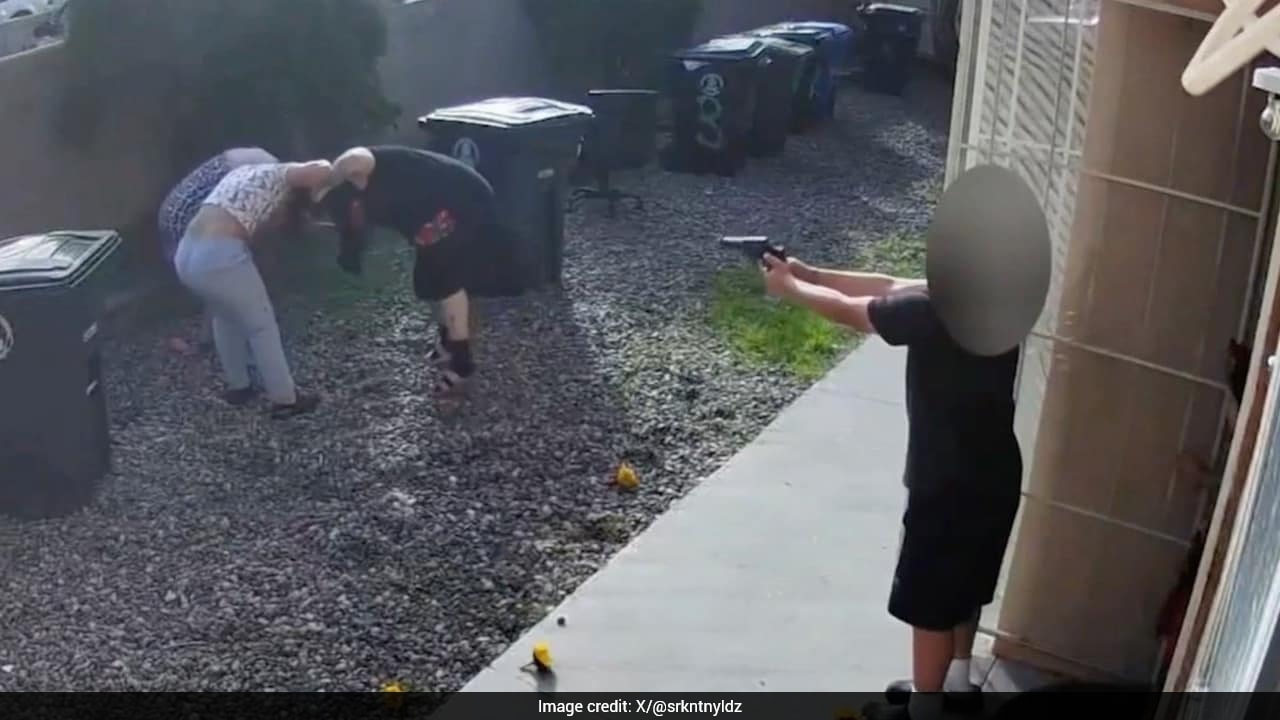
Low-level neighborhood friction turns lethal when three systemic failures align within a single household: unmitigated interpersonal conflict, unsecured firearm storage, and the neurological impulsivity of pre-adolescence. Incidents involving a 10-year-old shooting a teenage neighbor over a noise complaint represent the terminal point of an acute risk-management failure, not an isolated anomaly of juvenile delinquency. Standard media coverage reduces these events to sensationalized timelines of a trivial dispute—loud music—followed by catastrophic violence. That framing obscures the operational mechanics of how everyday residential disputes escalate into irreversible trauma and legal liability.
To analyze this phenomenon rigorously requires stripping away emotional shock and examining the exact sequence of systemic breakdowns. When a pre-adolescent gains access to a lethal weapon during an active dispute, the incident functions as a case study in environmental risk exposure, cognitive development deficits, and statutory negligence. If you found value in this article, you might want to read: this related article.
The Escalation Pipeline of Residential Friction
Neighborhood disputes over noise, property lines, or shared spaces operate on a predictable escalation curve. In typical adult interactions, social norms, legal awareness, and risk assessment act as circuit breakers that prevent minor irritations from crossing into physical violence. When children are integrated into the conflict—either as direct participants or as observers absorbing adult hostility—those circuit breakers fail.
The escalation pipeline follows four distinct stages: For another perspective on this story, check out the recent update from BBC News.
- The Acoustic Trigger and Boundary Violation: Loud music in dense residential environments acts as an immediate, inescapable stressor. Unlike visual annoyances, acoustic intrusion cannot be blocked out easily, creating sustained physiological arousal and frustration for those inside adjacent dwellings.
- Interpersonal Confrontation Without Mediation: Rather than utilizing municipal code enforcement, property management, or law enforcement, residents initiate direct, unmediated confrontation. In the absence of a neutral third party, the interaction immediately shifts from problem-solving to status defense.
- Intergenerational Spillover: When adults engage in heated verbal altercations in front of minors, the children interpret the neighbor not as a fellow citizen with a competing preference, but as an existential threat to their family unit. The child absorbs the emotional intensity of the conflict without possessing the adult cognitive framework to contextualize the dispute's actual stakes.
- Lethal Acceleration: The introduction of a firearm compresses the timeline between anger and irreversible action from minutes to milliseconds. Without a firearm present, a physical altercation between a 10-year-old and a teenager results in minor bruises or a broken window. With an accessible firearm, the exact same emotional impulse produces a gunshot wound.
Cognitive Asymmetry and Pre-Adolescent Decision Making
Evaluating the actions of a 10-year-old shooter through the lens of adult criminal intent is a fundamental analytical error. At age 10, the human brain is undergoing rapid structural changes, characterized by a severe asymmetry between emotional reactivity and executive control.
The limbic system, particularly the amygdala, is fully functional and hyper-responsive to perceived threats, social humiliation, and adult anger. Conversely, the prefrontal cortex—the region responsible for impulse inhibition, long-term consequence modeling, and emotional regulation—remains underdeveloped until the mid-twenties. In a high-stress confrontation, a 10-year-old operates almost entirely on limbic drive.
This neurological reality creates three specific operational vulnerabilities during a dispute:
- Inability to Model Permanence: Pre-adolescents struggle to fully grasp the irreversible nature of lethal force, particularly when their exposure to firearms comes primarily through media or detached observation rather than rigorous safety training. The weapon is perceived as an instrument to stop an immediate threat or assert dominance, not as a mechanism that permanently ends a life.
- Hyper-Sensitivity to Adult Cues: A 10-year-old lacks autonomous conflict-resolution strategies. They mimic the emotional baseline of the adults around them. If an adult caregiver exhibits rage, fear, or verbal aggression toward a neighbor, the child mirrors that intensity without the accompanying behavioral restraints that keep the adult from pulling a trigger.
- Tunnel Vision Under Adrenaline: Acute stress triggers a surge of cortisol and adrenaline, narrowing cognitive focus. For a child, this eliminates the capacity to consider alternative actions, such as retreating inside, locking a door, or calling an adult. The most immediate, salient object of power in the environment becomes the sole focus of action.
The Storage Failure Matrix
A child's neurological impulsivity remains harmless in a residential dispute unless the physical environment supplies a lethal tool. Every instance of a 10-year-old discharging a firearm during a neighborhood argument is, by definition, a catastrophic failure of physical access control.
In risk engineering, preventing unauthorized access to hazardous materials relies on the Swiss Cheese Model of accident causation. Multiple independent layers of defense—locked safes, unloaded chambers, trigger locks, and hidden ammunition—must align to prevent a single point of failure from resulting in disaster. In incidents where a minor retrieves a gun mid-argument, every layer of defense has been compromised simultaneously.
The failure typically manifests across three operational lapses:
- Proximity Over Security: Firearm owners frequently prioritize rapid deployment for perceived self-defense over child-access prevention. Storing a loaded handgun in an unlocked nightstand, a closet shelf, or a vehicle console reduces retrieval time to seconds—for both the adult owner and any child residing in the home.
- The Illusion of Concealment: Many adults operate under the flawed assumption that hiding a firearm constitutes securing it. Research in pediatric injury prevention consistently demonstrates that children are acutely aware of where firearms are hidden in their homes, often locating them well before the age of 10.
- Loaded State Readiness: Keeping a round chambered removes the mechanical friction required to fire the weapon. A 10-year-old lacks the grip strength and mechanical familiarity to rack the slide of many modern semi-automatic pistols. When an adult leaves a firearm loaded and chambered, they eliminate the final physical barrier preventing a child from discharging the weapon.
Statutory Liability and the Legal Vacuum
When a 10-year-old shoots a neighbor, the legal system faces a complex jurisdictional dilemma: prosecuting a defendant who lacks the cognitive capacity for full criminal mens rea while addressing the adult negligence that enabled the crime.
Across the United States, legal accountability splits into two distinct tracks: juvenile delinquency proceedings and adult criminal negligence.
Juvenile Capacity Standards
Common law traditions historically recognized the infancy defense, presuming children under seven incapable of criminal intent, and requiring prosecutors to prove capacity for children between seven and fourteen. Modern state statutes vary wildly. Some states set no minimum age for juvenile court jurisdiction, meaning a 10-year-old can be charged with aggravated assault, attempted murder, or homicide. However, the juvenile justice system is structurally designed for rehabilitation rather than punitive incapacitation, often lacking appropriate facilities for pre-adolescent offenders charged with violent felonies. The legal process frequently stalls in competency evaluations, as forensic psychologists assess whether a 10-year-old actually understands courtroom proceedings and the gravity of their charges.
Child Access Prevention (CAP) Laws
The true locus of preventable failure lies with the adult gun owner, yet statutory accountability remains inconsistent. Child Access Prevention (CAP) laws impose criminal liability on adults who negligently store firearms where minors can access them.
These statutes fall into two tiers of rigor:
- Negligent Storage Laws: The strictest standard, imposing liability whenever a child gains access to an improperly stored firearm, regardless of whether the child discharges it.
- Reckless Endangerment Laws: A weaker standard that applies only if an adult intentionally, knowingly, or recklessly provides a firearm to a minor, making prosecution difficult when a child simply finds an unlocked weapon during a heated moment.
In jurisdictions lacking strict CAP statutes, prosecutors must rely on general child endangerment or involuntary manslaughter laws. These charges carry high evidentiary burdens, often allowing the adult owner who created the lethal environment to escape severe felony penalties while the 10-year-old absorbs the brunt of state intervention.
The Structural Blind Spots of Standard Media Reporting
Sensationalist coverage of juvenile shootings consistently fails the public by focusing on the absurdity of the catalyst—the loud music—rather than the mechanics of the systemic failure. By framing the story around the triviality of the dispute, reporting implicitly categorizes the event as an unpredictable freak accident or a symptom of inexplicable youth violence.
This framing creates two dangerous public misperceptions:
- Misattribution of Causality: Focusing on the music implies that better conflict resolution between neighbors is the primary solution. While de-escalation training has value, expecting a 10-year-old to exercise mature conflict resolution during an adult dispute is biologically unrealistic. The causal variable is not the argument; it is the unsecured weapon.
- Omission of Systemic Metrics: Single-incident reporting ignores the broader data on unsecured firearms in homes with children. Millions of American children live in homes with at least one unlocked, loaded firearm. When that baseline exposure exists, the statistical probability of a minor accessing a weapon during a moment of acute emotional distress approaches certainty across a large enough population.
Strategic Interventions for Risk Mitigation
Reducing the frequency of juvenile firearm discharges during residential disputes requires shifting focus from behavioral correction of children to structural controls on environments and legal frameworks.
- Mandate Biometric or Mechanical Access Controls: Policy and insurance frameworks must incentivize or require the use of rapid-access biometric safes for firearms kept for home defense. This eliminates the false dichotomy between rapid adult access and child security, preserving the adult's defensive capability while rendering the weapon inaccessible to a 10-year-old in a state of limbic arousal.
- Standardize Strict Liability CAP Statutes: Legislatures must replace weak reckless-provision laws with strict negligent-storage statutes. When adult firearm owners face automatic felony liability if an unsecured weapon is used by a minor in a crime, compliance with basic storage protocols increases measurably.
- Deploy Municipal Mediation for Acoustic Disputes: Law enforcement agencies and municipal governments should route non-violent noise complaints away from patrol officers and toward trained civilian dispute-resolution units or automated code enforcement. Removing the expectation of direct neighbor-to-neighbor confrontation eliminates the primary interpersonal trigger that draws children into adult conflicts.
- Integrate Pediatric Firearm Screening into Routine Healthcare: Pediatricians must treat unsecured firearm presence in the home with the same clinical rigor applied to pool fencing, smoke detectors, and poison control. Direct, non-judgmental counseling on locked, unloaded storage during standard wellness checks targets the risk factor directly at the household level before an acute dispute occurs.