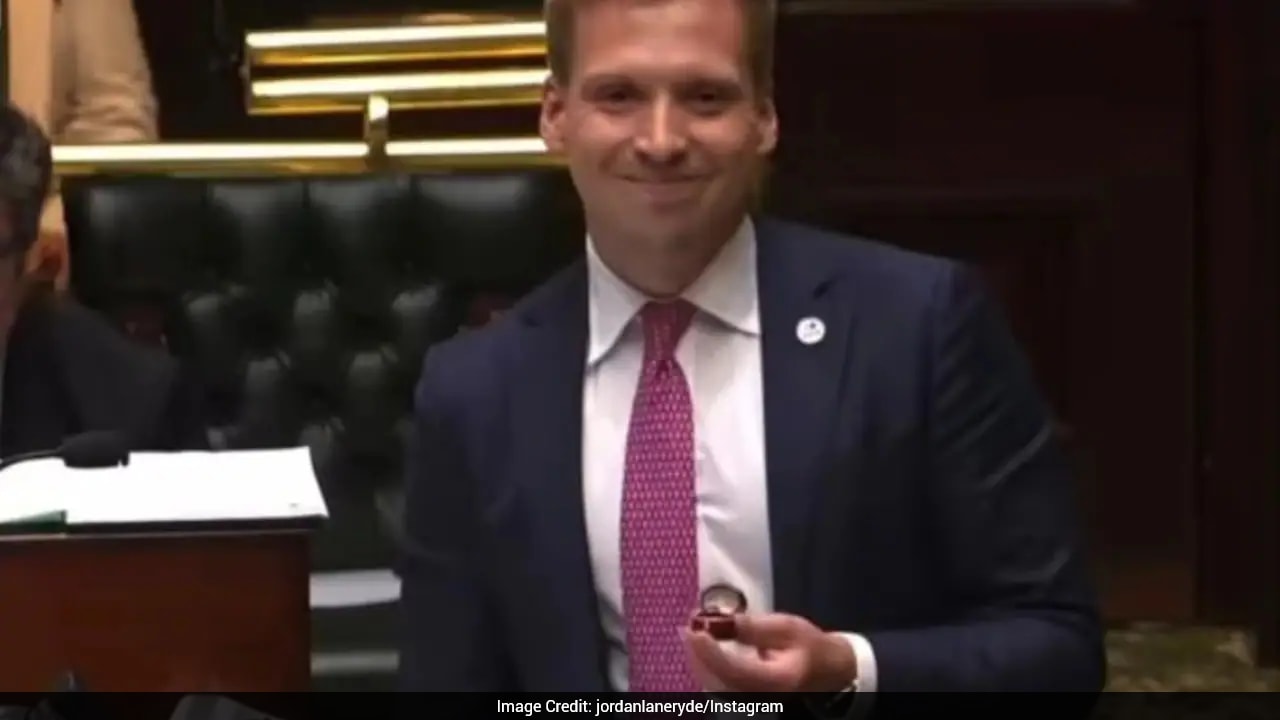
When an Australian Member of Parliament uses a valedictory speech to propose to their partner, the cameras lock onto the public gallery and the chamber erupts into applause. It makes for effortless evening news. Yet behind the viral clips and tearful reactions lies a much more calculated reality about how modern politicians manage their exits, reshape their public legacies, and navigate the rigid conventions of the Westminster system. A parliamentary farewell proposal is rarely just an impulsive burst of romance; it is a carefully timed collision of personal milestone, institutional theater, and media strategy that guarantees a departing lawmaker controls the final headline of their career.
The Anatomy of a Valedictory Spectacle
To understand why a sitting politician chooses the floor of a legislative chamber for an intimate life question, you have to look at the mechanics of a valedictory speech. Unlike standard parliamentary debate, where speakers are interrupted by points of order, heckled across the dispatch box, and bound by strict relevance rules, a farewell address operates under a rare truce. You might also find this related article insightful: Stop Falling for Blurry Warship Videos and Skinwalker Ranch Myths.
The chamber grants the outgoing member uninterrupted floor time. Colleagues from opposing parties sit quietly. Family members, staffers, and friends pack the public gallery above.
For a politician whose daily existence has been defined by partisan combat and hostile press conferences, that twenty-to-thirty-minute window is the single most sympathetic stage they will ever command. By introducing a marriage proposal into that space, the speaker transforms a routine administrative departure into an unforgettable human event. The partner, seated in the gallery directly in the line of sight of the parliamentary broadcast cameras, becomes an instant co-star in a moment that bypasses political cynicism entirely. As discussed in recent articles by TIME, the results are significant.
It works because the contrast is so jarring. Legislative chambers are built for argument, procedure, and dry statutory language. Dropping down on one knee—or looking up at the gallery to ask a life-altering question—short-circuits the audience's expectations.
Precedent in the Chamber
This phenomenon did not emerge in a vacuum. Australia's federal and state parliaments have seen a distinct pattern of romantic milestones playing out on Hansard, the official verbatim transcript of parliamentary debates.
The most famous modern precedent occurred in December 2017 during the historic debate over the Marriage Amendment (Definition and Religious Freedoms) Bill. Liberal MP Tim Wilson, speaking from the floor of the House of Representatives, used his contribution to propose to his longtime partner, Ryan Bolger, who was sitting in the public gallery. Bolger shouted "Yes" loud enough for the chamber microphones to capture it, and the Speaker officially recorded the response in Hansard.
That moment set a template. It proved that a parliamentary proposal could achieve global media saturation within minutes while simultaneously cementing a politician's personal brand.
Since then, other lawmakers across state and federal levels have adapted the playbook for their own departures. When a politician steps down—whether due to retirement, preselection loss, or a shift to the private sector—the valedictory speech offers the last guaranteed broadcast slot they will ever receive as an elected official. Using it to propose achieves two things simultaneously: it honors a partner who has endured years of late-night sittings and constant travel, and it ensures the politician leaves office on a wave of goodwill rather than a post-mortem of their policy failures.
The Unspoken Cost of Political Life
Ask anyone who has spent two decades covering Canberra or the state capitals, and they will tell you that politics destroys relationships at an alarming rate. The schedule is brutal. Federal MPs routinely spend twenty weeks a year away from home, flying across time zones for sitting weeks, committee hearings, and electorate tours.
When they are home, weekends are swallowed by community barbecues, citizenship ceremonies, and local sporting events. The partner at home absorbs the domestic fallout—missed birthdays, solo parenting, and the constant low-grade stress of public scrutiny.
Seen through that lens, a public proposal during a farewell speech functions as a form of public restitution. Politicians know their partners have sacrificed privacy and stability for the sake of a career in public office. Making the proposal in front of the entire legislature—and immortalizing it in the permanent parliamentary record—is a way of saying that the institution itself owes the partner a debt of gratitude.
It is an acknowledgment that the public role is finally ending, and the private life is finally taking precedence.
Hansard as a Permanent Keepsake
There is also a distinct legal and historical vanity at play. Every word spoken in an Australian parliament is preserved forever in Hansard. Once a proposal is uttered on the floor, it becomes part of the official state archive, bound in volumes and indexed alongside budgets, wartime declarations, and landmark legislation.
For a lawmaker, embedding their personal romance into the constitutional record is the ultimate souvenir of power. Ordinary citizens get engagement photos; politicians get an official government transcript proving their love story happened at the center of national or state democracy.
When Institutional Rules Collide With Personal Theater
Not everyone inside the building views these moments with unalloyed warmth. Parliamentary purists, clerks, and veteran proceduralists often harbor quiet reservations about turning legislative chambers into stages for personal milestones.
Under Westminster rules, remarks in the chamber are technically supposed to be directed through the Chair—the Speaker or the President—rather than to strangers in the gallery. In fact, strict standing orders traditionally forbid MPs from acknowledging or addressing visitors in the public gallery at all.
When an MP looks up at the gallery to propose, they are technically breaching parliamentary protocol. Presiding officers almost always turn a blind eye during valedictory speeches because enforcing standing orders during a marriage proposal would make the Speaker look like a heartless bureaucrat. Nobody wants to be the presiding officer who rules a marriage proposal out of order.
Yet this leniency creates a subtle shift in institutional culture. Over time, the chamber loses a fraction of its formal boundary between public duty and private spectacle. Critics argue that once the floor becomes a backdrop for personal life events, it blurs the line between serious governance and reality television.
The Risk of Emotional Coercion
There is another uncomfortable angle that rarely makes it into the feel-good news coverage. Public proposals carry an inherent element of social pressure, and few venues exert more pressure than a packed parliamentary chamber with live television cameras rolling.
When a politician proposes from the floor, the partner in the gallery is trapped in the spotlight. Every MP in the room is watching. The press gallery is typing. The broadcast feed is live. Saying anything other than an enthusiastic "yes" is practically impossible without triggering a national humiliation for both parties.
Even when the couple has discussed marriage privately beforehand—as is usually the case with carefully choreographed political announcements—the public setting removes any room for genuine, unscripted intimacy. The moment belongs to the audience first and the couple second.
The Media Calculus Behind the Viral Clip
Modern political communication is increasingly hostile to nuance. A twenty-minute valedictory speech detailing a member's legislative achievements on infrastructure committees or regional health funding will rarely generate more than a three-paragraph mention in a local newspaper.
A marriage proposal, on the other hand, is pure algorithmic gold.
Television news producers love it because it provides clean, emotional visual storytelling that requires zero policy explanation. Social media editors love it because short clips of a shocked partner in the gallery perform exceptionally well across platforms where political content normally dies.
Consider the practical benefits for an outgoing MP:
- Total Narrative Control: Instead of journalists summarizing the departing member's career through the lens of lost elections, factional brawls, or unfulfilled promises, the proposal dominates the coverage.
- Post-Politics Reputation Laundering: A politician leaving under a cloud of party infighting or voter fatigue suddenly exits as a relatable, devoted human being.
- Bipartisan Goodwill: Opponents who spent years attacking the MP's character are forced by social convention to stand, clap, and offer congratulations on the record.
In an era where public trust in politicians sits near historic lows, humanizing oneself on the way out the door is a smart strategic move—especially if the former MP plans to transition into corporate advisory roles, lobbying, or charity board positions where likability matters.
How the Chamber Reacts Behind Closed Doors
While the public sees unified applause, the reaction among fellow lawmakers is often split along generational and cultural lines.
Younger MPs and progressive members generally embrace the blending of personal authenticity with public service. To them, bringing real life into a historically stiff, male-dominated institution makes parliament feel more representative of modern Australia. It strips away the archaic pomp that alienates everyday voters.
Old-school parliamentary hands see it differently. Many veteran MPs hold to the belief that the chamber should remain strictly impersonal—a place where ideas clash, not where private lives are put on display. To this faction, using parliamentary privilege and broadcast resources for a personal milestone feels slightly self-indulgent, even if they smile and clap for the cameras.
The Evolution of the Political Exit
Decades ago, Australian politicians left parliament quietly. They gave a formal speech thanking their electorate, their staff, and the clerks, shook hands with the Speaker, and walked out the door into obscurity.
Today, political careers are treated as continuous personal brands. Entering parliament requires a personal origin story; surviving it requires constant social media curation; leaving it requires a signature viral moment.
The parliamentary farewell proposal sits right at the intersection of genuine emotion and modern imagecraft. The love between the couple may be completely authentic, and the gratitude toward a supportive partner deeply felt. At the same time, no seasoned politician steps up to the dispatch box without knowing exactly where the cameras are pointed and what the morning headlines will say.
When the applause fades and the chamber moves on to the next item of business, the Hansard record remains—preserving both a real human commitment and a masterclass in how to own the room one final time.