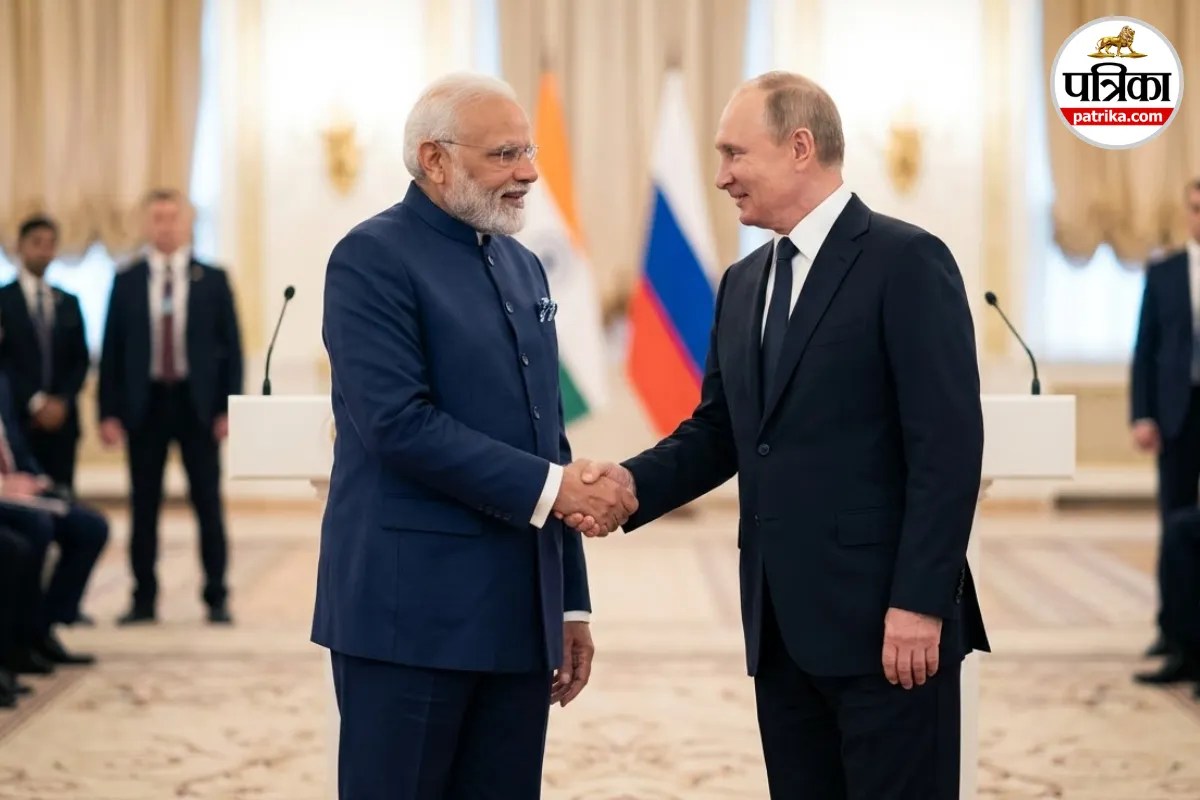
India and Russia aren't just partners on paper. They’re proof that long-term geopolitical interests beat temporary global trends every single time. While most of the world watches the shifting dynamics of the West, New Delhi and Moscow are quietly doubling down on a bond that’s lasted decades. The latest confirmation from Russian Foreign Minister Sergey Lavrov isn't just a routine update. It’s a loud signal. Prime Minister Narendra Modi is heading back to Russia in 2026 for the 26th India-Russia Annual Summit.
This isn't some last-minute plan. It’s the result of a steady, deliberate strategy. When Lavrov spoke about this upcoming visit, he wasn't just talking about logistics. He was highlighting a relationship that refuses to break, no matter how many external sanctions or diplomatic hurdles get thrown in the way. If you thought India was drifting solely toward Washington, this move should make you rethink that entire narrative.
Why 2026 matters for the India Russia friendship
The timing of this visit is everything. By 2026, the global landscape will look vastly different than it does today. Yet, the consistency of these annual summits remains a bedrock of Indian foreign policy. Why does Modi keep going back? It’s simple. Energy security, defense technology, and a massive trade deficit that needs fixing.
Russia remains India's most reliable energy tap. We’ve seen how India handled the oil situation over the last couple of years. Despite immense pressure from the G7 and European nations, India kept buying Russian crude. Why? Because it was the right move for the Indian economy. It kept inflation in check at home while the rest of the world saw prices skyrocket. Modi’s 2026 visit will likely focus on turning these temporary oil deals into long-term energy contracts that span the next decade.
Then there’s the defense angle. People love to say India is "moving away" from Russian hardware. Sure, we’re buying more from France and the US. But you don't just replace 60% of your military ecosystem overnight. The S-400 missile systems and the BrahMos joint ventures are just the tip of the iceberg. The 2026 summit will probably see more talk about "Make in India" collaborations rather than just simple "buyer-seller" transactions. Russia knows it has to offer technology transfers to stay relevant, and India is more than happy to take them.
The Lavrov Factor and the Moscow Signal
Sergey Lavrov doesn't mince words. When he confirmed the 2026 visit during his recent interactions, he was essentially telling the West that their attempts to isolate Russia have failed in the Global South. India is the crown jewel of that argument. As the world's most populous nation and a top-five economy, India’s refusal to turn its back on Moscow is a massive diplomatic win for the Kremlin.
But don't mistake this for India being "pro-Russia" in a vacuum. India is pro-India. The relationship works because it’s transactional and emotional at the same time. Older generations in the Indian diplomatic corps remember 1971. They remember who stood by India when things got ugly. That institutional memory doesn't just vanish because of a few years of Western outreach.
Trade is the real elephant in the room
Let’s be honest about the numbers. The trade balance is skewed. Heavily. India buys a lot from Russia—mostly oil and fertilizers—but doesn't export nearly enough back. This creates a huge pile of rupees that Russia can't easily spend. During the 2024 talks, this was a major headache. By 2026, both leaders need a real solution.
Expect the 2026 summit to dive deep into the International North-South Transport Corridor (INSTC). This isn't just a road. It's a way to bypass traditional shipping routes and cut costs by 30%. If India can get its textiles, medicines, and machinery into Russian markets via Iran, the trade deficit starts to look a lot healthier. This is the kind of "boring" logistics stuff that actually changes the world.
Chasing the 100 Billion Dollar Goal
By 2030, both nations want 100 billion dollars in mutual trade. That’s a massive jump from where things stand. To get there, the 2026 meeting has to be more than just a photo op in the Kremlin. It has to involve the private sector. Currently, most India-Russia trade is government-to-government. That’s a bottleneck.
Modi and Putin have already discussed simplifying visa regimes for businessmen. They’re looking at digital payment connectivity—think UPI meeting the Russian Mir system. If an Indian tourist can pay for a coffee in Moscow using their phone, and a Russian trader can settle a contract in rupees instantly, the game changes. This is the practical side of the "eternal friendship" that rarely gets the headlines it deserves.
Addressing the China Shadow
You can’t talk about India and Russia without mentioning China. It’s the awkward third party in every conversation. Moscow is closer to Beijing than it has been in decades, mainly because it has few other options. New Delhi, meanwhile, has a serious border problem with China.
This is where Modi’s personal chemistry with Putin comes into play. India needs Russia to stay somewhat neutral—or at least not purely pro-China—in the event of further Himalayan tensions. Russia, for its part, doesn't want to be a junior partner to China. By keeping India close, Russia maintains its status as a multi-polar power. It’s a delicate balancing act. Modi’s trip in 2026 will be a masterclass in this kind of high-stakes tightrope walking.
Nuclear energy and the future of the Arctic
While everyone talks about oil, nuclear energy is the quiet winner. The Kudankulam Nuclear Power Plant in Tamil Nadu is a Russian project. It’s one of the few areas where high-tech cooperation has never stalled. We’ll likely see announcements about more reactor units or even small modular reactors (SMRs) which are the next big thing in clean energy.
Then there’s the Arctic. As ice melts, new shipping lanes open up. Russia has the territory; India has the need for shorter routes. India's "Arctic Policy" isn't just about climate research. It’s about being at the table when the world’s newest trade route opens. Modi going to Russia in 2026 ensures India isn't left out of the "Polar Silk Road" or whatever the latest branding for it is.
The human side of the 2026 visit
Beyond the tankers and the missiles, there’s a cultural element. Millions of Russians grew up on Bollywood. Today, thousands of Indian students study medicine in Russian cities. These aren't just statistics; they’re the people-to-people links that make the diplomacy stick. When Modi visits, he usually spends time with the Indian diaspora. It’s a reminder that this relationship isn't just built on cold hard cash.
The "Special and Privileged Strategic Partnership" isn't just a fancy title. It’s a description of a reality where both sides trust each other enough to share sensitive tech and ignore third-party threats. 2026 will be the year this trust gets its next major stress test and, likely, its next major reinforcement.
Navigating the 2026 geopolitical minefield
Western analysts will undoubtedly criticize this move. They'll call it a setback for the "rules-based order." But India’s "strategic autonomy" is a real thing. It means New Delhi doesn't ask for permission before securing its own interests. If the US can deal with its own messy alliances, India can certainly maintain its 70-year-old bond with Russia.
The 2026 summit will be a defining moment for the mid-decade. It’ll show whether the "multipolar world" is a reality or just a talking point. For India, the path is clear. Balance the West, secure the North, and keep the energy flowing.
Keep an eye on the official joint statements leading up to the summit. Watch for mentions of the Chennai-Vladivostok maritime corridor. That’s the real indicator of how serious these two are about bypassing traditional Western-controlled waters. If you’re looking to understand where the world is heading, don't look at the shouting matches in the UN. Look at the flight path of Air India One in 2026.