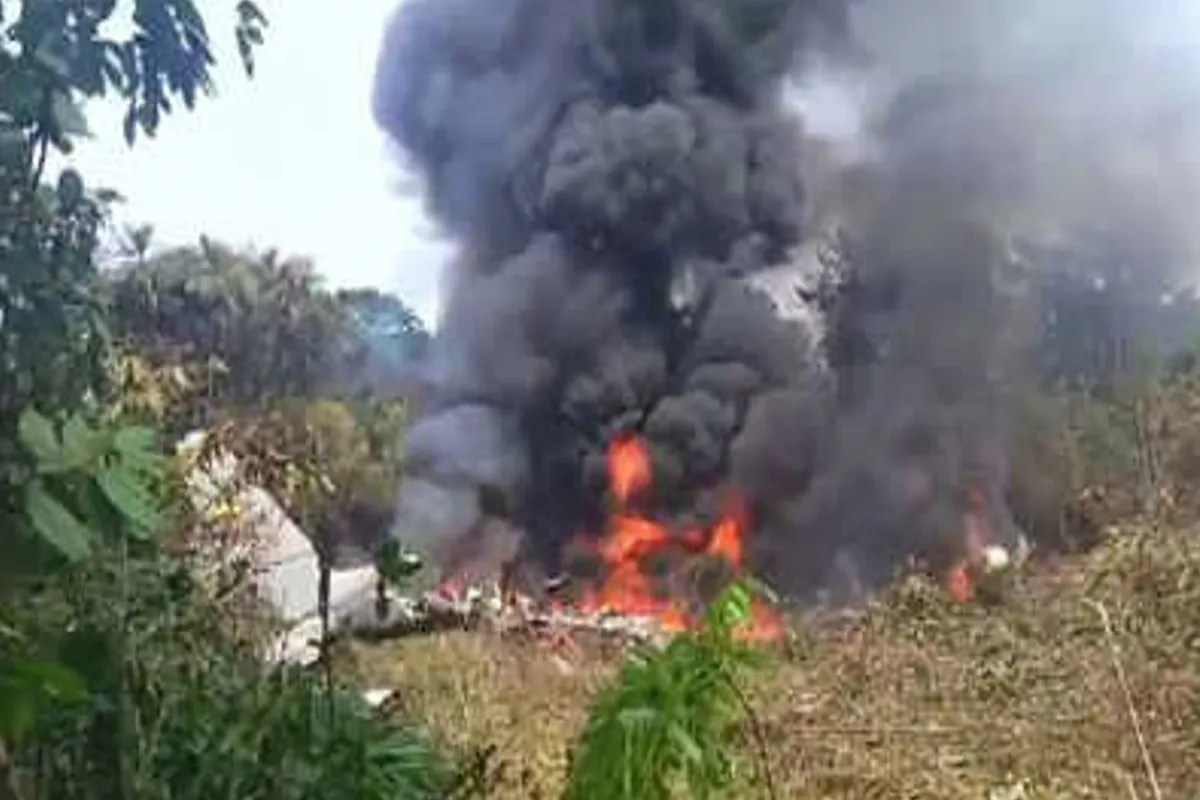
A plume of black smoke over the Colombian jungle is no longer just a tragedy. It is a recurring indictment of a military aviation infrastructure pushed beyond its breaking point. When a transport aircraft carrying 110 personnel encounters a catastrophic failure, the immediate instinct of the public is to mourn. But for those who track the maintenance logs and procurement cycles of the Colombian National Army, the instinct is to ask why another aging airframe was allowed to clear the runway. The crash represents more than a mechanical failure. It is the result of a decades-long reliance on hardware that was never designed to endure the relentless operational tempo of the Andean cordilleras.
Military aviation in South America operates under a set of physics and economics that the average observer rarely considers. You have high-altitude takeoffs, extreme humidity, and a lack of spare parts that turns every pre-flight check into a gamble. While initial reports focus on the "video" of the descent, the real story is found in the maintenance hangars where engineers are forced to cannibalize old parts to keep the fleet airborne. Discover more on a related topic: this related article.
The High Altitude Trap
Colombia possesses some of the most unforgiving terrain on the planet. To the uninitiated, a flight from Bogotá to the coastal regions seems routine. It is not. The "hot and high" conditions—high elevation combined with high temperatures—drastically reduce air density. This means engines produce less thrust and wings generate less lift. When you pack 110 soldiers into a transport vessel under these conditions, the margin for error evaporates.
A heavy aircraft in a thin atmosphere requires a longer takeoff roll and has a much slower rate of climb. If an engine fails during this critical phase, the pilot has seconds to react before the laws of gravity override the flight controls. In many of these aging transport models, the safety systems are analog. They do not have the automated flight envelope protection found in modern civilian jets. The pilot is wrestling with a metal beast that is actively trying to fall out of the sky. Additional analysis by NPR explores similar views on the subject.
The Maintenance Debt
The Colombian military has long been the backbone of the country's internal security. However, years of constant use have accumulated a "maintenance debt" that is now coming due. We are seeing airframes that have exceeded their recommended flight hours, kept alive by a patchwork of repairs.
- Supply Chain Fragility: Procurement of genuine parts for older American-made or European-made aircraft is hampered by bureaucratic red tape and fluctuating currency values.
- Operational Fatigue: The aircraft are rarely given the "down time" required for deep-cycle inspections because the demand for troop movement is constant.
- Technological Lag: Many of the cockpits lack modern terrain awareness and warning systems (TAWS), which are vital in the foggy peaks of the Andes.
When an aircraft goes down with 110 souls on board, the investigation usually points to "human error" or "unfavorable weather." These are convenient labels. They mask the underlying truth that the hardware was tired. A pilot can be the most skilled in the world, but they cannot fly a wing that has suffered structural fatigue or an engine with a fractured turbine blade.
The Geopolitics of the Hangar
Why hasn't the fleet been modernized? The answer is a mix of fiscal austerity and shifting political priorities. Modernizing a transport fleet costs billions. For a government balancing social programs against military needs, buying a dozen new C-130Js or Brazilian-made KC-390s is a hard sell. Instead, the strategy has been to "sustain and maintain."
This strategy works until it doesn't. We are now in the "doesn't" phase. The cost of losing a single aircraft and 110 trained personnel far outweighs the price tag of a new airframe, yet the budget cycles never seem to account for the price of blood. There is also the matter of international aid. Much of Colombia’s hardware was provided through various security cooperation frameworks. When those frameworks expire or shift focus toward intelligence rather than logistics, the transport fleet suffers first.
Anatomy of a Catastrophe
Witness accounts and leaked footage from recent incidents show a terrifyingly consistent pattern. The aircraft often appears to be struggling with altitude before a sudden wing-drop or a trail of smoke indicates a localized fire. In a crowded transport, there is no easy way out. There are no parachutes for 110 men. There is only the hope that the pilot can find a flat enough clearing in a landscape defined by verticality.
The psychological impact on the remaining forces is immeasurable. Soldiers are expected to fly into active conflict zones, but their primary fear shouldn't be the equipment they are sitting in. When the transport fleet becomes a greater threat than the enemy, the entire chain of command loses its foundation.
The Missing Pieces in the Official Narrative
The official statements from the Ministry of Defense typically follow a script. They promise a full investigation. They express condolences. They mention a technical commission. What they rarely mention is the age of the specific tail number involved. They don't talk about how many times that specific aircraft had its "heavy maintenance" deferred.
To truly understand this crisis, one must look at the Mean Time Between Failures (MTBF) for the specific components used in these aging turboprops. In a humid, tropical environment, corrosion is a silent killer. It eats at the wiring and the struts. If the inspection protocols aren't strictly followed—or if they are "streamlined" to meet operational demands—corrosion goes unnoticed until a spar snaps in mid-air.
Rethinking Troop Logistics
There is a growing argument among industry analysts that the era of massive troop movements in single, aging airframes must end. The risk concentration is too high. Moving 110 people in one go is efficient on paper, but it creates a single point of failure that can decapitate an entire battalion's leadership or specialized units in one go.
Decentralized transport using smaller, more modern, and more agile aircraft might be the only way forward. It would distribute the risk and allow for more frequent maintenance cycles. But this requires a complete overhaul of the military's logistical doctrine—a task that is often more difficult than actually buying the planes.
The wreckage in the jungle is a warning. It is a signal that the "sustain and maintain" era has reached its lethal limit. Without a radical shift in how Colombia procures and cares for its wings, these videos will continue to surface, each one a grim reminder that gravity has no mercy for a neglected fleet. The next step is not another investigation; it is a grounded fleet and a hard look at the budget.
Check the tail numbers of the remaining fleet against their original delivery dates.