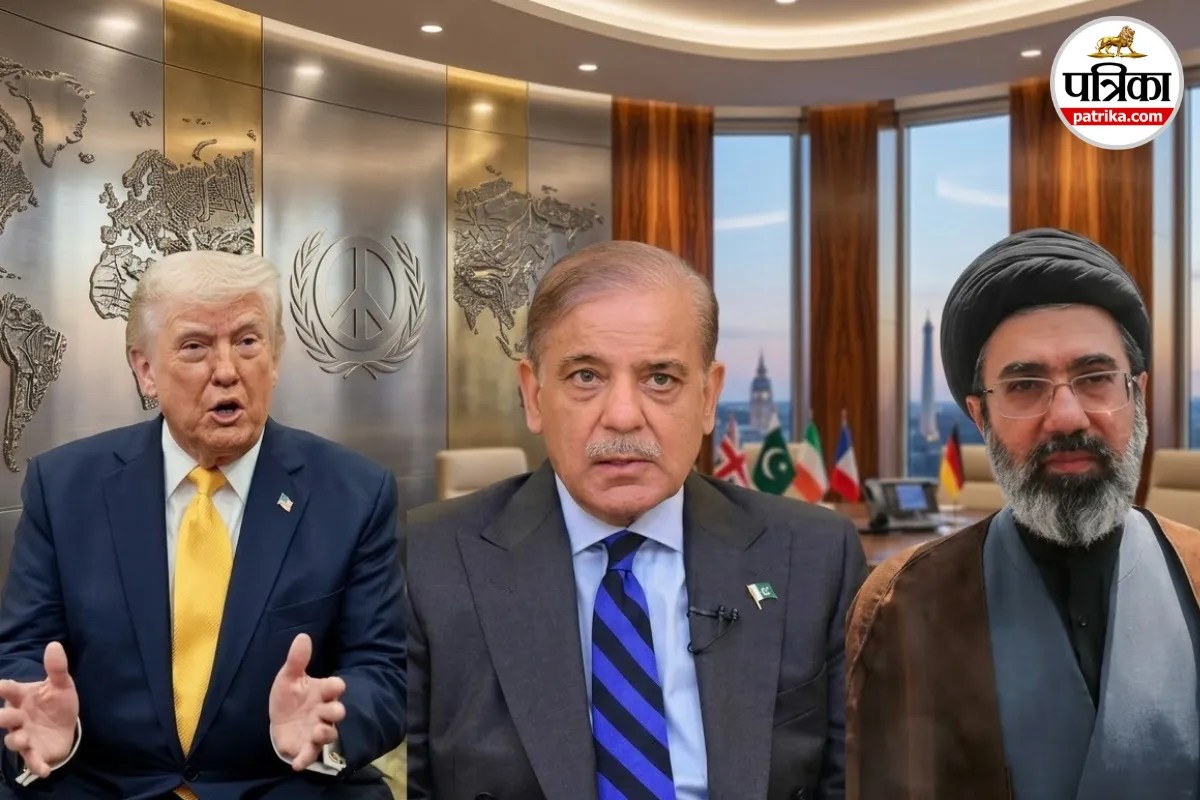
The rumors of a high-level summit in Islamabad aren't just about diplomatic hospitality. They are about survival. As Washington and Tehran edge closer to a direct confrontation that neither side can afford but both seem unable to avoid, Pakistan is attempting to position itself as the indispensable middleman. History suggests this is a high-stakes gamble that often leaves the mediator caught in the crossfire.
Pakistan’s sudden pivot to host high-stakes talks between regional powers reflects a desperate need to balance its checkbook against its ideological commitments. On one side, the United States remains the primary gatekeeper for the IMF loans keeping the Pakistani economy on life support. On the other, Iran represents a neighbor that can either facilitate regional trade or export instability across a porous border. Islamabad is not acting out of a sense of global peace-making. It is acting out of a realization that a full-scale war between its neighbor and its benefactor would be the final blow to its own crumbling domestic stability.
The Financial Noose and the Tehran Connection
To understand why Pakistan is inviting Iranian officials to the table now, you have to look at the spreadsheets in the Finance Ministry. The country is currently trapped in a cycle of debt restructuring. Every major move in its foreign policy is scrutinized by the State Department and the Treasury in Washington. When the US applies pressure on Iran through sanctions, Pakistan feels the heat.
The long-delayed Iran-Pakistan gas pipeline is the perfect example of this friction. Tehran has already completed its side of the project and is threatening Islamabad with billions in legal penalties for non-compliance. Meanwhile, Washington has been blunt: moving forward with the pipeline will trigger sanctions that would disqualify Pakistan from future Western financial aid. By hosting a "high-level meeting," Pakistan is trying to buy time. They want to show Tehran they are still serious partners while signaling to Washington that they are the only ones capable of de-escalating the Iranian regime.
It is a thin tightrope. One slip and the IMF could tighten the purse strings, or Iran could allow sectarian tensions to boil over in the Balochistan province.
Border Security and the Proxy Problem
Geography is a permanent reality that diplomats often try to ignore until it bites them. The 900-kilometer border between Pakistan and Iran is a chaotic stretch of desert and mountains that has become a playground for militants. Earlier this year, we saw a rare and terrifying exchange of missile strikes between the two nations, each claiming to target terror groups hiding on the other’s soil.
The proposed meetings in Islamabad are a direct response to that breach of trust. Pakistan cannot afford a second "hot" border. With the Taliban in Afghanistan becoming increasingly hostile and the traditional rivalry with India remaining a constant threat, a hostile Iran would mean Pakistan is effectively surrounded.
The Intelligence Gap
Inside the halls of the ISI, the concern isn't just about missiles. It is about the "Sippah-e-Muhammadi" and other sectarian groups that could be activated if Pakistan leans too far toward the US-Saudi axis. Iran has perfected the art of proxy warfare across the Middle East. Islamabad knows that if it provides the US with even passive support—like drone basing or intelligence sharing—Tehran has the assets inside Pakistan to trigger a domestic security nightmare.
The high-level meeting is designed to establish a "No-Surprise" policy. It is an attempt to create a back-channel where both militaries can coordinate to prevent accidental escalations. However, these agreements are only as good as the political will behind them, and in a region where non-state actors often dictate the pace of conflict, formal treaties are often written in sand.
Washington’s Wary Eye on the Indus
The Biden administration, and whoever follows it, views Pakistan’s "neutrality" with deep skepticism. Years of "double-dealing" during the War on Terror have burned most of the goodwill Islamabad once held in DC. When Pakistani officials claim they are acting as a bridge to Tehran, many in the Pentagon see it as a play for relevance.
The US strategy has shifted. They are no longer interested in Pakistan as a frontline state; they want Pakistan to stay out of the way. But the reality is that Pakistan’s nuclear status and its proximity to the Strait of Hormuz make it impossible to ignore. If the US decides to strike Iranian nuclear facilities, they will expect Pakistan to at least remain silent. If Pakistan instead uses these high-level meetings to warn Tehran or provide a diplomatic shield, the fallout in Washington will be severe.
The Saudi Factor
We cannot talk about US-Iran-Pakistan relations without mentioning Riyadh. Saudi Arabia is Pakistan’s largest source of oil and a massive provider of direct investment. The Saudis have their own complex thaw with Iran, brokered by China, but they remain wary. Pakistan is essentially trying to serve three masters: the American lender, the Iranian neighbor, and the Saudi patron.
The Myth of the Neutral Mediator
There is a romanticized version of diplomacy where a middle power brings two giants to the table and saves the day. That is not what is happening in Islamabad. This is a tactical maneuver by a state that is running out of options.
The "high-level meeting" will likely produce a joint statement filled with platitudes about regional stability and Islamic brotherhood. But beneath the surface, the tensions remain. Iran will continue to use its border regions to project power. The US will continue to use the IMF as a leash. Pakistan will continue to hope that the next explosion doesn't happen on its doorstep.
The real test will be the first time a US-linked asset is hit in the Gulf or an Iranian commander is targeted. In that moment, the "meeting" in Islamabad will be revealed for what it truly is: a desperate attempt to stay relevant in a theater where the lead actors have already memorized their battle lines.
Pakistan is not a bridge. It is a buffer. And buffers eventually get compressed until they crack. The diplomats in Islamabad are currently checking for structural weaknesses, hoping that a few more rounds of tea and handshakes can delay the inevitable pressure of a regional war.
If you want to see where the next global flashpoint will be, stop looking at the maps of the Middle East and start looking at the flight manifests of the private jets landing in Islamabad. The shadow war is moving, and Pakistan is trying to charge admission for a front-row seat.
Ask yourself if a nation that cannot pay its own electricity bills can truly broker peace between two of the most heavily armed ideologies on the planet. The answer is usually found in the fine print of the next loan agreement.