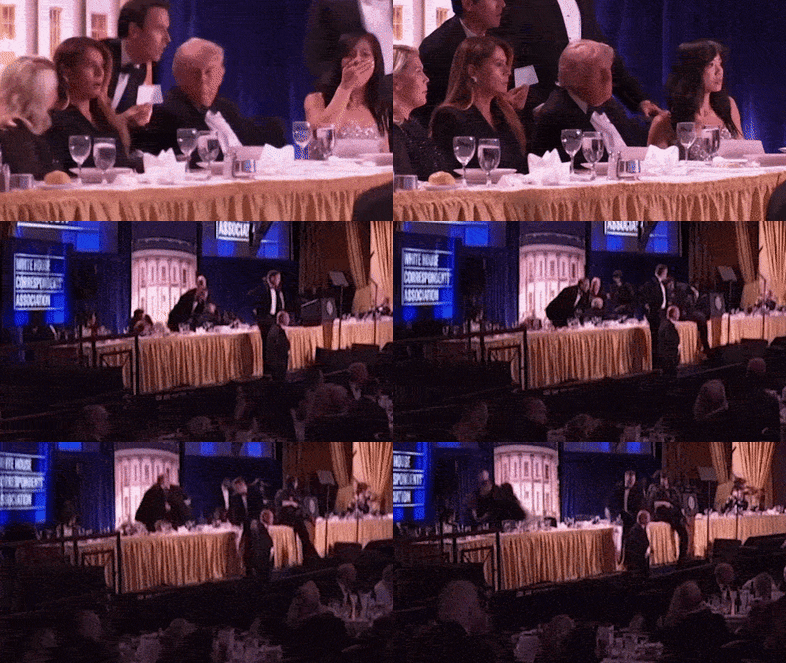
The silver service was polished to a mirror finish. At Mar-a-Lago, luxury isn’t just an aesthetic; it’s a physical weight. The air in the ballroom typically smells of expensive lilies and the faint, ozone scent of high-end climate control. On this particular evening, the guest list was a rolling directory of power, a collection of silk ties and evening gowns gathered for a presidential dinner that was supposed to be a choreographed display of stability.
Then the first crack of gunfire cut through the clinking of crystal.
Chaos has a specific sound. It isn't the cinematic roar we see in movies. It is a series of sharp, discordant notes—the screech of a chair leg against marble, the collective intake of breath from a hundred people who suddenly realize the world has shifted on its axis. In that moment, the political becomes visceral. The abstract debates about security and rhetoric dissolve. All that remains is the cold, hard reality of a metal barrel and the person behind it.
The Man in the Shadows
While the guests were tucking into their appetizers, a man named Michael Byrd was allegedly moving through the periphery with a far darker itinerary. He wasn’t a ghost. He was a person with a car, a set of keys, and a collection of weapons that suggests a chillingly deliberate intent.
According to the reports that trickled out once the smoke cleared, Byrd wasn't just carrying a firearm. He was a walking arsenal. Knives. Handguns. The sheer variety of his kit speaks to a mindset that had moved past a singular moment of passion and into the realm of a tactical mission.
Think about the physical act of preparing for such an evening. The weight of a blade against the thigh. The metallic scent of oil on a slide. While the rest of the country was arguing over polling data in comfortable living rooms, one individual was checking the tension on a holster. It is a sobering reminder that the thin veneer of our civil society relies entirely on the collective agreement that we will settle our differences with ballots, not bullets.
The Perimeter of Safety
We often treat security as a binary state. We are either "safe" or "not safe." But security is actually a series of concentric circles, each one thinner and more fragile than the last.
- The outermost circle is the law itself.
- The middle circle is the physical barrier—the gates, the checkpoints, the Secret Service details.
- The final circle is the most vulnerable: the human heart.
When Byrd allegedly fired those shots, he didn't just pierce the air; he shattered the illusion that any space is truly sacrosanct. The Secret Service acted with the clinical efficiency they are trained for. They neutralized the threat. They secured the former president. They did their jobs. But the trauma of a discharged weapon in a room full of diners doesn't go away just because the handcuffs click shut.
It lingers in the way a server's hand shakes while pouring water the next night. It stays in the subconscious of every person who now looks for the nearest exit before they look for their seat.
The Invisible Stakes
There is a tendency in our modern news cycle to treat these events like a box score. We count the shots. We list the charges. We move on to the next headline. But the real story isn't the police report. The real story is the eroding foundation of our public life.
When political gatherings become active crime scenes, we lose something fundamental. We lose the ability to gather. We lose the "public" in public service. Consider the psychological cost of living in a state of perpetual high-alert. It changes the way we speak to one another. It turns neighbors into suspects and dinners into security risks.
Byrd now faces a litany of charges, ranging from carrying a concealed weapon to more severe felony counts. The legal system will do what it does. It will weigh the evidence, hear the testimony, and deliver a verdict. But the law cannot repair the sense of violation that occurs when a space meant for celebration is transformed into a theater of violence.
The Weight of the Metal
The firearms recovered from the scene were more than just tools. They were symbols of a specific kind of modern desperation. In a world where everyone feels like they are losing, some people decide that the only way to be heard is through the percussion of a gunshot. It is a false promise. Gunfire doesn't clarify an argument; it ends the conversation entirely.
The knives found on Byrd’s person add a layer of intimacy to the threat that is perhaps even more unsettling than the guns. A firearm is a distance weapon. A knife requires proximity. It requires the perpetrator to be close enough to see the eyes of their target. The presence of both suggests a man prepared for every possible distance, every possible outcome.
We are left to wonder about the "why," though the "why" rarely satisfies. Whether it is fueled by delusion, ideology, or a simple, broken need for significance, the result is the same: a jagged tear in the fabric of the American evening.
The Silence After the Sirens
Long after the police cruisers have left and the yellow tape has been rolled up, the silence returns to the palm trees of Florida. But it is a different kind of silence. It is heavy. It is the silence of a house that has realized its locks aren't as strong as it thought they were.
We like to believe we are in control of our narratives. We plan our dinners, we write our speeches, and we assume the sun will rise on a world that looks exactly like the one we left the night before. But then a man with a collection of steel and a grievance walks through a door he wasn't supposed to enter.
The chandelier stops shaking eventually. The glass is swept up. The guests go home and try to explain to their children why the news is talking about the place where they just had dinner. They try to find the words to describe the sound of a shot fired in a room full of friends.
The words usually fail. Because at the end of the day, there is no logic that can bridge the gap between a peaceful dinner and a charged suspect. There is only the chilling realization that the distance between a normal Tuesday and a national tragedy is often just the length of a trigger pull.