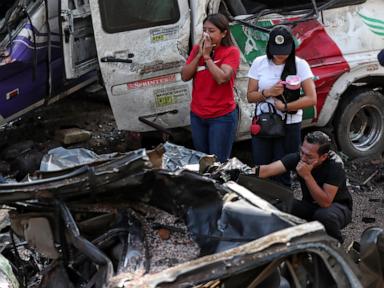
The metal skeleton of a bus smoldering on a mountain road in Nariño is not just a crime scene. It is a signature. Following the recent bombing in southwest Colombia that claimed 20 lives, the international community has focused on the body count while ignoring the strategic logic driving this specific brand of slaughter. This wasn't a random act of terror or a botched robbery. It was a calculated demonstration of sovereignty by armed groups who have effectively replaced the state in the Pacific corridor.
Violence in departments like Nariño, Cauca, and Valle del Cauca has surged to levels not seen since the signing of the 2016 peace accords. The central government in Bogotá remains entangled in "Total Peace" negotiations, but on the ground, the reality is a fragmented war between the ELN (National Liberation Army), various FARC dissident factions, and the Gulf Clan. The bus bombing marks a brutal escalation in their competition for the "Gold Route," the primary logistics vein for both high-grade cocaine and illegal gold mining exports.
The Strategic Failure of the 2016 Vacuum
When the original FARC-EP laid down their arms, the Colombian state promised to fill the power vacuum with schools, roads, and judges. It didn't happen. Instead, the military held the high ground while the valleys and jungle transit points were left open. This oversight allowed smaller, more predatory groups to move in.
These new actors are not ideological revolutionaries. They are franchise-based cartels. The FARC’s Second Marquetalia and the Central General Staff (EMC) are currently fighting a war of attrition to decide who controls the tax on the local population. When a bus is targeted, it is often because the transport company refused to pay a "vacuna"—a protection tax. By killing 20 civilians, the perpetrators sent a message to every business owner in the southwest: the government cannot protect you, but we can destroy you.
Logistics of a Massacre
Public transport is the lifeblood of rural Colombia. In the absence of reliable private infrastructure, these buses carry everything from students to bulk agricultural goods. Targeting them is the most efficient way for an armed group to paralyze a region.
- Total Blockade: Attacking a vehicle on a narrow mountain pass creates a physical barrier that stops all trade for days.
- Psychological Dominance: It proves that the "invisible borders" drawn by militants are the only laws that matter.
- Forced Displacement: Fear drives locals off their land, allowing armed groups to repurpose the territory for coca labs or illegal airstrips.
The sophistication of the explosives used in this latest attack suggests a high level of technical expertise. We are no longer dealing with crude pipe bombs. These are shaped charges designed to ensure total destruction of the vehicle's frame, maximizing casualties even in armored-plating scenarios.
The Total Peace Paradox
President Gustavo Petro’s administration has staked its reputation on the "Paz Total" policy. The ambition is noble: negotiate with everyone at once to end the cycle of conflict. However, this strategy has created a perverse incentive for violence.
In the world of Colombian insurgency, violence is a bargaining chip. Groups ramp up attacks right before a ceasefire negotiation to claim more territory, which they then use as leverage at the table. They aren't fighting to win a war; they are fighting to improve their starting position for a deal. The 20 victims in the southwest are essentially collateral in a high-stakes political poker game.
Why the Military is Hamstrung
Soldiers in the region find themselves in an impossible position. If they engage, they risk violating the spirit of ongoing peace talks. If they stay in their barracks, the civilian population is left to the mercy of the dissidents. This paralysis has turned the Pan-American Highway—the region's most vital artery—into a gauntlet of checkpoints and IEDs.
The intelligence community suggests that the specific faction behind the bombing, likely a subgroup of the EMC, is trying to sabotage rival negotiations between the government and the ELN. By creating chaos, they prove that no peace deal is valid without their specific signature. It is a vetocracy maintained through gunpowder.
The Economics of Blood and Benzene
To understand why this violence persists, look at the price of a kilo of cocaine at the port of Buenaventura. Despite global efforts, production is at an all-time high. The southwest serves as the primary processing hub because its geography—dense jungles meeting the Pacific—is a smuggler’s dream.
The groups involved have moved away from the old FARC model of centralized command. They operate as autonomous cells. This makes them harder to kill, but also more unpredictable. A local commander in Nariño might order a bus bombing without ever consulting his superiors in the highlands, simply because he felt the local bus union wasn't "respecting" his authority.
The Illusion of Border Control
While the military maintains heavy presence near the Ecuadorian border, the porous nature of the terrain makes it irrelevant. Smugglers and militants use "trochas"—illegal trails—to move men and materiel with impunity. The bombing indicates that these groups now feel confident enough to move out of the shadows and strike directly on the main roads.
- Weaponry: The flow of black-market arms from the north, often traded for drugs, has equipped these groups with military-grade explosives.
- Recruitment: Poverty remains the best recruiter. In towns where there is no legal economy, a teenage boy can choose between picking coca for pennies or carrying a rifle for a "salary" that dwarfs what his father ever made.
- Intelligence: The groups have infiltrated local governments and police forces. They often know where the army is moving before the soldiers have even finished their morning briefing.
Accountability in a Lawless Zone
The Attorney General’s office has promised a full investigation, but in the southwest, the conviction rate for crimes committed by armed groups is abysmal. Witnesses do not come forward because they know that a police statement is a death sentence.
We must stop viewing these events as isolated tragedies. They are symptoms of a systemic failure to integrate the Colombian periphery into the modern state. The tragedy is not just the 20 lives lost; it is the fact that for the survivors, this is simply the cost of doing business.
The government’s response has been the standard playbook: more troops, more promises, and another round of "urgent" security meetings in the capital. But more boots on the ground won't solve a problem rooted in the absence of a functional economy. Until a farmer in Nariño can get his crops to market without paying a tax to a man with a rifle, the buses will keep burning.
The international community needs to look past the headlines of "wave of violence" and recognize the emergence of a new type of narco-state within the borders of the old one. This isn't a civil war; it's a hostile takeover of the supply chain.
If the "Total Peace" plan continues to ignore the economic reality of the Gold Route, the southwest will remain a graveyard. The state needs to decide if it wants to be a sovereign power or just another faction in the mountains. For the families of the 20 killed in the bombing, that choice has already been made for them by the silence of the government and the roar of the blast.
Demand more than a moment of silence. Demand the reclamation of the road.



