Rain on the bridges of the Ljubljanica river does not fall with the theatrical rage of a Mediterranean storm. It mist-drives, a quiet persistent gray that coats the baroque facades and the Triple Bridge in a sheen of melancholy. Walk along the riverbanks in the dusk, and you hear the scrape of a bicycle tire, the low murmur of students outside a cafe drinking union beer, and very little else. Slovenia is a country that spent centuries being passed between empires like a pocket watch at a tavern table. Venice held the coast. Vienna held the north. Yugoslavia held the middle.
To live here is to develop a specialized geography of survival. You learn how to whisper in Slovenian when German or Serbo-Croatian dominated the market square. You learn that survival for a nation of two million souls is not about shouting the loudest. It is about outliving the shouters.
Yet geopolitics has a way of kicking the door open even when you have bolted the deadbolts with your own hands.
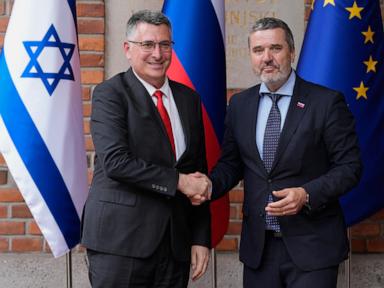
Consider what happens next on a damp Tuesday morning in Ljubljana, when a brass plaque is screwed into a limestone wall. A flag is unfurled. It is not an ordinary diplomatic outpost. It is a new Israeli embassy, planted firmly in the heart of central Europe at a moment when the ground beneath international diplomacy is cracking wide open.
To understand why this matters, you have to throw away the press releases. You have to look at the invisible lines drawn on maps by people who have never smelled pine needles in Triglav National Park or tasted salt in Piran.
For decades, Slovenia’s foreign policy existed in a comfortable, predictable key. It was the good European citizen. It followed the consensus. It voted with the block, spoke softly at the United Nations, and preferred trade over confrontation. When it came to the Middle East, Ljubljana maintained an official distance, keeping its head down, trading quietly where it could, avoiding the bruising theater of Jerusalem's endless ideological tug-of-war. Small nations like options. Small nations hate corners.
Then the room shrank.
In May 2024, the Slovenian government made a choice that sent ripples through diplomatic corridors from Washington to Tel Aviv. It formally recognized Palestinian statehood. To the casual observer reading an agency wire in London or New York, it was just another data point in a slow-motion realignment. To Jerusalem, it was a sharp, biting escalation.
Diplomacy is often imagined as a game of chess played by men in tailored suits under crystal chandeliers. It is not. It is closer to the weather. It is pressure systems colliding, cold fronts meeting warm moist air, creating sudden squalls that nobody predicted.
When Slovenia took that step, the diplomatic atmosphere dropped to zero. Recalibration became mandatory. You do not ignore a country just because it is small, especially in the European Union where every single vote in the Council carries the weight of a veto or a consensus blocker.
So Israel packed a suitcase and moved in down the street.
Why Ljubljana? Why now?
To answer that, let us walk through a hypothetical afternoon in the office of a mid-level strategist sitting in the Kirya in Tel Aviv or an aide in the Slovenian Ministry of Foreign Affairs on Prešeren Square. Imagine the friction. Imagine the quiet phone calls made after midnight.
A permanent embassy is not just a building where people stamp visa applications. It is an embassy of permanent listening. It is a physical anchor dropped into a shifting seabed. For Israel, operating in Europe right now feels like walking through a minefield blindfolded. Every capital is a potential flashpoint. Every university quad, every parliament floor, every trade delegation holds the risk of an ambush. By establishing a fully-fledged diplomatic mission in Ljubljana rather than running operations out of Vienna—as they had for years—they are making a deliberate statement of permanence and engagement.
They are saying: We see you shifting. We see you stepping out of the crowd. And we refuse to be a distant abstraction to you.
And for Slovenia? This is where the plot thickens into something genuinely human.
Small countries suffer from a profound paradox. They desperately want to be moral actors on the global stage, to champion human rights, to be the conscience of the continent. But conscience has a cost. When you stand up in the grand hall of the UN and take a definitive, controversial stand, you draw the gaze of empires. You invite retaliation, diplomatic cold shoulders, and economic friction.
Slovenia’s leadership knew what was coming. They knew that recognizing Palestinian statehood while keeping Israeli ties at arm's length would invite an icy response. Opening the door to a resident Israeli ambassador is the pragmatic counterweight. It is the diplomatic equivalent of sliding back down to earth after a high-wire act. It says we can disagree on the map of the Middle East, but we still have to share the same room in Brussels, we still have to buy technology, we still have to manage cybersecurity, intelligence sharing, and the messy reality of trade in the twenty-first century.
It is an awkward marriage born of necessity.
Look closer at the demographic and economic wires connecting these two disparate places. You will find threads running through cyber defense networks, agricultural technology, and academic research labs. Israel is a nation forged in high-stakes technological innovation out of sheer survival instinct. Slovenia is a nation of engineers, precision manufacturers, and quiet thinkers nestled in the green heart of Europe. They speak different languages—Hebrew with its staccato Semitic rhythm, Slovenian with its archaic dual grammatical forms—but they speak the fluent language of modern survival in a world that is becoming more hostile by the month.
The opening of this embassy is not a celebration of peace. It is not a ribbon-cutting ceremony accompanied by champagne and declarations of historic brotherhood.
It is a trench.
It is two governments digging in, deciding that even when relations are strained to the breaking point, cutting the telephone wires is a luxury neither side can afford.
Think about what it means to be a diplomat assigned to this new post. You arrive in a city where the air smells of wet stone and roasted chestnuts from street carts. You rent an apartment overlooking a courtyard where laundry hangs on lines between old red-tiled roofs. You go to your office, and your inbox is a burning wreckage of diplomatic notes, protest letters, trade negotiations, and security briefings. You walk out into the evening, past the Dragon Bridge where the mythical beasts of stone bare their teeth to the river, and you wonder if anything you do tomorrow will matter, or if the next storm will wash the whole structure away.
That is the hidden cost of modern statehood. We watch the headlines break—Israel opens embassy in Slovenia—and we consume it as a dry fact, a bullet point on a ticker tape, a sterile transaction between governments.
We forget the human pulse beneath it. We forget the calculus of fear, ambition, pride, and necessity that drives nations to plant flags in soil that is sometimes hostile, sometimes indifferent, but always watching.
The rain continues to fall over the Ljubljanica. The bridge stones gleam like wet slate. Across the city, behind the glass of a newly minted diplomatic mission, a light stays on late into the night, casting a pale, rectangular glow onto the dark water below.