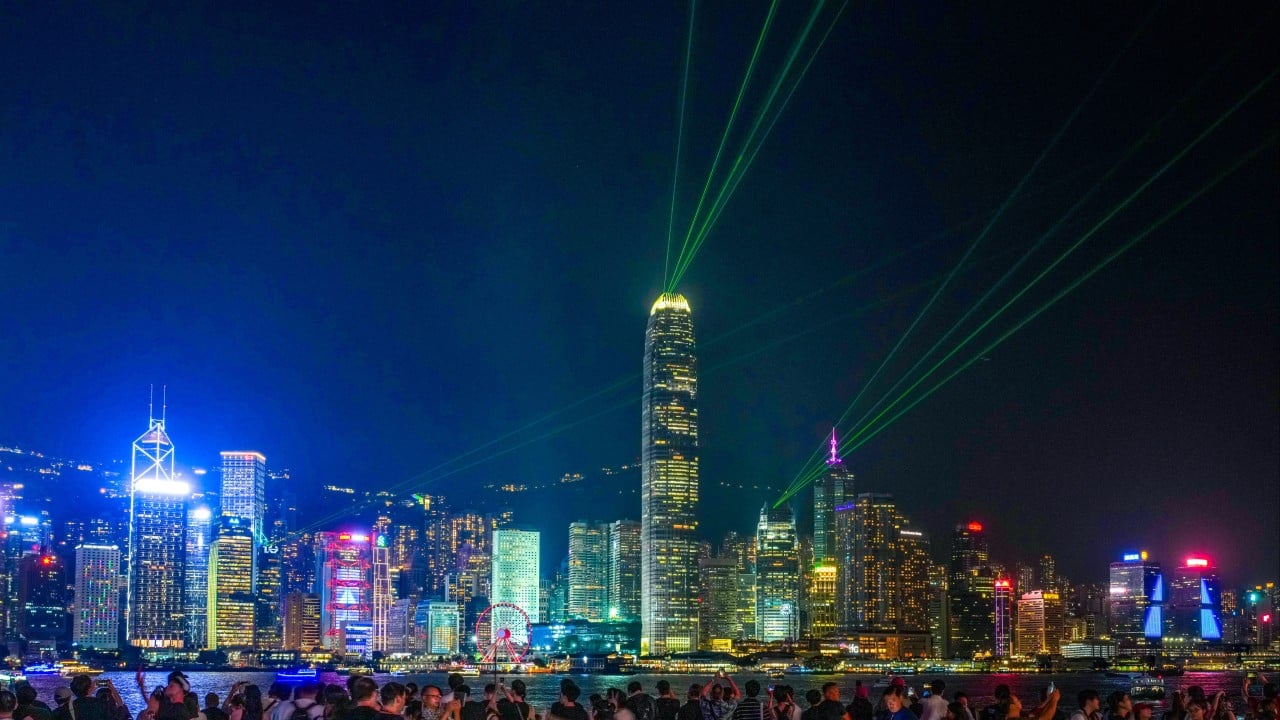
Static nightly spectacles fail when audience expectations evolve faster than physical infrastructure. For over two decades, Hong Kong’s Victoria Harbour relied on A Symphony of Lights—a synchronized laser, LED, and searchlight show spanning more than forty skyscrapers—to anchor its nighttime economy. While the installation initially generated significant earned media and established a visual baseline for waterfront tourism, its retirement marks an operational necessity rather than a cultural loss. The city is shifting from a monolithic, fixed-schedule light show toward a decentralized, high-frequency event architecture designed to capture higher per-capita visitor spending and extend overnight stays.
The Structural Obsolescence of Static Nighttime Anchors
To understand why Hong Kong is retiring its flagship harbor show, one must evaluate the diminishing returns of fixed-asset entertainment in urban tourism. A Symphony of Lights operated on a rigid 8:00 PM daily schedule. In hospitality economics, predictable, zero-cost public spectacles suffer from a specific monetization bottleneck: they generate high foot traffic with low dwell-time conversion.
When a tourist attraction occurs at a fixed hour without variation, visitor behavior becomes hyper-compressed. Spectators arrive at the Tsim Sha Tsui waterfront at 7:45 PM, consume the fourteen-minute visual product, and disperse by 8:20 PM. Because the show requires no ticketing, creates no scarcity, and offers no narrative progression across seasons, it fails to incentivize repeat visitation or adjacent retail expenditure.
Three operational liabilities accelerated the show's obsolescence:
- Visual Normalization and Sensory Inflation: When A Symphony of Lights launched in 2004, synchronized architectural lighting across a dense skyline represented a technical novelty. Over twenty years, high-lumen LED facades, projection mapping, and synchronized drone swarms became baseline expectations across competing Asian hubs, including Shenzhen, Shanghai, and Singapore. Against modern pixel-mapped media facades, traditional searchlights and static rooftop lasers register as low-resolution artifacts.
- Coordination Friction Across Private Assets: Unlike purpose-built theme park installations owned by a single operator, Victoria Harbour’s light show required continuous technical alignment across dozens of privately held commercial towers. Upgrading hardware across disparate building management systems created high capital expenditure friction. If three central skyscrapers underwent facade renovations or experienced hardware failures, the visual symmetry of the entire harbor degraded.
- Zero Weather Resilience: Atmospheric conditions in the Pearl River Delta frequently produce low cloud ceilings, coastal fog, and seasonal haze. Because beam-based light shows rely on atmospheric scattering to make lasers visible, heavy fog obscures the upper tiers of the skyscrapers, reducing the spectacle to diffused glare.
The New Architecture of Hong Kong Waterfront Monetization
Retiring the legacy show clears operational bandwidth for a multi-tiered nighttime strategy. Rather than relying on a single daily broadcast, tourism planners and commercial landlords are deploying a portfolio approach that segments audiences by spending capacity, seasonality, and cultural affinity. This transition rests on four distinct operational pillars.
1. Periodic High-Intensity Pyrotechnics and Drone Choreography
Replacing a low-intensity daily show with scheduled, high-impact events alters the demand curve for waterfront real estate and hotel inventory. Monthly or festival-aligned firework displays and large-scale Unmanned Aerial Vehicle (UAV) formations introduce temporal scarcity.
Scarcity drives advance booking behavior. When a spectacle occurs once a month rather than every night, regional travelers from the Greater Bay Area and international visitors structure their itineraries around specific dates. Hotels along Salisbury Road and Wan Chai can implement dynamic pricing models during these peak windows, capturing higher Average Daily Rates (ADR) that a static daily show could never support. Furthermore, UAV swarms allow for rapid thematic reconfiguration—shifting from Lunar New Year iconography to international art festival motifs without physical hardware alterations on private skyscrapers.
2. Decentralized District Activation
A centralized harbor show concentrates pedestrian density along a narrow two-kilometer stretch of the Kowloon waterfront, creating crowd-management bottlenecks while leaving adjacent commercial districts under-monetized after dark. The replacement model distributes nighttime programming across multiple nodes along both sides of Victoria Harbour.
By integrating curated night markets, waterfront dining promenades, and pop-up cultural installations in districts like West Kowloon Cultural District, Central Harbourfront, and Wan Chai, the city shifts from passive viewing to active consumption. In spatial economics, increasing the number of friction-free transaction points—such as outdoor food and beverage kiosks, licensed alcohol zones, and late-night retail—directly increases the marginal propensity to consume among pedestrians who would otherwise simply stand at a railing and watch a light show.
3. Dynamic Architectural Media and Interactive Facades
While the unified 8:00 PM laser broadcast is ending, individual skyscrapers are transitioning toward independent, ultra-high-definition LED curtain walls and algorithmic light art. Institutions like M+ in West Kowloon demonstrate how a single architectural canvas can function as a rotating digital gallery.
This decentralized visual strategy solves the coordination problem that plagued A Symphony of Lights. Individual property developers now compete to commission bespoke digital art and commercial brand activations for their own facades. This aligns private capital incentives with public aesthetic value: landlords fund the hardware upgrades because the facades serve as high-visibility branding assets and cultural landmarks, removing the burden of continuous municipal subsidy.
4. Cultural and Intellectual Property Integration
Modern destination marketing relies heavily on Intellectual Property (IP) partnerships and immersive storytelling rather than abstract light patterns. Visitors increasingly travel for specific, shareable cultural experiences—whether large-scale inflatable harbor installations, illuminated drone narratives tied to local cinema history, or interactive light festivals synchronized with live symphonic performances.
Abstract beams of light lack narrative hooks. By anchoring waterfront programming to recognizable cultural IP, art biennials, and culinary festivals, Hong Kong creates distinct marketing campaigns for different demographic segments throughout the calendar year.
The Economics of Dwell Time and Per-Capita Spend
The fundamental objective behind retiring A Symphony of Lights is correcting an imbalance in Hong Kong’s tourism recovery metrics: strong arrival volume paired with softer per-capita retail and dining expenditure.
To understand how nighttime programming affects the balance sheet of a destination, consider the relationship between Dwell Time ($T_d$), Transaction Density ($\rho_t$), and Per-Capita Spend ($S_p$):
$$S_p = f(T_d \times \rho_t \times C_v)$$
Where $C_v$ represents the average transaction value. A Symphony of Lights optimized for a single metric—footfall volume—while suppressing $T_d$ and $\rho_t$. Spectators stood in non-commercial public viewing zones for twenty minutes and left without executing a financial transaction.
The post-Symphony framework attacks all three variables simultaneously:
- Extending Dwell Time ($T_d$): Multi-hour waterfront festivals, live music stages, and night bazaars encourage visitors to remain outdoors for two to three hours rather than twenty minutes.
- Increasing Transaction Density ($\rho_t$): Permitting commercial pop-ups, craft beverage stalls, and artisanal retail along the promenade converts passive spectators into active consumers within arms' reach of the waterfront view.
- Elevating Transaction Value ($C_v$): Pairing premium harborfront dining experiences and harbor cruise packages with scheduled pyrotechnic or drone events allows hospitality operators to bundle high-margin food and beverage packages with guaranteed sightlines.
Operational Risks and Execution Bottlenecks
Shifting from an automated daily light show to a dynamic, event-driven nighttime economy introduces significant operational complexity. Replacing predictable infrastructure with continuous programming exposes the city to four execution risks that require disciplined management.
Weather Volatility and Cancellation Costs
Unlike permanent building-mounted lasers that operate automatically regardless of rain, drone swarms and pyrotechnic barges face strict meteorological thresholds. High wind speeds, heavy precipitation, or sudden squalls require immediate cancellation of UAV formations to prevent hardware loss and public safety hazards.
If Hong Kong anchors its marketing around monthly drone and firework spectacles, weather-induced cancellations can generate acute visitor dissatisfaction and force hotels and cruise operators to process costly refunds. Mitigating this requires building hybrid programming—pairing outdoor spectacles with weather-proof indoor cultural anchors, late-night museum hours, and covered waterfront dining zones so visitors retain high-value alternatives when harbor conditions deteriorate.
Regulatory Friction and Licensing Latency
Activating waterfront promenades with commercial vendors, live music, and late-night alcohol service demands rapid municipal permitting. Historically, Hong Kong’s regulatory environment enforced strict separation between public recreational spaces and commercial vending, resulting in long approval cycles for temporary event organizers.
If event producers face six-month permitting timelines to operate a weekend night market or install temporary lighting structures, the waterfront will lose momentum between major festivals. Sustaining a vibrant nighttime economy requires pre-approved, modular zoning along the harborfront where vetted operators can plug into existing power, water, and waste infrastructure with minimal bureaucratic friction.
Audience Fatigue from Repetitive Programming
Replacing a repetitive daily light show with repetitive monthly drone shows merely shifts the obsolescence curve by a few years. Aerial drone choreography relies heavily on novelty; once a visitor has seen standard 3D shapes formed in the sky, the marginal excitement drops sharply.
To avoid rapid audience fatigue, creative directors must treat the harbor as a curated exhibition space rather than a fixed entertainment product. This means rotating artistic direction, integrating synchronized spatial audio via mobile applications so spectators experience immersive soundscapes without noise pollution across residential districts, and combining physical water-screen projections with aerial elements.
Cost Escalation and Subsidy Dependency
A Symphony of Lights had a relatively low marginal operating cost once the initial hardware was installed on the participating buildings; running the automated show each night required minimal labor and electricity. Conversely, live events, marine pyrotechnics, crowd-control policing, and temporary festival infrastructure carry high recurring operational expenses.
If the government or tourism board subsidizes every waterfront activation indefinitely, the fiscal return on investment will erode. The long-term viability of the post-Symphony model depends on transitioning from publicly funded spectacles to commercially self-sustaining ecosystems—where ticketed waterfront VIP zones, brand sponsorships, and revenue-sharing agreements with food and beverage operators underwrite the production costs of free public entertainment.
Strategic Deployment for Hospitality and Tourism Operators
The retirement of A Symphony of Lights signals a structural market shift for hotels, harbor cruise operators, retail landlords, and destination marketers operating in Hong Kong. Relying on passive municipal foot traffic is no longer a viable acquisition strategy. Operators must realign their commercial models around the new event-driven harbor architecture:
- Transition from Fixed Daily Packages to Event-Synchronized Inventory: Harbor cruise lines and waterfront restaurants must abandon static nightly dinner-and-show pricing. Inventory should be segmented into standard operational nights—anchored by culinary quality and live acoustic entertainment—and peak event nights synchronized with scheduled pyrotechnics, drone shows, and art festivals, priced at a 30% to 50% premium.
- Monetize Sightlines Through Tiered Access: Commercial landlords and rooftop venues overlooking Victoria Harbour should invest in modular outdoor terrace infrastructure. As public waterfront promenades become more crowded during high-intensity periodic events, affluent travelers and corporate groups will pay substantial premiums for unobstructed, crowd-free viewing platforms bundled with curated hospitality.
- Integrate Digital Wayfinding and Spatial Audio: Tourism technology providers and district operators must build frictionless mobile layers over the physical waterfront. Because decentralized events span multiple districts from West Kowloon to Causeway Bay, real-time digital guides that direct visitors from a drone show in Tsim Sha Tsui to a late-night culinary pop-up in Central via Star Ferry routes will capture the transitional spending that currently leaks out of the system.
- Anchor Marketing on Cultural Scarcity Rather Than Permanent Landmarks: Destination marketers must retire legacy imagery of static skyscraper laser beams. Campaign assets should highlight time-bound cultural collisions—emphasizing that Hong Kong’s harbor is a continuously mutating stage where the visual and culinary experience changes every month, compelling repeat regional travelers to book immediately rather than deferring their visit.