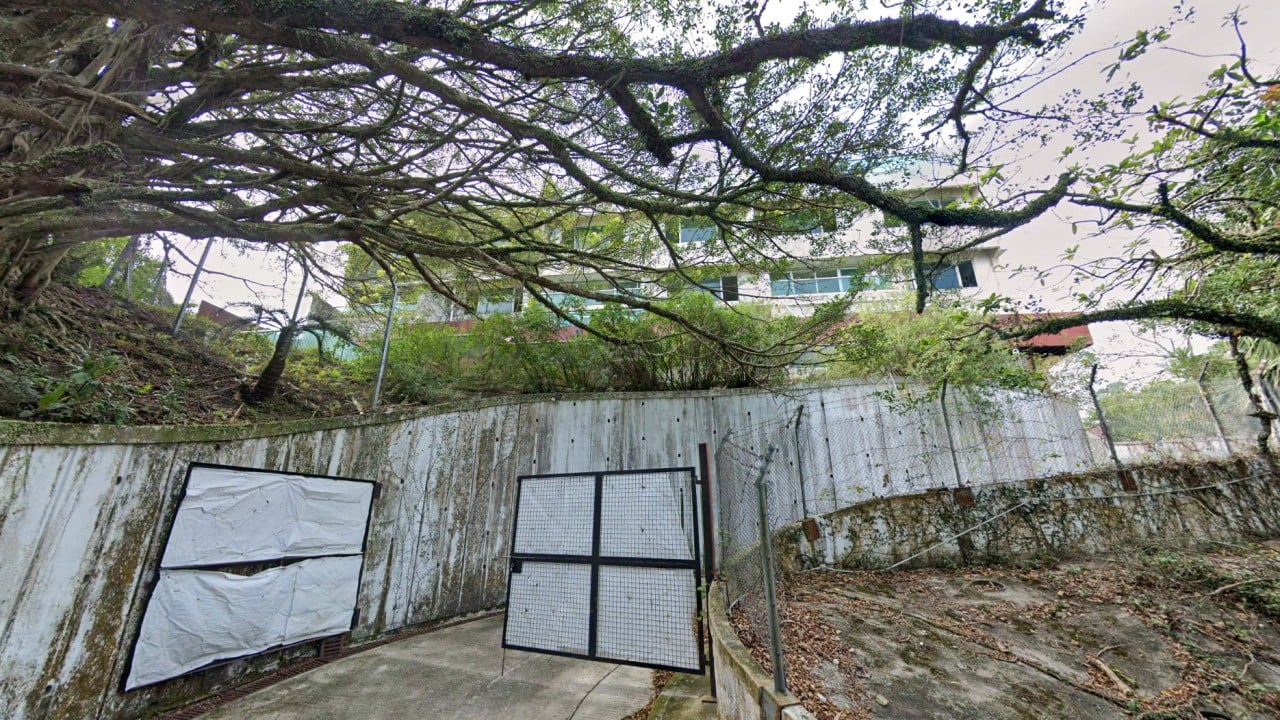
The era of the "trophy asset" as an unbreakable vault for wealth has ended. In a market that once defined global excess, the forced sale of premier properties at Mount Nicholson on The Peak is not just a personal financial setback for a single businessman—it is a autopsy of a dead speculative model. Chen Hongtian, the tycoon behind Cheung Kei Group, is currently witnessing the systematic dismantling of a real estate portfolio that was supposed to be bulletproof. His acquisition of units at 8 Mount Nicholson for roughly US$255 million (HK$2.1 billion) represented the peak of the mountain, both literally and figuratively. Today, those same properties are being offloaded by receivers at staggering losses, signaling a structural shift in how Hong Kong’s elite assets are valued and who actually owns them.
This isn't a standard market dip. It is a fundamental repricing of risk.
The Mechanics of a Forced Exit
When a property is seized by a bank, the priority shifts from "maximizing value" to "recovering debt." This distinction is where billions of dollars in paper wealth evaporate. Chen’s acquisitions were fueled by a level of cheap credit that no longer exists. During the mid-2010s, the strategy was simple: borrow against existing assets to buy more prestigious ones, assuming the capital appreciation would always outpace the interest.
That math failed.
The properties at Mount Nicholson, once the most expensive residences in Asia per square foot, are now being marketed by creditors who are more interested in liquidity than prestige. When a receiver takes control, the "asking price" becomes a fiction. The market knows the seller is under duress. This creates a predatory environment where savvy buyers wait for the third or fourth price cut, knowing the bank has a timeline that the previous owner did not.
For Chen, the losses are compounded by the sheer scale of the initial overpayment. Buying at the absolute top of a cycle—driven by a frenzy of mainland Chinese capital looking for a safe harbor—left no margin for error. When the tide of capital tightened and interest rates spiked, the "safe harbor" became a debt trap.
The Illusion of the Peak
The Peak has always functioned as a barometer for the health of the Hong Kong-Mainland financial bridge. For decades, owning a piece of this fog-covered ridge was the ultimate signal of "having arrived." However, the narrative has shifted. The buyers who once scrambled for these units are now facing their own domestic liquidity crunches.
We are seeing a massive transition from "Mainland Glamour" to "Institutional Realism."
The current valuation of these properties is being dragged down by several factors that the initial headlines often overlook:
- Maintenance and Holding Costs: A vacant luxury property on The Peak costs millions annually just to maintain. Creditors are unwilling to burn cash to wait for a market recovery that might be five years away.
- The Vanishing Premium: The "prestige premium"—the extra 30% or 40% people paid just for the address—has disappeared. Buyers are now looking at the yield and the actual replacement cost, not the ego-boost of the ZIP code.
- The Shadow Inventory: Chen is not the only one. There is a quiet queue of distressed assets waiting to hit the market. Every time a bank successfully sells one of these units at a 30% discount, they set a new, lower benchmark for the entire neighborhood.
Interest Rates and the Death of the Carry Trade
The fundamental driver behind this collapse is the decoupling of Hong Kong's property yields from its cost of capital. For years, investors could borrow at 2% and watch property values rise by 10% annually. It was the ultimate carry trade. Now, with the Hong Kong Dollar pegged to the US Dollar, the city has been forced to import high interest rates regardless of its local economic conditions.
Borrowing costs have effectively tripled. When you are carrying hundreds of millions in debt, a 3 percentage point rise in interest isn't just an inconvenience; it's a terminal event for the cash flow.
The wealthy are not immune to the laws of gravity. In fact, because they are more heavily leveraged, they fall faster. The creditors—often international banks like HSBC or local giants like Hang Seng—have shifted their risk appetite. They are no longer willing to "extend and pretend." They want the cash back on the balance sheet, even if it means booking a loss on the principal.
A New Class of Buyer
The people stepping into the void left by crumbling tycoons are different. They are not the flamboyant industrialists of the 2010s. They are family offices from Southeast Asia, local old-money clans who sat out the last decade of madness, and cash-rich entities looking for "generational" entry points.
These buyers are disciplined. They are not bidding against each other in a frenzy. They are making "low-ball" offers and walking away if they aren't met. This creates a floor for the market, but that floor is significantly lower than anyone in the real estate industry wants to admit.
Comparison of Acquisition vs. Current Market Reality
| Property Metric | The 2017 Peak | The 2026 Reality |
|---|---|---|
| Buyer Motivation | Ego and Capital Flight | Value and Wealth Preservation |
| Financing | High Leverage (70%+) | All-Cash or Low LTV |
| Market Velocity | Multiple bids within weeks | Months of "Price Discovery" |
| Yield Expectation | Irrelevant | Must exceed 3% |
The Regional Ripple Effect
Hong Kong’s luxury sector does not exist in a vacuum. What happens on The Peak eventually filters down to Mid-Levels, then to the mass market in the New Territories. When the most desirable real estate in the city loses its luster, it shakes the confidence of the middle-class homeowner.
The wealth effect is reversing. For twenty years, the rising value of Hong Kong property made everyone feel richer, driving consumption and luxury spending. Now, the sight of a billionaire losing his crown jewels creates a psychological chill. If the smartest, best-connected players in the game can lose US$100 million on a single deal, what chance does a retail investor have?
Furthermore, the "China Premium" is being re-evaluated. The assumption that there would be an endless supply of mainland buyers to bail out the Hong Kong market has proven false. Capital controls in Beijing, combined with a domestic property crisis in the mainland, have severed the main artery of the Hong Kong luxury market.
The Strategy of the Receivers
To understand where the price lands, you have to look at the behavior of the receivers, such as PriceWaterhouseCoopers or FTI Consulting. Their job is clinical. They are appointed by the court or the bank to liquidate. They don't have an emotional attachment to the "record-breaking" history of the building.
They often use a "tender" process. They invite bids, pick the least-worst one, and move on. This process is inherently deflationary. It bypasses the traditional real estate agent's hype machine and cuts straight to the bone of what the market is willing to pay today.
Structural Decay vs. Cyclical Dip
Is this just a bad patch, or is the Hong Kong property miracle over?
Evidence suggests a structural realignment. The city is no longer the sole gateway to China, and China is no longer the high-growth engine it was in 2015. The geopolitical landscape has shifted the risk profile of holding large, illiquid assets in Hong Kong. Investors now demand a "risk premium" to hold property here, whereas they used to pay a "safety premium."
The loss taken on the Mount Nicholson properties is a cold, hard measurement of that new risk premium.
The Reality of "Paper Wealth"
The Cheung Kei Group’s struggle highlights the fragility of net worth when it is tied to appraised values rather than realized cash. Chen Hongtian was once estimated to be worth billions. On paper, he was a titan. But the moment the credit markets froze and the property values dipped, that wealth evaporated because it was built on a foundation of debt and optimistic valuations.
This is a lesson for the entire industry: a property is only worth what a buyer can pay for it in 24 hours during a crisis. Anything else is just marketing.
The liquidation of these Peak properties is the final curtain call for the era of unbridled leverage. The towers still stand, the view remains spectacular, but the price of entry has been brutally reset. This isn't a "buying opportunity" for the masses; it is a warning for those who think the top of the mountain is a safe place to stand when the weather changes.
If you are looking at the luxury market now, ignore the asking prices. Look at the price of the last forced sale. That is the only truth left in the market.
Would you like me to analyze the specific debt structures of the other major distressed developers in the Hong Kong sector?