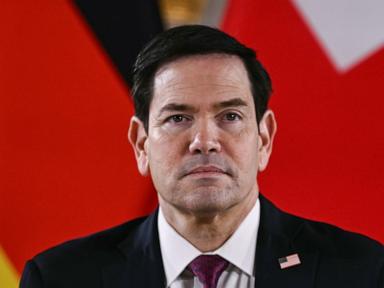
The United States government officially reclassified three of Guatemala's oldest drug trafficking families—Los Lorenzanas, Los Huistas, and Los Mendoza—as terrorist organizations. Announced by Secretary of State Marco Rubio and the Treasury Department's Office of Foreign Assets Control (OFAC), the move places Los Lorenzanas on the Foreign Terrorist Organization (FTO) list while slapping all three groups with Specially Designated Global Terrorist (SDGT) sanctions. By treating these regional smuggling syndicates like al-Qaeda or ISIS rather than conventional narcotics networks, Washington has unlocked sweeping financial, immigration, and military-adjacent legal authorities across Central America's most volatile transit corridors.
Wire reports treat this as another routine sanctions package. They miss the structural shift happening beneath the surface.
For forty years, U.S. counter-narcotics policy in Central America relied on kingpin indictments, extradition treaties, and targeted asset freezes under traditional drug laws. That playbook failed to break the logistical backbone moving cocaine, methamphetamine, and fentanyl precursors north. By pulling the counter-terrorism lever, the Trump administration is not just freezing bank accounts. It is criminalizing the entire commercial ecosystem—from legitimate cattle ranches to regional banks—that allows Guatemalan transportistas to service Mexican cartels.
Why Washington Called Them "Gangs" (And Why That Label Is Wrong)
The initial headlines got the terminology wrong. Los Lorenzanas, Los Huistas, and Los Mendoza are not street gangs. Calling them gangs confuses urban extortion crews like MS-13 or Barrio 18 with entrenched, multi-generational landowning dynasties.
In Guatemala, these syndicates are known as transportistas. They do not fight over street corners in Guatemala City. They own the dirt under the highways, the clandestine airstrips carved into the Petén jungle, and the border crossings linking Honduras to Mexico. Since the 1980s and 1990s, these three clans have operated as the indispensable freight forwarders of the Western Hemisphere's drug trade.
Mexican cartels—specifically the Sinaloa Cartel and the Cartel de Jalisco Nueva Generación (CJNG), both designated as FTOs by Washington in February 2025—rarely move bulk shipments through Central America on their own. Instead, they subcontract.
- Los Lorenzanas: Operating out of the eastern department of Zacapa since the 1990s, the Lorenzana clan built an empire moving contraband before pivoting to bulk cocaine shipments. Even after patriarch Waldemar Lorenzana Lima was arrested in 2011 and extradited, his sons kept the machinery running, maintaining violent control over eastern transit routes and clashing directly with state security forces.
- Los Huistas: Based in the rugged northwestern mountains of Huehuetenango along the Mexican border, Los Huistas evolved from cocaine brokers into synthetic drug manufacturers. According to Treasury findings, they import precursor chemicals to cook methamphetamine alongside cultivating opium poppies. Despite the high-profile arrest of alleged leader Eugenio Darío Molina-López ("Don Darío") in San Diego in April 2026 and the earlier prosecution of co-leader Aler Baldomero Samayoa Recinos, the organization's political protection network in Huehuetenango remained intact.
- Los Mendoza: Rooted in Izabal and Petén since the 1980s, the Mendoza family blended narcotics logistics with aggressive land acquisition. They laundered cartel proceeds through sprawling cattle ranches, African palm plantations, and real estate holdings, turning illicit cash into legitimate agricultural dominance.
When the State Department designated Los Lorenzanas as a full Foreign Terrorist Organization under Section 219 of the Immigration and Nationality Act, and OFAC hit Los Huistas and Los Mendoza with SDGT status under Executive Order 13224, Washington effectively declared that acting as a logistics contractor for a Mexican cartel is now legally indistinguishable from financing international terrorism.
The Legal Mechanics Behind the Terrorist Label
To understand why this designation terrifies Central American elites far more than a standard Drug Enforcement Administration (DEA) indictment, look at the statutory difference between narcotics sanctions and terrorism sanctions.
Under the Foreign Narcotics Kingpin Designation Act or Executive Order 14059—which OFAC had already used against Los Huistas back in 2022—penalties are largely financial and targeted. U.S. citizens cannot do business with sanctioned individuals, and assets under U.S. jurisdiction are frozen. It is a serious headache for a cartel accountant, yet family front companies routinely route money through local banks, agricultural co-ops, and shell firms outside American reach.
The FTO and SDGT designations change the rules of engagement.
First, material support becomes a federal felony with extraterritorial reach. Under 18 U.S.C. § 2339B, anyone who knowingly provides "material support or resources" to a designated FTO faces up to 20 years in U.S. federal prison—or life if death results—even if the act occurs entirely outside the United States. "Material support" does not just mean handing over rifles or bricks of cocaine. It includes financial services, lodging, transportation, communications equipment, and expert advice. A Guatemalan trucking company hauling cattle for a Lorenzana front firm, or a local municipal official accepting campaign cash from a Huista intermediary, is no longer just complicit in local corruption. They are now exposed to U.S. counter-terrorism prosecution.
Second, secondary sanctions weaponize the global banking system. Under Executive Order 13224, as amended by Executive Order 13886, the Treasury Department can cut off any foreign financial institution that knowingly conducts or facilitates a significant transaction on behalf of an SDGT. Guatemalan banks rely on U.S. correspondent accounts to clear dollar transactions and process billions of dollars in annual remittances from the United States. No bank executive in Guatemala City will risk losing access to the U.S. dollar clearing system to protect a regional cattle baron in Zacapa or Huehuetenango. Compliance departments across Central America will be forced to aggressively de-risk entire geographic sectors.
Third, the FTO label triggers automatic immigration bars and asset-seizure mandates. Any non-citizen who has ever solicited funds for, or provided material support to, Los Lorenzanas is permanently inadmissible to the United States and subject to immediate deportation—a devastating blow to the extended family networks of Guatemalan political and business figures who routinely travel to Miami, Houston, and Los Angeles.
Violence in Zacapa and the Timing of the Crackdown
The November 13, 2026 announcement in Washington did not happen in a vacuum. It landed in the middle of an acute security crisis on the ground in eastern Guatemala.
In the weeks leading up to Rubio's press statement, the departments of Zacapa and Izabal—the historical heartlands of Los Lorenzanas and Los Mendoza—erupted in coordinated armed attacks. Gunmen targeted local officials, including the murder of a lawmaker, and carried out multiple mass shootings. On November 13, the exact day Washington unveiled the terrorist designations, two separate armed attacks in Zacapa and Izabal left seven people dead, including five killed in La Majada, Zacapa.
Twenty-four hours later, the Guatemalan government responded with Government Decree 8-2026, imposing a 30-day state of siege across both Zacapa and Izabal effective November 15. The emergency decree suspended constitutional guarantees, allowing security forces to detain suspects and raid properties without judicial warrants while restricting public gatherings and vehicle movement. Even after troops deployed, four more people were gunned down in Zacapa over the following 48 hours, prompting the U.S. Embassy to ban its personnel from entering either department.
This sequence reveals the tactical coordination behind the sanctions. By designating Los Lorenzanas as an FTO and naming Los Mendoza an SDGT just as Guatemalan security forces moved into their strongholds under emergency powers, Washington synchronized financial strangulation with physical military pressure. While Guatemalan soldiers blockaded highways in Zacapa and Izabal, OFAC froze the clans' ability to pay off informants, buy fuel, or move cash across borders.
The Overlooked Fallout for Legitimate Commerce and Remittances
Here is the part that Washington's press releases gloss over. When you drop counter-terrorism sanctions onto rural economies where illicit and licit businesses have been fused together for four decades, the collateral damage hits ordinary people first.
In departments like Huehuetenango, Zacapa, Petén, and Izabal, these three clans are not shadow entities hiding in caves. They are major regional employers. Over thirty years, Los Mendoza and Los Lorenzanas absorbed vast tracts of agricultural land, buying up cattle ranches, palm oil operations, transport fleets, and construction firms. In municipalities like Santa Ana Huista or La Reforma, local commerce runs on money that has passed through clan-linked enterprises at least once.
When OFAC warns foreign banks of secondary sanctions, financial institutions do not conduct surgical audits. They use a meat cleaver. Banks freeze accounts tied to entire industries—cattle ranching, regional freight, agro-exporting—in sanctioned corridors rather than risk a billion-dollar fine from the U.S. Treasury.
The immediate impact on remittance flows was so severe that security advisories had to explicitly clarify that ordinary family remittances to residents of Zacapa and Izabal were not automatically illegal, while warning senders to avoid informal transfer networks and document every relationship. For thousands of Guatemalan families relying on wire transfers from relatives in the United States, heightened compliance scrutiny means frozen payouts, delayed funds, and sudden account closures.
Does Treating Cartels Like Terrorists Actually Work
Legal scholars and veteran counter-narcotics officials remain sharply divided on whether stretching counter-terrorism statutes to cover profit-driven smugglers produces lasting results—or merely creates dangerous legal precedents.
The case for the FTO designation is straightforward. Traditional law enforcement treats drug trafficking as a series of individual crimes committed by discrete defendants. You arrest one boss, and his brother or lieutenant steps in the next morning. Terrorism designations attack the organization as a continuous enterprise. By criminalizing everyone who provides logistical, financial, or political cover, Washington aims to isolate these clans from the corrupt judges, mayors, and businessmen who keep them untouchable inside Guatemala. In Huehuetenango, where Los Huistas placed relatives and allies directly into municipal offices, the Guatemalan Congress, and even the Central American Parliament, threatening political facilitators with U.S. terrorism charges carries a deterrent weight that local prosecutors could never match.
Yet the counter-arguments carry serious weight.
First, ideology is not profit. Terrorist groups like ISIS or Hezbollah rely on ideological recruitment and centralized command structures that fracture when their financing channels are severed. Drug transportistas operate in a pure supply-and-demand market. As long as American consumers buy cocaine, methamphetamine, and fentanyl, someone will move those shipments across the 600-mile border between Guatemala and Mexico. If OFAC bankrupts Los Mendoza's trucking front or Guatemalan troops dismantle a Lorenzana cell in Zacapa, smaller, more fragmented smuggling networks immediately bid for the Sinaloa Cartel's contracts. Fragmentation rarely reduces violence; historically, as seen when Los Zetas invaded Guatemala in 2008 and shattered old clan truces, breaking established trafficking monopolies triggers bloody turf wars as upstarts fight over vacant corridors.
Second, militarization risks. Labeling criminal syndicates as foreign terrorists blurs the line between law enforcement and armed conflict. Critics of the administration's broader 2025–2026 cartel designation campaign point out that while an FTO listing does not legally authorize unilateral U.S. military strikes on foreign soil, it lays the rhetorical and intelligence groundwork for expanded Pentagon involvement, cross-border surveillance operations, and lethal interdiction missions. For a fragile democracy like Guatemala—still recovering from a 36-year civil war where counter-insurgency doctrines devastated rural Indigenous communities—re-framing rural crime control as counter-terrorism carries deep institutional hazards.
Third, the political asymmetry problem. Sanctions can freeze dollar accounts in New York and force Guatemalan banks to close checking accounts. They cannot reform Guatemala's judiciary. For years, U.S. prosecutors indicted Huista and Lorenzana operatives only to watch Guatemalan courts stall extradition requests or dismiss money-laundering cases through bribed prosecutors. Without sustained domestic judicial enforcement, sanctions simply push illicit commerce deeper into cash, cryptocurrency, and barter networks—making financial intelligence harder, not easier, for U.S. agencies to track.
The New Reality on the Southern Border
Washington's decision to brand Los Lorenzanas, Los Huistas, and Los Mendoza as terrorists marks the end of an era in hemispheric security. The neat bureaucratic wall separating counter-narcotics from counter-terrorism is gone.
For Guatemalan politicians, regional banks, and agro-export conglomerates operating near the Mexican and Honduran borders, the message from the State Department and Treasury is unmistakable: the era of plausible deniability has expired. Whether these sanctions dismantle the trafficking corridors or simply force the cartels to hire a new generation of subcontractors, every bank transfer, land deed, and political donation in northern Guatemala now carries the legal poison of international terrorism.