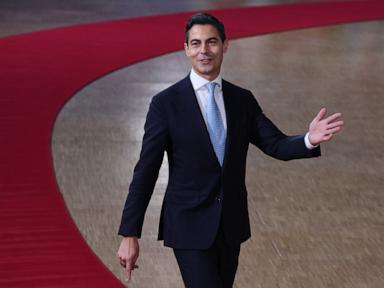
Dutch Prime Minister Dick Schoof is locked in emergency marathon negotiations in The Hague as his fragile four-party coalition fractures over a disputed multi-billion-euro tax package. The deadlock centers on a proposed €2 billion tax relief package aimed at lower- and middle-income households, alongside bitter disagreements over Value Added Tax (VAT) hikes on culture, sports, and media, and the looming threat of opposition vetoes in the Dutch Senate. Because the governing alliance lacks an upper house majority, any fiscal plan must survive not only internal ideological warfare between populist, centrist, and liberal factions, but also intense horse-trading with opposition lawmakers to avoid a total legislative collapse.
It is the oldest trap in Dutch politics. You cobble together an unnatural alliance out of ideological opposites, promise every voter demographic a fiscal miracle during the campaign, and then act shocked when the spreadsheet refuses to balance in November.
For months, the coalition—comprising Geert Wilders’ far-right Party for Freedom (PVV), the center-right People’s Party for Freedom and Democracy (VVD), the reformist New Social Contract (NSC), and the agrarian Farmer-Citizen Movement (BBB)—has operated on a razor-thin truce. That truce evaporated the moment budget realities collided with campaign pledges.
The Anatomy of a Fiscal Standoff
To understand why senior ministers are burning the midnight oil at the Catshuis, the official residence of the Prime Minister, you have to look at the structural math of the Dutch budget. The Netherlands prides itself on strict fiscal discipline, guided by the independent Bureau for Economic Policy Analysis (CPB) and rigid European Union deficit rules. You cannot simply print money or wish away a deficit in The Hague. Every euro spent or cut must be accounted for on the other side of the ledger.
Earlier in the budget cycle, the coalition agreed to offset tax cuts and spending increases by raising the VAT rate from 9 percent to 21 percent on a wide swath of everyday life. Hotel stays, books, newspapers, theater tickets, museum entries, and gym memberships were all placed on the chopping block. The goal was to raise roughly €2.3 billion to plug holes elsewhere in the state budget.
The political blowback was immediate and ferocious. Cultural institutions, sports federations, and media companies warned of an existential threat. More importantly, the coalition realized it had a fatal mathematical flaw in the Eerste Kamer, the Dutch Senate.
In the Dutch parliamentary system, the House of Representatives (Tweede Kamer) passes legislation, which then goes to the Senate for final approval. While the four coalition parties hold a comfortable majority in the lower house, they fall short in the upper chamber. They need opposition votes to pass the Tax Plan (Belastingplan).
Opposition parties from across the political spectrum—ranging from the green-left alliance GroenLinks-PvdA to the orthodox Christian SGP and the centrist D66—drew a hard line in the sand. They refused to back any budget that included the punitive VAT hikes on culture, sports, and media. Without those opposition votes, the entire tax package faces defeat in December, a scenario that would plunge the Dutch state into administrative chaos at the start of the new fiscal year.
Four Parties and Four Incompatible Visions
Prime Minister Dick Schoof, a former intelligence chief and civil servant brought in precisely because the four party leaders could not stomach one of their own taking the top job, is discovering the limits of technocratic mediation. He has no party base of his own to rally. His only leverage is the mutual assured destruction of a snap election, yet each of the four coalition partners is calculating whether a collapse might actually serve their immediate political interests.
The Party for Freedom (PVV) built its historic electoral victory on a promise of immediate financial relief for the "ordinary Dutchman." Geert Wilders wants lower healthcare deductibles, cheaper groceries, and reduced energy bills. For the PVV, delaying tax relief or appearing to squeeze working-class families to satisfy Brussels' budget rules is political poison. Wilders has repeatedly signaled that he will not be the fall guy for austerity, pushing relentlessly for the €2 billion in extra purchasing power relief even if it strains the deficit.
The People’s Party for Freedom and Democracy (VVD) sits on the exact opposite end of the fiscal spectrum. As the traditional party of Dutch business and fiscal conservatism, Finance Minister Eelco Heinen and VVD leader Dilan Yeşilgöz view reckless spending with deep suspicion. The VVD already swallowed hard to accept several populist spending measures during coalition formation. Now, they are drawing a line against raising taxes on corporations or high earners to pay for the PVV’s social spending. For the VVD, the math must add up through spending cuts, not by turning Dutch businesses into a piggy bank.
New Social Contract (NSC), founded by Pieter Omtzigt on a platform of good governance, institutional reform, and "livelihood security" (bestaanszekerheid), is in freefall in the opinion polls. Plagued by internal turmoil and Omtzigt’s own burnout-related absence, the party is desperate to prove it can protect vulnerable citizens from poverty traps without blowing up the national debt. NSC lawmakers are acutely sensitive to the Senate deadlock, recognizing that forcing a flawed tax bill through without broad parliamentary backing violates the very principles of sound governance they campaigned on.
The Farmer-Citizen Movement (BBB) has one overriding priority: shielding the agricultural sector and rural regions from new taxes and environmental mandates. As long as diesel subsidies for farmers and agricultural tax exemptions remain untouched, the BBB is willing to let the other three fight over urban theater tickets and corporate tax brackets. However, if any alternative revenue-raising measure threatens rural wallets, the BBB will instantly turn obstructionist.
The Illusion of the Painless Alternative
When politicians are forced to scrap a €2.3 billion tax hike due to Senate pressure, they face a brutal reality. That €2.3 billion hole does not disappear. It has to be filled by either cutting government spending elsewhere or raising a different tax.
During the crisis talks in The Hague, negotiators have scrambled to find alternative revenue streams that won't trigger another revolt. Every single option comes with a severe political hangover.
- Raising Corporate or Wealth Taxes: This is the preferred route for the opposition parties in the Senate and is quietly tolerated by parts of the PVV and NSC. However, the VVD views higher taxes on businesses, share buybacks, or Box 3 (savings and investments) as an attack on the Dutch investment climate, especially at a time when major multinationals have already questioned their future in the Netherlands.
- Slashing Departmental Budgets: Cutting billions from healthcare, education, or infrastructure avoids tax hikes, satisfying the VVD. Yet healthcare cuts are anathema to Wilders, and education is already facing massive budget reductions that have sparked nationwide university strikes.
- Increasing the Budget Deficit: Simply borrowing the money is the easiest political escape hatch, allowing everyone to keep their pet projects. The problem is that the Netherlands is already projected to breach or skirt dangerously close to the European Union's 3 percent deficit ceiling in the coming years. Letting the deficit balloon destroys the VVD's core brand and risks formal disciplinary procedures from the European Commission.
- Targeted Excise Duties: Raising taxes on tobacco, alcohol, or sugary drinks is a classic bureaucratic fallback. Yet Dutch border towns are already hollowing out as consumers drive across the border into Germany and Belgium for cheaper fuel, groceries, and cigarettes. Pushing excise taxes higher yields diminishing returns due to cross-border shopping.
Suppose a hypothetical mid-sized Dutch manufacturing firm is trying to plan its capital expenditure for the upcoming fiscal year. Under the current uncertainty, the company does not know whether its corporate tax burden will spike to pay for canceled cultural VAT hikes, whether employer social security contributions will rise, or whether consumer demand will stagnate due to delayed income tax relief. Multiply that hesitation across tens of thousands of businesses, and the political paralysis in The Hague begins to act as a direct drag on national economic growth.
Why the Dutch Polder Model Is Breaking Down
For decades, foreign observers marveled at the Dutch "polder model"—a consensus-driven political culture where bitter rivals sat around a table, drank endless cups of weak coffee, and hammered out pragmatic compromises that kept the country prosperous and stable.
That model relied on two pillars that no longer exist: stable centrist majorities and a shared respect for institutional guardrails.
Today, the Dutch political center has fractured into over a dozen parties. Forming a government requires cobbling together alliances that have no shared ideological DNA. In previous eras, a prime minister like Mark Rutte could rely on deep personal networks and decades of parliamentary horse-trading to smooth over a Senate impasse. Rutte knew exactly which opposition leader needed a minor policy concession in exchange for abstaining on a crucial budget vote.
Dick Schoof does not possess that political capital. Because he is an external appointee, the party leaders sit outside the cabinet in parliament, sniping at the very ministers they appointed. When Geert Wilders criticizes government policy on social media, he is effectively attacking his own coalition. This bifurcated structure—where power is split between ministers in the Trêveszaal and party bosses in the parliament building—turns every routine budget adjustment into an existential crisis.
Furthermore, the opposition in the Senate smells blood. Parties like GroenLinks-PvdA and D66 see an unstable, inexperienced coalition struggling to govern. They have zero incentive to rescue the cabinet for free. If the coalition wants opposition votes to pass the Tax Plan, the opposition will demand major ideological concessions—effectively forcing a right-wing populist government to implement left-leaning fiscal policies just to keep the lights on.
The High Stakes of a Senate Rejection
If the marathon talks fail to produce a compromise that satisfies both the four coalition partners and a working majority in the Senate, the consequences will be severe.
Technically, the Dutch constitution allows the government to continue operating on a provisional budget if the Tax Plan is voted down before the January 1 deadline. Tax collection does not suddenly stop, and civil servants still get paid. However, the political and administrative fallout would be catastrophic.
Millions of households expecting specific adjustments to their income tax brackets, childcare allowances, and purchasing power calculations would be left in limbo. Payroll software companies, tax authorities (Belastingdienst—an agency already notorious for severe IT bottlenecks and administrative crises), and municipalities would face an operational nightmare trying to recalibrate systems on the fly.
More fundamentally, losing a vote on the annual Tax Plan is widely viewed in Dutch constitutional convention as a vote of no confidence in the cabinet's ability to govern. While a rejection in the Senate does not legally force a government to resign, it renders the coalition functionally lame. Unable to pass its primary fiscal instrument, the cabinet would limp into the new year paralyzed, facing an inevitable collapse over the spring budget memorandum (Voorjaarsnota).
The Trap of Short-Term Politics
As the negotiators trade proposals behind closed doors, the underlying tragedy of the Dutch tax crisis is its sheer predictability. Every single variable currently causing chaos in The Hague was visible in broad daylight months ago.
The math of the Senate majority was known the day the coalition agreement was signed. The economic distortion of slapping a 21 percent VAT rate on books and sports was flagged immediately by the government's own fiscal advisors. The incompatibility between Wilders' spending promises and the VVD's deficit targets was obvious to anyone who could read a balance sheet.
Yet instead of confronting these contradictions upfront, the coalition kicked the can down the road, hoping that momentum and political pressure would force the opposition to fold when the deadline arrived. That gamble has failed spectacularly.
Now, Prime Minister Schoof is left trying to negotiate a truce between four factions that fundamentally distrust one another, while simultaneously begging for mercy from an opposition that wants to see the government fail. Whatever patchwork deal eventually emerges from these crisis talks will not solve the structural contradictions at the heart of this coalition; it will merely buy them a few more months before the next spreadsheet forces another reckoning.