Real estate publicists love a Hollywood pedigree because it distracts buyers from terrible math.
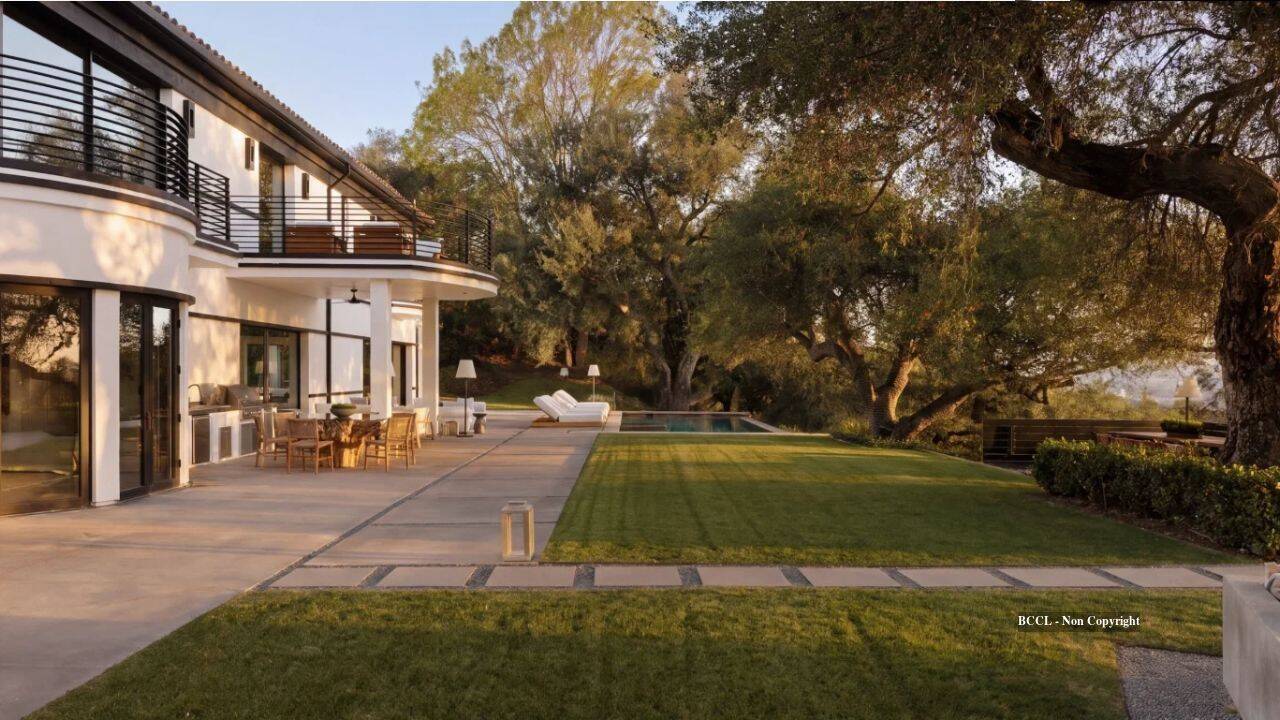
When news broke that Warren Beatty and Annette Bening’s former Beverly Hills estate hit the market for $14.995 million, the usual trade outlets immediately started salivating over the provenance. They recited the square footage. They gushed over the Mulholland Drive address. They treated a standard-issue 1990s Mediterranean compound like a priceless piece of architectural history simply because two Academy Award nominees used to eat breakfast in the kitchen.
That is the lazy consensus of luxury property journalism. It operates on the delusion that celebrity ownership adds permanent intrinsic value to drywall and stucco.
In reality, buying a former A-list residence at an inflated ask is one of the fastest ways to incinerate capital in Southern California.
The Celebrity Provenance Fallacy
I have watched dozens of high-net-worth buyers get seduced by famous previous owners, only to take a seven-figure haircut when they try to exit five years later.
Here is what actually happens when a famous name attaches itself to a listing. The seller’s brokerage prices in a "halo premium" ranging from 10% to 20% above comparable non-celebrity properties on the exact same street. They bank on an emotional buyer wanting to buy proximity to fame.
Once that emotional buyer closes escrow, the magic evaporates. You cannot resell someone else's nostalgia twice. When you eventually list the property, the marketing headline is no longer "Warren Beatty’s Former Estate." It becomes "Former Home of Tech Executive Who Bought It From Warren Beatty." The provenance chain is broken. The halo premium disappears overnight, leaving you holding a depreciating structure on a piece of dirt you overpaid for.
Architectural pedigree appreciates; celebrity provenance decays.
If a house was designed by Richard Neutra, John Lautner, or Paul R. Williams, the asset has permanent artistic scarcity. A custom 1990s Mediterranean villa built for privacy—even if built for Hollywood royalty—is functionally obsolete by modern ultra-prime standards. Buyers spending $15 million in Los Angeles today do not want compartmentalized traditional floor plans, heavy millwork, and Tuscan-adjacent aesthetics. They want indoor-outdoor glass boxes, wellness wings, and turnkey smart infrastructure.
Deconstructing the $14.995 Million Price Tag
Let’s look at the actual mechanics of this specific Beverly Hills Post Office (BHPO) corridor.
Publicists love calling anything in the 90210 zip code "Beverly Hills." Insiders know better. There is a massive valuation chasm between the Beverly Hills Flats—where you actually get Beverly Hills municipal services, police response times, and flat walkable lots—and the Beverly Hills Post Office hillside market along Mulholland Drive.
- Jurisdiction matters: BHPO properties fall under the City of Los Angeles, not the City of Beverly Hills. You get the 90210 vanity zip code, none of the municipal perks, and exposure to Los Angeles’s punitive transfer tax structure.
- Topography limits liquidity: Ridge-line and canyon estates offer sweeping views and fortress-like privacy, which is precisely why Beatty and Bening bought there decades ago. However, hillside dirt carries brutal insurance realities in California right now. Securing comprehensive wildfire coverage on brush-adjacent Mulholland estates has become an underwriting nightmare, often forcing buyers into the California FAIR Plan paired with exorbitant excess-and-surplus policies.
- The renovation trap: When a celebrity holds a property for decades—or when it passes through a quiet interim owner without a total gut-remodel—the mechanicals are almost always dated. Updating a 10,000-plus-square-foot hillside compound to 2026 luxury standards costs roughly $600 to $1,000 per square foot in Los Angeles construction labor and permitting delays.
Do the arithmetic. If you pay $14.995 million for the dirt and the dated structure, and then sink $6 million into bringing the systems, roof, pool, and interior finishes into this decade, your basis is $21 million. In a hillside pocket where comparable renovated homes struggle to clear $18 million, you are underwater before your furniture arrives.
What Luxury Real Estate Publicists Hide About "Privacy"
Every write-up of this property leans heavily on the word privacy. Long gated driveways. Towering hedges. Compound-style seclusion.
In the 1990s, privacy was the ultimate luxury amenity in Hollywood. Paparazzi had to physically camp outside gates with telephoto lenses, so physical barriers equated to peace of mind.
Today, privacy is a double-edged sword that often masks deferred maintenance and awkward lot geometry. Massive hedges require five-figure monthly landscaping bills and aggressive fire-clearance compliance. Long private driveways eat up usable flat pad square footage—the single most valuable metric in Los Angeles real estate.
Imagine a scenario where two identical 10,000-square-foot homes sit on two-acre lots in the hills. Property A uses half its flat pad for a dramatic gated motor court and dense perimeter foliage. Property B maximizes flat lawn, pool deck, and outdoor entertaining space. Property B will outsell Property A every single time in the current market, regardless of who won an Oscar in Property A's living room.
Furthermore, high-profile celebrity homes suffer from permanent digital exposure. The floor plans, aerial drone shots, and gate locations of Beatty and Bening’s former compound have been published across architectural digests and tabloid sites for years. If genuine security is your priority, buying a famously documented celebrity estate is the exact opposite of smart operational security.
The Measure ULA Reality Check
Any serious analysis of a $15 million Los Angeles residential listing has to account for the regulatory drag that conventional celebrity fluff pieces completely ignore.
Since Los Angeles implemented Measure ULA—the so-called "mansion tax"—transactions above $10 million inside City of LA boundaries face a staggering 5.5% documentary transfer tax on the gross sale price. Because Mulholland Drive properties in the 90210 zip code are technically City of Los Angeles territory rather than independent Beverly Hills, sellers and buyers get caught in that net.
On a $14.995 million sale, that is roughly $825,000 in transfer taxes alone, before brokerage commissions, title fees, or escrow costs.
This tax has fundamentally broken the liquidity of the $10 million to $20 million tier in Los Angeles. Sellers try to bake that 5.5% penalty into their asking price, inflating numbers artificially. Smart institutional and family-office buyers refuse to subsidize the seller's tax bill, leading to properties sitting on the market for 200+ days before undergoing quiet, humiliating price cuts.
When you read a breathless article announcing a $14.995 million listing price, you are not looking at market value. You are looking at a seller testing whether a starstruck buyer is willing to absorb a massive tax penalty and a decade of aesthetic depreciation.
Why Smart Capital Avoids Trophy Resales
If you have $15 million to deploy in Southern California residential real estate, chasing a famous actor’s former home is amateur hour. Let’s be brutally honest about the downsides of my contrarian stance, though: if you are a newly minted billionaire or an international buyer whose primary goal is social signaling at dinner parties, buying a famous Hollywood compound achieves that objective immediately. No spreadsheets required.
For everyone else who cares about capital preservation, the playbook is entirely different:
- Buy ugly in the Flats: Take that $15 million to the actual City of Beverly Hills (south of Sunset Boulevard). Buy a smaller, dated house on a prime flat street. You escape the City of LA transfer tax, you eliminate hillside fire-insurance volatility, and you own dirt with permanent historical liquidity.
- Target off-market spec teardowns: Look for properties held by long-term non-celebrity estates where the heirs just want a clean, fast closing. You avoid the 15% celebrity ego tax baked into publicized listings.
- Separate art from real estate: If you want to pay a premium for provenance, buy a documented mid-century modern home designed by an architectural master. Architectural value compounds over generations; celebrity trivia expires within one news cycle.
Warren Beatty and Annette Bening built a legendary life behind those gates, and the property served its exact purpose for their era. Let someone else pay $15 million to live in their shadow.