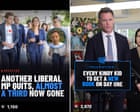
Scroll through your feed in Sydney right now and you'll probably stumble across a punchy, brightly colored graphic breaking down the latest cost-of-living updates or local transport delays. It looks just like every other youth-focused media startup cluttering social platforms. Except there's a catch. That slick, seemingly independent NSW news Instagram account isn't run by a scrappy team of twenty-something journalists in Surry Hills—it's actually operated by the NSW Labor party.
If that makes you raise an eyebrow, you're not alone. Political parties have been trying to crack the social media code for over a decade, usually with cringeworthy results that scream "hello, fellow kids." This time, though, the strategy is markedly different. Instead of plastering party logos across every tile or leading with stiff press releases from Macquarie Street, the content mimics the exact visual grammar of popular digital publishers. It's a calculated pivot toward native political marketing, and honestly, it's working far better than traditional campaign ads ever could.
Why Political Parties Are Ditching Traditional Media Channels
To understand why NSW Labor is building its own news-style outlets on Instagram, you have to look at how Australians actually consume information today. Traditional newspapers and nightly television bulletins simply don't reach voters under forty the way they used to. According to the annual Digital News Report published by the University of Canberra, social media has firmly overtaken print and radio as a primary news gateway for younger demographics, with Instagram and TikTok seeing massive growth for news consumption.
When a political party buys a traditional billboard or runs a thirty-second TV spot, voters immediately put their guard up. You know you're being sold something. Your brain filters it out before the voiceover even finishes.
By packaging policy announcements, local infrastructure updates, and critiques of the opposition inside the aesthetic of a casual news aggregator, the party bypasses that immediate skepticism. The graphics use bold typography, meme-adjacent humor, and clean layouts that blend right into a user's regular scrolling routine. It doesn't feel like a lecture from a politician. It feels like a quick update from a friend who keeps tabs on what's happening around New South Wales.
The Fine Line Between Digital Strategy and Astroturfing
Here's where things get tricky. Critics and media watchdogs have raised valid concerns about transparency when political organizations adopt the disguise of impartial news outlets. In digital marketing, there's a massive difference between branded content and straight-up misdirection.
When you follow a traditional news brand, you expect at least a baseline commitment to editorial independence and fact-checking both sides of an issue. A political party, by definition, exists to win elections and promote its own platform. Their goal isn't balanced journalism. Their goal is persuasion.
If an Instagram account presents itself with the authority and neutrality of a local news desk while quietly omitting context that hurts the sitting government, voters can easily be misled. Even if a tiny disclaimer sits buried in the profile bio or hidden at the bottom of a long caption, most people don't read bios. They read the headline on the graphic, double-tap, and keep moving. That split-second impression is exactly what political strategists are banking on.
How the "News Style" Playbook Actually Works
Having watched digital political campaigns evolve across Australia and overseas, I've noticed a very specific formula behind these covert party channels. They don't succeed by accident. They rely on a few core mechanics that exploit how platform algorithms reward engagement:
- Hyper-local hooks: Instead of talking about broad economic policy, posts focus on a specific train line shutdown in Western Sydney or a new school upgrade in the Illawarra. Local relevance drives shares in group chats.
- Emotional framing: Headlines are written to spark immediate frustration, pride, or curiosity. Boring bureaucratic terms get stripped out completely.
- Visual consistency: Using distinct color palettes and readable fonts builds subconscious brand recognition long before a user ever checks who actually owns the page.
- Selective framing: Every story highlights a government win or an opposition failure, subtly reinforcing a political narrative without ever asking for a vote directly.
It's smart. Really smart. Yet it also exposes a massive blind spot in how social platforms regulate political advertising. While paid political ads on Meta platforms require clear "Paid for by" authorization banners and sit in a public ad library, organic posts from party-owned lifestyle or news pages often slip right past those strict labeling rules.
What Other Parties Are Doing Behind the Scenes
NSW Labor isn't operating in a vacuum. Across the political spectrum in Australia, major parties and independent movements alike have poured millions into in-house content studios. During recent federal and state election cycles, both the Coalition and the Greens ramped up their production of meme pages, short-form vertical video teams, and grassroots-style community groups on Facebook and Instagram.
The arms race for attention has forced parties to hire former digital journalists, video editors, and TikTok creators rather than relying solely on traditional policy advisors. If you want to win seats in competitive suburban electorates, you have to dominate the feeds where undecided voters spend two hours every evening.
The danger is that as every political faction launches its own pseudo-news network, the public square fractures even further. Instead of debating the same set of facts reported by independent journalists, voters end up trapped inside algorithmic bubbles curated by party headquarters.
How to Spot Party-Backed Pages in Your Feed
You don't need a degree in media studies to figure out who's pulling the strings behind a slick Instagram account, but you do need to slow down for five seconds before hitting share. Next time a viral local news graphic pops up on your screen, run through a quick mental checklist:
- Check the bio and links: Look closely at the fine print at the top of the profile. Legitimate Australian political entities usually include an authorization line somewhere, even if it's tucked away at the very bottom.
- Look at the criticism balance: Scroll through the last twenty posts. Does the account ever criticize the current state government, or does every single problem somehow trace back to the opposition? Real news outlets annoy everybody eventually.
- Inspect the comment section: Party-run pages often heavily moderate comments or flood early threads with supportive talking points from known staffers and local branch members.
- Cross-check the headline: If a post makes a bold claim about a new policy or funding cut, search the exact topic on an established outlet like ABC News or the Sydney Morning Herald to see what details were left on the cutting room floor.
Social media has completely changed how political power is built and maintained in New South Wales. Knowing who owns the megaphone doesn't mean you have to unfollow every political page on your phone, it just means you should never mistake a well-designed campaign flyer for independent journalism. Check the source before you share the graphic, keep a healthy dose of skepticism when scrolling through political memes, and always look past the aesthetic to see who actually benefits from the story being told.