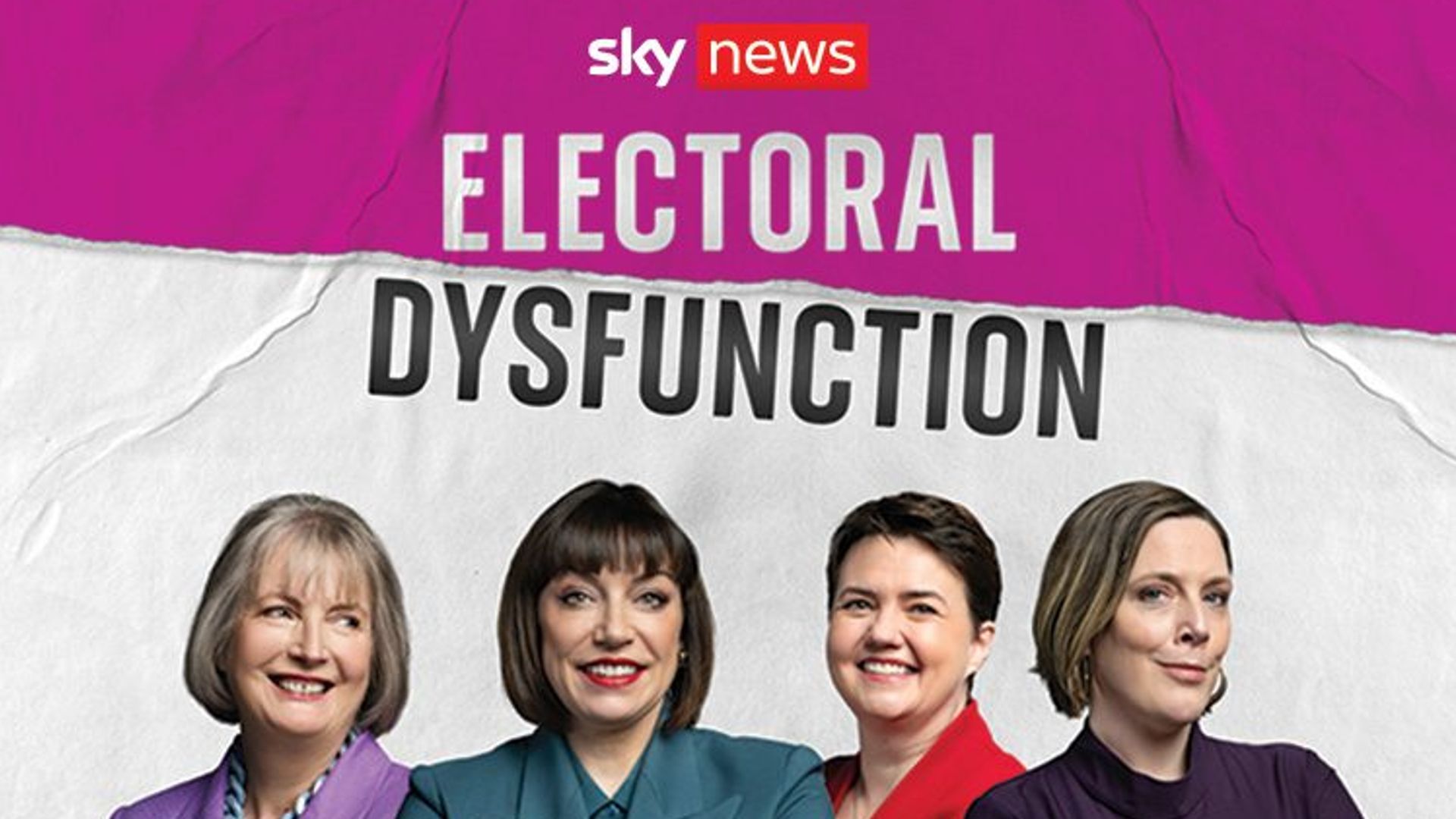
The press releases are predictable. A trio of high-profile Westminster insiders—in this case, Sky News’s Beth Rigby, Labour MP Jess Phillips, and former Conservative Scottish leader Ruth Davidson—announce that their hit podcast, Electoral Dysfunction, is hitting the road for a live theatre tour.
The entertainment press eats it up. They frame it as a triumph of modern political engagement. They celebrate the democratization of Westminster gossip, applauding the fact that ordinary voters are willing to pay forty pounds a ticket to sit in a plush velvet seat and watch politicians and journalists banter over glasses of pinot grigio.
That consensus is completely backwards.
Moving political podcasts from the intimacy of an earbud to the bright lights of a theatre stage does not deepen public understanding of power. It hollows it out. When political commentary transforms into live variety entertainment, journalism dies, accountability evaporates, and the audience ends up paying to applaud their own disenfranchisement.
The Illusion of Access
To understand why the live political tour is a trap, you have to look at the mechanics of the medium. Audio podcasting works because it mimics a private conversation. When you listen to Electoral Dysfunction on your morning commute, the lack of a visual audience forces the hosts to rely on substance, vocal nuance, and actual reporting.
Put those same hosts on a stage in front of a thousand cheering fans, and the incentives flip overnight.
I have spent over a decade watching media executives chase live event revenue to offset collapsing digital ad rates. Every single time a serious news brand pivots to live touring, the editorial product degrades. Why? Because you cannot bomb in front of a live audience. Silence in a theatre feels like failure. Therefore, every point must end with a punchline, an applause line, or a relatable anecdote about how hard it is to juggle Westminster life with school runs.
According to media theorists like Neil Postman, who warned decades ago about news mutating into show business, entertainment-driven formats inherently trivialize serious discourse. When complex legislative failures or systemic economic crises are packaged into ninety-minute theatre sets complete with interval drinks and audience Q&As, the gravity of governance disappears. Politics becomes a spectator sport where the spectators are only allowed to cheer.
The Cross-Party Cosiness Problem
The specific appeal of Electoral Dysfunction—and competitors like The Rest Is Politics—rests on a seductive premise: tribalism is bad, and watching people from opposite sides of the aisle get along is refreshing. Ruth Davidson represents the centre-right; Jess Phillips represents Labour; Beth Rigby represents the supposedly neutral fourth estate.
In theory, this creates a balanced ecosystem. In practice, live shows accelerate a dangerous dynamic known in Westminster as the "chumocracy."
When a sitting Member of Parliament, a former party leader, and a senior political editor share a tour bus, split ticket revenues, and share backstage green rooms, the adversarial tension required for real journalism vanishes. How aggressively can Beth Rigby interrogate Jess Phillips on government policy during a Tuesday press briefing when the two of them have a sold-out date at the London Palladium on Friday?
This is not a hypothetical conflict of interest. Research from the Reuters Institute for the Study of Journalism consistently highlights public skepticism regarding the cozy relationships between British political journalists and the politicians they cover. Taking that relationship on tour monetizes the exact proximity that alienates voters outside the M25.
The Theatre Audience Echo Chamber
Defenders of live political shows argue that these events bring politics to the people. Let us look at who actually buys the tickets.
Live podcast audiences are overwhelmingly self-selecting, affluent, urban, and already hyper-engaged with Westminster minutiae. They are not the swing voters in marginal constituencies who decide general elections, nor are they the disillusioned citizens who have stopped voting altogether.
By performing in front of an audience that already agrees with the fundamental premise that Westminster is a quirky, lovable, slightly chaotic workplace, hosts receive constant validation. The laughter in the room acts as a narcotic. It convinces the talent on stage that their framing of the national conversation is universally shared.
Imagine a scenario where a live show tackles a deeply divisive issue like NHS funding or immigration targets. In a broadcast studio, a journalist has to consider the millions of unseen listeners who might reject their premise. In a theatre full of fans who paid for a fun night out, the speaker plays to the room. Nuance gets sanded down to fit the rhythm of stand-up comedy. Hard truths that might dampen the mood are quietly left off the setlist.
Why Media Companies Are Really Doing This
If live political podcasts are bad for journalistic rigor, why is every major broadcaster rushing to launch them? The answer has nothing to do with civic duty and everything to do with unit economics.
Traditional newsrooms are bleeding money. Digital programmatic advertising yields pennies per thousand impressions. Subscription paywalls are hitting saturation ceilings. Live events, however, offer high-margin, upfront cash flow with zero algorithmic interference from tech platforms.
- Ticket Sales: Direct-to-consumer revenue that bypasses social media gatekeepers.
- Merchandise and VIP Packages: High-margin upsells like post-show meet-and-greets.
- Content Recycling: Recording the live show provides a "free" episode for the main feed, cutting production costs for that week.
- Brand Halo: A packed theatre looks impressive to corporate sponsors looking to buy expensive mid-roll ad slots.
Sky News and similar legacy outlets are not putting their talent on stage to educate the public. They are doing it because live events are one of the few remaining business models in media that reliably turn a profit. Pretending it is a noble exercise in public service is pure corporate spin.
Dismantling the Common Myths
Whenever critics point out the flaws in the live podcast boom, industry defenders trot out the same tired talking points. None of them hold up under scrutiny.
Myth 1: "It makes politics accessible to young people."
The data does not support this. While podcasts as a medium skew younger than terrestrial television, live theatre tickets priced between £35 and £60 primarily attract middle-aged, middle-class demographics. Young voters are getting their political news from short-form vertical video on TikTok and Instagram, not from ninety-minute stage shows in historic city-centre theatres.
Myth 2: "Humanizing politicians is good for democracy."
Humanizing politicians is great for the politicians' personal brands and post-parliamentary speaking fees. It is terrible for accountability. Voters do not need to know what their representatives drink after work or how funny they are on stage. Voters need to know why public services are failing and what specific legislative mechanisms will fix them. Turning MPs into relatable celebrities insulates them from the harsh scrutiny their offices demand.
Myth 3: "Unscripted live Q&As hold speakers to account."
Anyone who has ever attended a live podcast recording knows how Q&As actually work. Producers screen the questions beforehand—either via slips of paper collected at the interval or pre-moderated digital submissions. Hostile, deeply technical, or genuinely embarrassing questions rarely make it to the microphone. Even when a tough question slips through, the home-field advantage of the stage allows the speaker to deflect with a joke, drawing protective laughter from the crowd that shuts down follow-up interrogation.
The Honest Downsides of Rejecting the Stage
To be entirely fair, the alternative to live political entertainment has massive problems of its own.
If political journalists and MPs retreat strictly into dry white papers, formal parliamentary debates, and sterile studio interviews, public disengagement will continue to climb. Traditional broadcast formats like Question Time or the Ten O'Clock News have lost millions of viewers over the past decade precisely because they feel rigid, overly rehearsed, and disconnected from how normal people actually talk.
Podcasts like Electoral Dysfunction succeeded because Rigby, Phillips, and Davidson sound like real humans having an unfiltered conversation. Stripping away the formal broadcast voice made Westminster feel intelligible to people who normally tune out. There is genuine value in breaking down the arcane rules of Parliament in plain English.
The mistake is assuming that scaling that intimacy up to a thousand-seat auditorium preserves what made it work. It does not. It mutates a clever audio format into an archaic theatrical one.
How Political Coverage Should Actually Evolve
If broadcasters and political commentators genuinely want to bridge the gap between Westminster and the public without turning democracy into cabaret, they need to abandon the theatre tour model entirely.
- Drop the Tickets, Go to the Friction: Instead of selling tickets in affluent city centres, broadcasters should host free, unmoderated town halls in areas with the lowest voter turnout. Put MPs and editors in rooms where the audience is genuinely angry, not rooms where fans want a selfie.
- Enforce Strict Separation of Powers: News organizations must establish clear ethical firewalls. Active political editors should not be co-hosting commercial entertainment tours with sitting lawmakers. If a journalist wants to be an entertainer, they should leave the newsroom.
- Prioritize Investigation Over Commentary: The political podcast market is drowning in reaction and insider gossip. Audiences are starved for deep, investigative audio journalism that uncovers how power actually operates behind closed doors, rather than three people reading the morning newspapers aloud to each other.
- Keep Audio Intimate: Respect the medium. The magic of a podcast happens in the listener's head, not under stage spotlights. Resist the urge to film everything, tour everything, and monetize every conversation as a live spectacle.
The Verdict
Watching powerful politicians and senior journalists joke about the dysfunction of the British state while collecting ticket receipts is not a sign of a healthy democracy. It is a symptom of a political class that has figured out how to profit from its own failures.
Next time a major news outlet announces a live theatre tour, do not mistake a sold-out box office for civic progress. You are just watching Westminster sell tickets to the circus while the tent burns down.