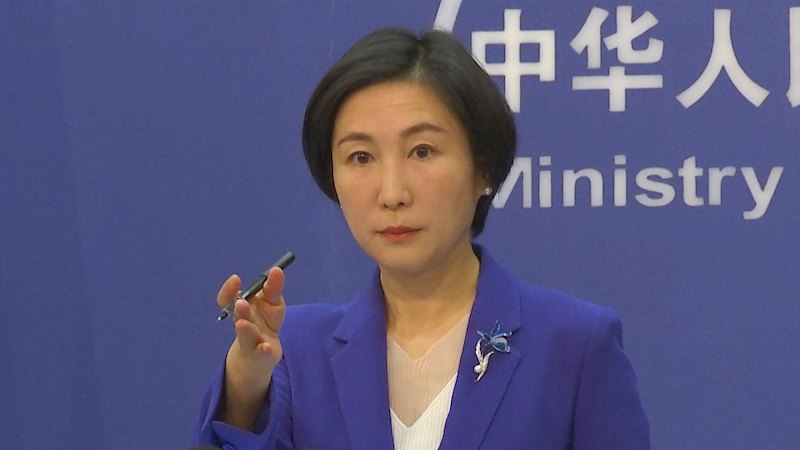
The air in the Great Hall of the People in Beijing doesn’t circulate like the air in a normal room. It feels heavy, filtered by history and the silent weight of a thousand unspoken protocols. In March 2023, the world was looking elsewhere. We were obsessed with the grinding attrition in Ukraine and the flickering screens of our own domestic political dramas. But in a quiet wing of that massive stone complex, two men who had spent years refusing to breathe the same air—representatives from Riyadh and Tehran—sat across from each other. Between them sat the Chinese delegation.
They weren't there for a photo op. They were there because of twenty-six phone calls.
Think about a phone call. Most of ours are digital ghosts—brief exchanges about grocery lists or missed appointments. But in the world of high-stakes diplomacy, a phone call is a physical bridge built over an abyss of blood and oil. For decades, the divide between Saudi Arabia and Iran was considered an unfixable tear in the fabric of the Middle East. It was a cold war that occasionally turned red-hot through proxies in Yemen and Syria. Conventional wisdom said only Washington could pull the strings of such a complex puppet show.
Conventional wisdom was wrong.
The Silence of the West
For years, the Middle East functioned under a specific set of rules. You picked a side. You armed that side. You hoped the other side would eventually crumble under the pressure of sanctions and isolation. But isolation is a vacuum, and nature hates a vacuum. While the West focused on "maximum pressure," a different kind of energy was flowing through the fiber-optic cables connecting Beijing to the Persian Gulf.
China didn't arrive with a lecture on human rights or a demand for democratic reform. They arrived with a ledger.
Consider the hypothetical merchant in a bazaar in Isfahan or a tech startup founder in Riyadh. For them, the "Great Game" of geopolitics is less about ideology and more about the price of shipping containers and the stability of the power grid. China understood this bone-deep reality. They saw two nations exhausted by the cost of their own animosity. Iran was suffocating under a blanket of economic restrictions; Saudi Arabia was looking to pivot its entire civilization away from oil toward a high-tech future.
Neither could move forward while looking over their shoulder at the other.
The Architecture of the Call
The "twenty-six calls" weren't just a tally. They were a sequence. Imagine the logistics. Every time a Chinese diplomat picked up the receiver, they were navigating a labyrinth of cultural sensitivities, historical grievances, and religious nuances that date back centuries.
One call might have been about the safety of tankers in the Strait of Hormuz. The next might have been about the delicate balance of the petroyuan. By the tenth call, the conversation shifted from "What do you want?" to "What can you live with?"
This is the grueling work of peace. It isn't found in a grand speech or a signed treaty on a sunny lawn. It is found in the eleventh hour of a Tuesday night, arguing over the specific phrasing of a security guarantee. China played the role of the silent guarantor. They didn't just facilitate the talk; they underwrote the risk. They told the Saudis, "We are your biggest customer." They told the Iranians, "We are your only lifeline."
When you are the biggest player in the room, your silence carries more weight than someone else's shouting.
Beyond the Barrel
We often make the mistake of thinking this is only about oil. It’s a convenient lie that lets us ignore the human element. The reality is that the Middle East is undergoing a demographic explosion. Millions of young people in Tehran and Riyadh are more interested in the speed of their internet and the availability of global brands than they are in the sectarian battles of their grandfathers.
China saw this shift before anyone else. They saw that the region was hungry for a "Development First" doctrine. If you build the high-speed rail, if you lay the 5G cable, if you integrate the banking systems, the cost of war becomes too high to pay.
It is a cold, calculated peace. It is a peace built on the realization that dead men don't buy smartphones and scorched earth doesn't produce semiconductors.
The Invisible Stakes
Why does this matter to someone sitting in a coffee shop in London or a suburb in Ohio? Because the world just changed its center of gravity. For the first time in nearly a century, a major geopolitical shift in the Middle East happened without a single American diplomat in the room.
The twenty-six calls represent a new way of doing business. It’s a method that values stability over transparency and commerce over charisma. It’s messy. It’s morally ambiguous. It’s quiet.
In the West, we are used to the "Big Reveal." We like the dramatic summit, the televised handshake, and the immediate results. But the Chinese model is glacial. It moves in millimeters until the pressure becomes an inevitability. By the time the world realized a deal was being struck in Beijing, the ink was already dry. The phone calls had done their work.
The Ghost in the Machine
Let’s look at a hypothetical scenario to understand the stakes. Imagine a cargo ship leaving the port of Shanghai. In the old world, that ship's safety depended on the presence of a U.S. carrier group in the Persian Gulf. Today, its safety is increasingly tied to the diplomatic capital Beijing has invested in making sure Riyadh and Tehran don't start a fire that burns down the neighborhood.
This is the "Security of Interdependence." It’s the idea that we won't hit you because if we do, we break our own toys.
But there is a fragility here that we shouldn't ignore. Peace built on trade is only as strong as the market. If the Chinese economy stumbles, or if a local commander on the ground in Yemen ignores the orders from above, the twenty-six calls can be undone by a single bullet. The invisible stakes are the lives of millions who finally have a chance to imagine a future that isn't defined by the next air raid siren.
The Resonance of the Quiet
The most striking thing about the Beijing agreement wasn't the content—it was the tone. It was professional. It was disciplined. It was devoid of the grandstanding that usually accompanies such breakthroughs.
There is a lesson here about the nature of power in the 21st century. Power isn't just about who has the most missiles; it's about who has the most minutes on their calling card. It's about the person who stays on the line when everyone else has hung up in frustration.
China didn't "bring" them to the table like children. They showed them the table was already set, and the food was getting cold. They made the cost of absence higher than the cost of presence.
The world woke up to a new map that day. Not a map of borders, but a map of connections. The twenty-six calls were the stitches holding a wounded region together. Whether those stitches hold or eventually tear under the weight of old ghosts is a question only time can answer.
But for now, the phones are quiet. The delegates have gone home. And the ships keep moving through the dark water, guided by a peace that was whispered into existence, one call at a time.