Twenty-four.
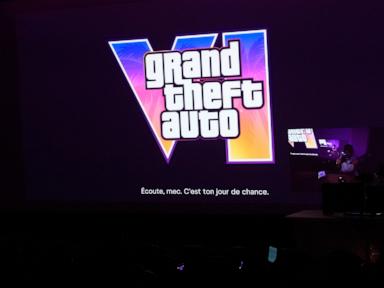
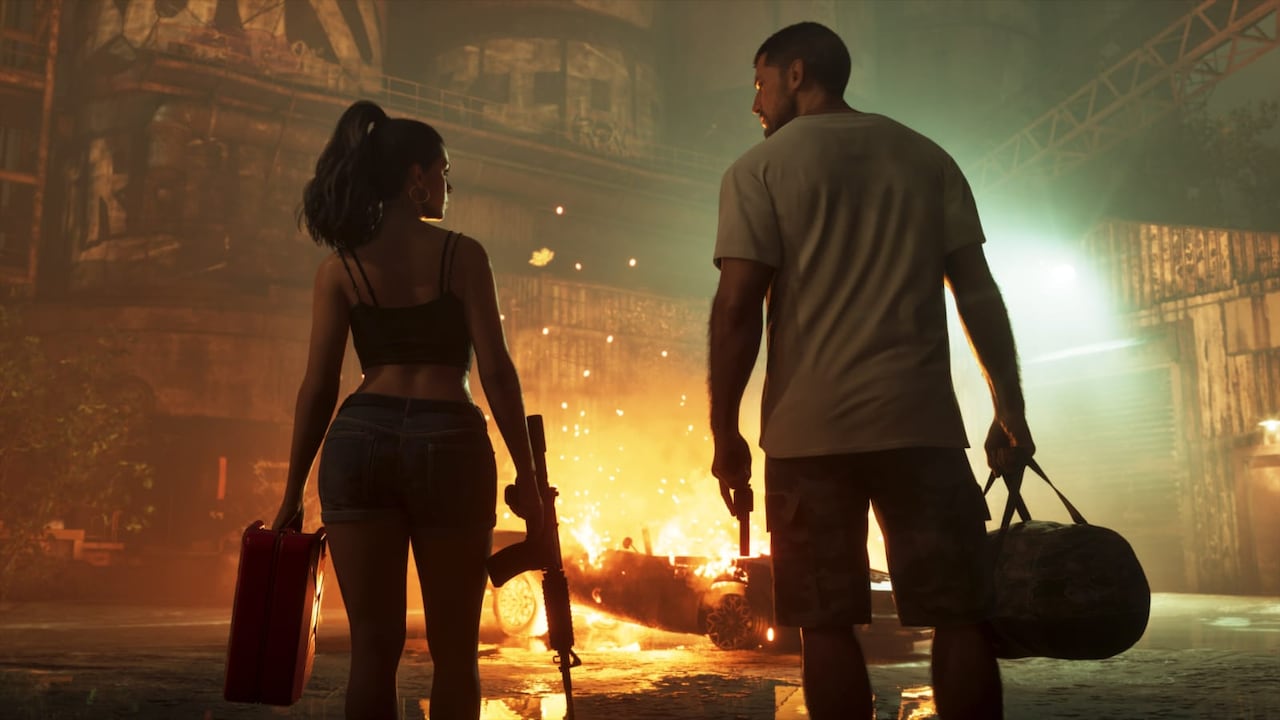
That is the exact number of times the trigger was pulled in a seven-second video clip that tore through gaming forums this week, racking up millions of views before moderators could even decide which rulebook applied. On the screen, bathed in the neon-drenched humidity of Rockstar Games’ long-awaited Grand Theft Auto VI, a player corners a non-playable character—a woman standing near a palm-lined boulevard—and empties a magazine into her digital frame. Twenty-four times. The physics engine responds with sickening fidelity. Every impact registers with distinct anatomical weight, the fabric of her shirt tearing, the ragdoll mechanics buckling under the kinetic force of modern rendering hardware.
It is just pixels. We know that. You know that. Yet, watching the clip on a glowing phone screen at two in the morning, my stomach tightened in a way that Grand Theft Auto III never managed back in 2001.
Back then, when I was sixteen and huddled over a CRT television in a dimly lit bedroom, violence in Liberty City looked like slapstick theater. Characters were blocky, jagged puppets with mittens for hands. When a digital pedestrian fell, they folded like a cardboard box, leaving behind a hovering, glowing wad of cash and a cartoonish puddle of crimson. There was a built-in mercy to the low resolution. Your brain never mistook the polygon for a person, because the technology simply wasn't capable of bridging that gap.
Today, that gap is gone. And as GTA 6 steps onto the global stage, pushing photorealism and behavioral artificial intelligence into territories no entertainment medium has ever occupied, that viral twenty-four-shot clip forces us to confront an uncomfortable, deeply human question. When the art becomes indistinguishable from the flesh, what happens to the person holding the controller?
The Architecture of Empathy
To understand why this specific clip sparked such visceral outrage—and such morbid fascination—you have to look at what Rockstar’s engineers have actually built. For over a decade since Grand Theft Auto V launched in 2013, the studio has poured billions of dollars into a single obsession: making a virtual world feel alive.
Consider a hypothetical player—let’s call him Marcus, a twenty-eight-year-old accountant who logs on after a grueling week of spreadsheets to unwind in Leonida, Rockstar’s fictionalized version of Florida. Marcus isn't a monster. He volunteers at an animal shelter on Saturdays and calls his mother every Sunday. Yet, within ten minutes of booting up the game, he finds himself testing the boundaries of the simulation. Why? Because the simulation invites him to.
In older video games, non-playable characters—NPCs—were essentially walking mannequins. They repeated three lines of dialogue and walked in predictable loops. If you bumped into them, they bounced off you like billiard balls. In GTA 6, however, behavioral animation systems and procedural memory have transformed background characters into convincing illusions of humanity. They check their phones, react to shifts in the weather, flinch when a car backfires, and make eye contact that lingers just a fraction of a second too long.
Think of the difference between tearing up a rough pencil sketch and slashing an oil painting so realistic you can see the pores on the subject's skin. The physical act is identical. The psychological friction is entirely different.
When that viral clip circulated, the outrage wasn't merely about the presence of gun violence in a franchise famous for satire and mayhem. It was about the intimacy of the brutality. The way the digital woman stumbled, the way her expression shifted from confusion to terror before the animation sequence yielded to physics—it triggered the mirror neurons in our brains. Neuroscientists have spent years studying how human empathy responds to virtual avatars. Research consistently shows that when facial micro-expressions and bodily kinematics cross a certain threshold of realism, the human amygdala stops registering the image as "a cartoon" and starts processing it as "a human in distress."
We built engines designed to make us care about our digital protagonists. We cannot act surprised when those same engines make us recoil at the suffering of digital bystanders.
The Algorithm Loves a Spectacle
There is another invisible hand at work here, one that has nothing to do with Rockstar’s code and everything to do with the attention economy we inhabit.
Twenty-four shots. Why did the player keep firing long after the virtual target had fallen?
Part of the answer lies in the mechanics of sandbox testing—players have poked, prodded, and broken virtual physics engines since the dawn of 3D gaming. But the darker, more modern truth is that the player wasn't just playing for themselves. They were playing for the feed.
In the fifteen years since the last major GTA release, gaming has transformed from a private pastime into a performative broadcast. Every session is a potential content stream; every shocking moment is currency. Social media algorithms do not reward quiet exploration or subtle narrative appreciation. They reward visceral shock, moral outrage, and extreme edge cases. A player driving safely down the coast of Vice City gets zero impressions. A player unloading twenty-four rounds into an unarmed woman to showcase the game's hyper-realistic gore mechanics generates millions of views, thousands of furious quote-tweets, and endless debate threads.
Look at how fast the cycle turns:
- A player engineers an extreme, cruel scenario within an open-world sandbox.
- They record the clip, stripping away any narrative context, and upload it with a provocative caption.
- Outraged viewers share the clip to condemn the game's brutality, inadvertently feeding the very algorithm that promotes it.
It is a perpetual motion machine of digital disgust. By the time the clip hits the mainstream news cycle, the nuance is dead. The game is reduced to a murder simulator in the eyes of critics, while defenders rush to dismiss any discomfort as pearl-clutching censorship. Both sides miss the point entirely.
What the Data Actually Says About Digital Violence
Whenever a clip like this goes viral, the ghost of the 1990s moral panic rises from the grave. Politicians dust off talking points about how violent video games breed real-world killers. Parents look nervously at their teenagers' consoles.
Let us ground ourselves in the facts, because fear thrives in the dark.
Decades of longitudinal psychological research—including massive meta-analyses conducted by the American Psychological Association and independent universities across Europe and North America—have consistently found no causal link between playing violent video games and committing real-world criminal violence. In fact, as video game realism and sales have skyrocketed over the past thirty years, youth violent crime rates in the United States and Western Europe have plummeted to historic lows.
The human brain is remarkably good at maintaining a firewall between fantasy and reality when it comes to action. Nobody plays GTA 6, shoots a digital character twenty-four times, and suddenly forgets that real bullets destroy real lives.
And yet, dismissing the conversation entirely because "it doesn't cause real-world crime" is a failure of imagination. Just because something doesn't turn you into a criminal doesn't mean it leaves no mark on your psyche. We accept without question that a devastating film, a haunting novel, or a brutal piece of journalism can alter our mood, numb our sensitivity, or shift our worldview for days. Why do we pretend that interactive media—where we aren't merely watching the violence, but actively authoring it with our thumbs—exists in a vacuum?
Habituation is real. Behavioral psychologists call it desensitization: the gradual dulling of an emotional response through repeated exposure. When we turn hyper-realistic suffering into a viral meme, a punchline, or a benchmark test for graphics cards, we aren't becoming murderers. We are simply training ourselves to look at pain—even simulated pain—and feel nothing at all.
The Sandbox Dilemma
I remember sitting in a developer conference years ago, listening to a senior animator talk about the exhaustion of working on high-realism combat games. He spoke quietly about spending six months perfecting the way a character clutches their throat when hit, watching hours of reference footage to get the muscle tension right, only to watch streamers laugh uproariously at the finished animation on launch day.
That disconnect sits at the dead center of modern game design.
Rockstar Games has built a reputation on biting cultural satire, holding a distorted, cynical mirror up to American excess, greed, and violence. Grand Theft Auto has always been about the absurdity of the criminal underworld. Yet, the more serious and photorealistic the presentation becomes, the harder it is for the satire to breathe. When Grand Theft Auto: San Andreas exaggerated gang warfare in 2004, the stylized visuals reminded you constantly that you were inside a caricature. When GTA 6 renders sweat beading on a brow under a flickering neon sign, the caricature evaporates. What remains looks uncomfortably like a documentary.
Game developers are trapped in an arms race of fidelity. Consumers demand realism. Investors demand technical leaps that justify seventy-dollar price tags and decade-long development cycles. If a character doesn't react convincingly to gunfire, players mock the game for feeling "dated" or "broken." If the character reacts too convincingly, the internet recoils at the cruelty it enables.
There is no easy patch for this. You cannot code a moral compass into a physics engine without destroying the very freedom that makes open-world games compelling in the first place. The freedom to choose kindness only has meaning if the freedom to choose cruelty also exists within the code.
Where the Controller Meets the Conscience
Maybe the discomfort we feel watching that clip isn't a flaw in the game at all. Maybe it is a feature of our own humanity refusing to go quiet.
Think about the millions of people who watched those twenty-four shots ring out on their screens this week. Most of them didn't cheer. They winced. They scrolled past quickly, or left comments questioning why someone would spend their time staging an execution in a virtual paradise. Even among hardened fans of the franchise, there was a palpable sense of unease—a quiet recognition that the sandbox has grown deep enough to drown in.
We are entering an era where virtual worlds will only become more convincing, more responsive, and more intimate. Soon, artificial intelligence will allow NPCs not just to bleed realistically, but to beg, to bargain, and to remember your face across sessions in their own unscripted words. The line between simulation and presence will blur until it is nearly invisible to the naked eye.
When that day arrives, no rating board, no parental control, and no studio patch will be able to regulate how we behave inside those worlds. The guardrails will be entirely internal.
Late at night, when the room is dark and the glow of the monitor illuminates your hands, the code will give you total permission to do whatever you want. It will render the scene with breathtaking, indifferent perfection, waiting quietly to see what kind of person you choose to be when nobody is keeping score.