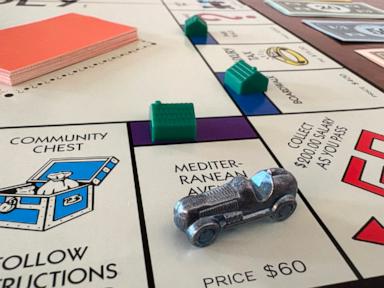
You have parked your token on Boardwalk. Your best friend owns it. They smile, extend their hand, and take your last remaining cash. You flip the board. Game over.
We have all been there. Monopoly is supposed to be a fun family board game. Instead, it turns living rooms into war zones of petty revenge and financial ruin. Charles Darrow patented the game back in 1935, pitching it to Parker Brothers after watching people struggle through the Great Depression. Ironically, he sold a tool of pure capitalist torture as mass entertainment.
Most people play the game completely wrong. They rely on house rules that prolong the agony for hours. They ignore math, trade terribly, and wonder why luck always dictates the winner. Monopoly holds up a mirror to real-world economics. It teaches brutal lessons about monopolies, luck, and human greed.
Let us break down why this century-old board game still destroys relationships and how it actually reflects the mechanics of modern wealth.
The Broken Rules Everyone Uses
You grew up playing with house rules. Free Parking money sitting in the center of the board? Not official. Bypassing auctions when someone lands on an unowned property and declines to buy it? Completely illegal according to the rulebook.
Parker Brothers originally marketed Monopoly as a fast-paced battle of wits. When you introduce Free Parking jackpots, you inject artificial liquidity into a closed economic system. Money never leaves the game. Games drag on for five hours because cash keeps circulating to players on life support.
Real Monopoly moves fast. Unowned properties go straight to auction if the person who landed on them passes. This mechanic forces bidding wars immediately. It drains cash reserves and puts assets into active circulation. If you want to win, you need to ditch the comfort blanket of homebrew rules. Treat the board like a cold, hard marketplace.
The Math Behind Winning Properties
Luck matters on the first three rolls, but math dictates the rest of the game. Most players obsess over Boardwalk and Park Place. They think landing there is the ultimate path to victory.
Statistically, they are wrong.
The orange property group is the most frequently landed-on color set on the entire board. Why? Because players frequently leave Jail. The most common dice roll sum is seven. From the Jail space, a roll of seven lands you squarely on St. James Place, the anchor of the orange set.
Smart players trade aggressively for orange and light blue sets. You do not need the most expensive real estate to bankrupt opponents. You need high traffic volume. Three modest houses on an orange set generate steady cash flow while your opponents bleed out five dollars at a time. It is death by a thousand paper cuts.
How Monopoly Mimics Real Estate Economics
Elizabeth Magie originally designed the precursor to Monopoly in 1903. Called The Landlord's Game, her creation aimed to demonstrate how landlords profit unfairly while tenants sink into poverty. She wanted to teach Henry George’s single-tax theory.
Parker Brothers stripped away the anti-monopoly educational message and turned it into a celebration of ruthless acquisition. That pivot made it a masterpiece of accidental realism.
You see the same dynamics play out in housing markets today. Once you secure a monopoly on a color group, you control supply. Opponents have nowhere else to go when they roll the wrong numbers. You hold all the cards, quite literally. You dictate the rent, push rivals toward bankruptcy, and extract every last dollar they earned from passing Go.
Monopoly strips away the polite illusions of commerce. It shows how capital compounds. Early wins snowball into insurmountable advantages. If you fall behind early, catching up requires either miraculous dice rolls or desperate trades that rarely pan out.
The Psychology of Board Game Rage
Why does a cardboard box with metal tokens make adults scream at each other?
It boils down to forced dependency. You need to trade to win. You cannot complete a color set alone. You have to negotiate with rivals whom you are actively trying to destroy. That creates profound psychological tension.
When your sibling refuses to trade you the final green property you need, it feels personal. Even though it is just strategic self-preservation, our brains process economic exclusion like physical pain. Add a little sleep deprivation and holiday wine, and you have a recipe for overturned living room furniture.
The trick is treating negotiations like cold business transactions. Stop taking rejections personally. Make offers that benefit the other player just enough to make saying no mathematically foolish.
Stop Playing Badly
Throw away the house rules. Memorize the traffic probabilities around Jail. Stop hoarding cash in reserve when properties are up for auction.
Monopoly is not a casual pastime. It is a ruthless simulator of financial attrition. Master the board, protect your cash flow, and never trade the orange properties to anyone.