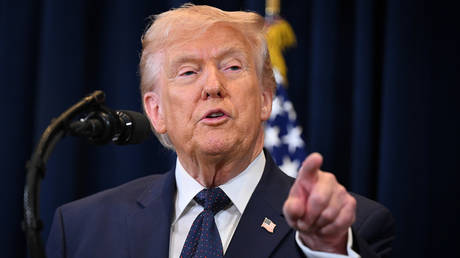
The headlines are vibrating with panic. Pundits are clutching their pearls over Donald Trump’s rhetoric regarding the North Field—the massive Qatari-Iranian gas reservoir that keeps the lights on in London and Tokyo. They call it a threat to global stability. They call it "blowing up" the world’s largest gas field.
They are missing the point entirely.
The "lazy consensus" among energy analysts is that the global liquefied natural gas (LNG) market is a fragile ecosystem that requires American subservience to maintain. They believe that any disruption to the Qatari supply chain is an act of economic suicide. I have spent years watching energy desks trade on fear rather than physics, and I can tell you: the North Field isn't a cornerstone of global stability; it’s a bottleneck that has turned the West into a hostage.
Trump isn't threatening to destroy a field. He is threatening to destroy a monopoly.
The Myth of the Fragile Supply Chain
Most people think of energy security as a steady flow of molecules from Point A to Point B. That is a 1970s mindset. In the modern era, energy security is defined by redundancy and leverage.
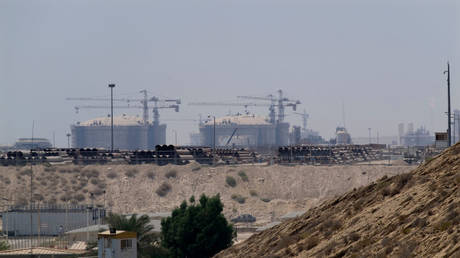
The North Field represents the greatest concentration of energy risk on the planet. By holding the lion's share of global LNG export capacity, Qatar doesn't just sell gas; they sell geopolitical insurance. When the competitor article suggests that "blowing up" this arrangement is dangerous, they are advocating for a status quo where the United States—the world’s largest gas producer—begs for permission to compete.
Imagine a scenario where a single warehouse holds 30% of the world’s grain. If that warehouse owner also maintains cozy relationships with every adversary of the West, is the warehouse a "stabilizing force"? No. It’s a single point of failure.
The "threat" isn't about explosives. It’s about the aggressive expansion of American LNG to the point where the North Field becomes irrelevant. That is the disruption the establishment fears most because it shifts the power center from Doha to the Permian Basin.
Why the Market Needs a Controlled Burn
The current LNG market is rigged by long-term, restrictive contracts that prevent price discovery. This is the "dirty secret" of the energy sector. We operate in a world where gas prices in Asia can be five times higher than in Henry Hub, simply because the infrastructure is built to favor specific, protected corridors.
Breaking the North Field's dominance isn't an act of war; it’s an act of market liberation.
- Arbitrage Destruction: By flooding the market with American supply, we kill the ability of state-owned enterprises to price-gouge during geopolitical crunches.
- Infrastructure Realignment: We stop building pipelines to please dictators and start building terminals to serve allies.
- The Iran Problem: Half of the North Field is the South Pars field, owned by Iran. Every dollar that flows into the stabilization of the North Field indirectly subsidizes the IRGC. The competitor article ignores this because it’s "complicated." It’s not. It’s math.
I’ve seen traders lose fortunes betting on the "stability" of the Middle East. They treat the North Field like a sacred cow. In reality, it’s a geopolitical leash.
The Physics of Power vs. The Rhetoric of Fear
Let’s talk about the actual mechanics of "blowing up" a field. In the industry, we know that you don't need missiles to render a field useless. You need regulatory dominance and export superiority.
If the U.S. government decides to fully weaponize its energy exports, it can render the North Field’s future expansion economically unviable. If we fast-track every pending LNG export terminal on the Gulf Coast, we create a supply glut that crashes the global price of gas below Qatar’s extraction and liquefaction costs.
That is the "bomb." It’s a capital-intensive, high-output explosion of American industry.
The pundits ask: "But what about our allies?"
This is the wrong question. The right question is: "Why are our allies dependent on a field shared with Iran in the first place?"
The "People Also Ask" sections of the internet are filled with queries like "Will gas prices go up if Trump acts?" The brutal truth is that prices are high because we haven't acted. We have allowed a cartel-like structure to dictate the terms of the energy transition.
The False Idol of "Global Stability"
Whenever an insider says "global stability," they usually mean "my portfolio's predictability."
True energy independence requires the destruction of old dependencies. You cannot build a new house without clearing the rubble. The North Field represents the old world—a world where the West pays a tax to the Middle East for the privilege of staying warm.
The transition to a U.S.-led energy order isn't going to be "seamless." It’s going to be messy. It’s going to involve trade wars, tariff threats, and aggressive rhetoric. This is not a bug; it is a feature of a shifting power dynamic.
- The Permian Basin is the new North Field.
- The Gulf Coast is the new Strait of Hormuz.
- The U.S. Dollar is the only currency that should back these molecules.
If you think this is dangerous, you haven't been paying attention to the last fifty years of energy history. Dependency is the real danger. Autonomy is the only safety.
Stop Asking if it’s "Possible" and Start Asking if it’s "Necessary"
We are told that we must "foster" relationships with energy giants to keep the peace. I have watched American companies spend billions on joint ventures in regions that hate us, only to have their assets seized or their contracts "renegotiated" at gunpoint.
The contrarian take isn't that we should go to war. It’s that we should stop pretending that the North Field is an American interest. It is a competitor. It is a strategic obstacle.
To the critics who say Trump’s rhetoric will alienate our "partners" in the Gulf: those partners are already diversifying their interests into China and Russia. They aren't waiting for us to lead; they are waiting for us to fold.
If we want to secure the next century, we don't do it by protecting the world’s largest gas field in someone else’s backyard. We do it by making it obsolete.
The establishment is terrified because they have built their careers on the "delicate balance" of the status quo. They like the meetings in Davos. They like the "holistic" approach to energy security that never actually secures anything.
I’m telling you to look at the numbers. The U.S. has the capacity. We have the technology. We have the resources. The only thing we lack is the stomach to stop playing by the rules of a game designed to make us lose.
The North Field isn't a crown jewel. It’s a target. Not for a bomb, but for a better, cheaper, and more American alternative.
The "threat" isn't a crisis. It’s a long-overdue eviction notice for a monopoly that has overstayed its welcome.
Move your capital out of "stability" and into the disruption. The era of the North Field is over, whether the pundits like it or not.
Build the terminals. Open the valves. End the monopoly.


![[Write a natural, opinionated title. No colons. No brackets. No AI clichés.]](https://cms.patrika.com/wp-content/uploads/2026/03/immigrant-truck-drivers.webp)