
The era of predictable energy is over. Brent crude oil has surged to $118 a barrel, a staggering 60% increase since the outbreak of hostilities on February 28, 2026. While headlines focus on the immediate fireballs at Gulf refineries, the true crisis lies in the systematic dismantling of the world’s most critical energy transit infrastructure. This is not a temporary supply glitch. It is a fundamental reorganization of global risk.
On Thursday, March 19, Iran intensified its retaliatory campaign following an Israeli strike on the South Pars gas field. The response was surgical and devastating. Drones and missiles struck the SAMREF refinery in Yanbu, Saudi Arabia, and set ablaze Qatari liquefied natural gas (LNG) facilities at Ras Laffan. Two Kuwaiti refineries, Mina Al-Ahmadi and Mina Abdullah, were also targeted. These are not symbolic gestures. They are direct hits on the nodes that keep the global economy from seizing up.
The Strategy of Asymmetric Strangulation
To understand why your local gas station is rewriting its price boards every six hours, you have to look past the smoke. Iran is practicing a doctrine of "if we don't export, nobody does." By targeting the Red Sea port of Yanbu, Tehran has neutralized Saudi Arabia’s primary alternative to the Strait of Hormuz.
The Strait is currently a graveyard for maritime commerce. One-fifth of the world’s oil and 20% of global LNG trade normally pass through this narrow choke point. With Iran making the passage nearly impassable, the world relied on pipelines to the Red Sea. The hit on SAMREF, a joint venture between Saudi Aramco and ExxonMobil, proves those alternatives are just as vulnerable.
This isn't just about lost barrels. It is about the evaporation of spare capacity. When a refinery like Mina Al-Ahmadi, which processes 730,000 barrels per day, goes offline, the global "buffer" vanishes. Markets are now pricing in a reality where there is no safety net left.
The LNG Crisis No One Predicted
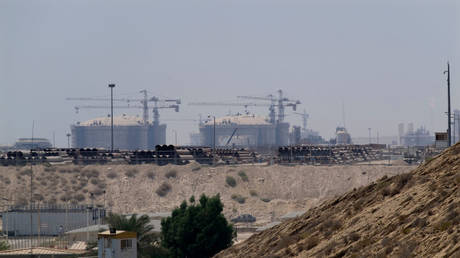
While oil dominates the news, the strike on Qatar’s Ras Laffan is arguably more dangerous. Qatar provides a massive share of the world's LNG. Unlike oil, which can be stored in strategic reserves or moved via diverse truck and rail networks in a pinch, LNG requires highly specialized, billion-dollar infrastructure.
Firefighters managed to contain the blazes at the Pearl GTL plant, but the damage is "sizable." European gas benchmarks at the Dutch TTF hub have already spiked 30%. Europe, still reeling from the energy shifts of the mid-2020s, now faces a scenario where its winter stockpiles cannot be replenished. This is a direct hit to the industrial heart of Germany and Northern Europe. Manufacturing costs are set to rise to a point where "deindustrialization" moves from a theoretical threat to a boardroom reality.
The Washington Gamble
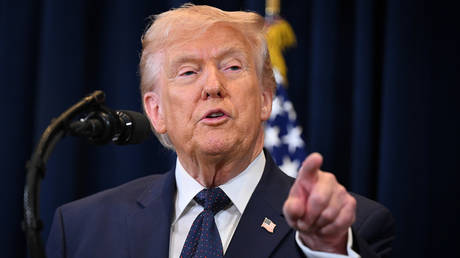
The political response has been a mixture of bravado and desperation. U.S. President Donald Trump has warned that further strikes on Qatari infrastructure would lead the U.S. to "massively blow up" the entirety of the South Pars field. However, this rhetoric ignores the physical reality of the oil market. Destroying more infrastructure only tightens the noose on global supply.
In a move that signals true panic, U.S. Treasury Secretary Scott Bessent suggested the U.S. might "unsanction" roughly 140 million barrels of Iranian oil currently sitting in tankers on the water. It is a bitter irony. To lower prices at home, the administration may have to facilitate the sale of the very oil owned by the regime they are currently in a kinetic war against.
Why Prices Won't Drop Tomorrow
Investors often wait for a "return to normal," but the technical damage to these refineries makes that impossible. We are seeing the destruction of complex cracking units and cooling systems that take months, if not years, to replace.
- Supply Chain Lag: Even if the shooting stopped tonight, the insurance premiums for tankers entering the Gulf would remain at prohibitive levels.
- Refinery Bottlenecks: It is easier to blow up a refinery than to fix one. The specialized steel and components required for these facilities are already in short supply globally.
- The China Factor: Beijing, which takes a third of the region's exports, is already hoarding its own refined products, suspending diesel and gasoline exports to protect its domestic market. This further starves the global pool of available fuel.
The International Energy Agency (IEA) has authorized the release of 400 million barrels from emergency reserves. In any other year, that would be a massive intervention. Today, it is a bucket of water thrown at a forest fire.
The brutal truth is that the global energy market was built on the assumption of a stable Persian Gulf. That assumption died on February 28. Until a new security architecture is established—one that doesn't involve daily drone swarms over the world's largest gas fields—the "high-price environment" is simply the new environment.
Contact your logistics providers and re-evaluate your 2026 fuel surcharges now; the peak hasn't even been sighted yet.

![[Write a natural, opinionated title. No colons. No brackets. No AI clichés.]](https://cms.patrika.com/wp-content/uploads/2026/03/immigrant-truck-drivers.webp)