European leaders spent the morning of November 4 quietly exhaling, but celebrating a Democratic sweep of the US Congress misses the structural reality of American executive power. While Democrats captured both the House of Representatives and the Senate in the November 3, 2026 midterm elections, President Donald Trump retains sweeping unilateral authority over tariffs, military deployments, and diplomatic deals—and stripping him of domestic legislative victories makes Europe his easiest target for unchecked executive retaliation.
In Brussels, Berlin, and Paris, the initial reaction to the "blue wave" was a mixture of guarded relief and hard-nosed skepticism. Spanish Prime Minister Pedro Sánchez hailed the vote as a rejection of "climate denial" and the international far right, while Polish Prime Minister Donald Tusk warmly declared that democracy had won in America. Yet the silence from most other European chancelleries spoke louder than the applause. Veteran diplomats in the European External Action Service understand a basic rule of Washington politics. When an American president is boxed in on Capitol Hill, he turns outward, where constitutional checks are weakest and the spotlight is brightest.
For the next two years, the transatlantic alliance will not return to the predictable rhythms of the post-war order. Instead, Europe faces a wounded, unencumbered White House determined to prove its relevance through executive fiat.
The Illusion of Congressional Rescue
To understand why a Democratic Congress cannot simply rescue Europe, you have to look at the mechanics of US trade and foreign policy law. Over the past century, Congress steadily ceded its constitutional authority over commerce and war-making to the Oval Office. Reclaiming that power requires a two-thirds supermajority in both chambers to override a presidential veto—a threshold the incoming 120th Congress does not remotely possess.
German Chancellor Friedrich Merz cut straight through the post-election euphoria during an economic forum in Berlin. "Even over the last two years, Trump has largely governed by bypassing Congress," Merz noted. "Why should that be any different now?"
That blunt assessment exposes the flaw in assuming Capitol Hill can shield European exporters. Under Section 232 of the Trade Expansion Act of 1962 and Section 301 of the Trade Act of 1974, the president can impose, modify, or expand tariffs on national security or unfair trade grounds without a single vote from lawmakers. Incoming House Ways and Means Committee Chair Richard Neal immediately singled out "price-hiking tariffs" after the election, signaling Democratic appetite to confront the administration on trade. Passing a bill to repeal duties is one thing. Surviving a guaranteed White House veto is another.
The December Tariff Cliff
The timing of the American political calendar creates an immediate trap for Brussels. The newly elected Democratic majorities will not take their seats until January 2027. Meanwhile, the European Union faces a hard deadline at the end of December 2026.
European goods containing steel and aluminum—ranging from washing machines to motorcycles—still face punitive US duties of up to 50 percent. If Washington fails to bring those rates down before the year ends, Brussels is legally positioned to suspend tariff concessions it previously granted to American exporters.
Trump enters that December window with zero incentive to compromise. Having watched voters punish Republicans over grocery bills, gasoline prices, and the economic fallout from US strikes on Iran, the president faces intense domestic pressure. Rather than retreating on protectionism, a cornered administration frequently doubles down, framing European trade surpluses as an easy villain for domestic audiences. If Brussels triggers retaliatory tariffs in January just as the new Congress convenes, Trump can paint European allies as ungrateful adversaries attacking American workers, effectively daring congressional Democrats to side with Brussels over Detroit or Pittsburgh.
Foreign Policy as an Executive Escape Hatch
Trade is only half the equation. Look at the White House's immediate post-election personnel moves to see where the administration is headed. Following the midterm defeat, Trump elevated hardliner Stephen Miller to chief of staff. That appointment signals a sharp turn toward ideological discipline and aggressive executive action rather than bipartisan accommodation.
French Economy and Finance Minister Roland Lescure identified the fork in the road facing the White House. "On international affairs, he is still in charge," Lescure warned. Trump can either read the midterm rebuke as a mandate to lower domestic fuel costs and dial back foreign entanglements, or he can press ahead with unilateral diplomacy that sidelines traditional allies.
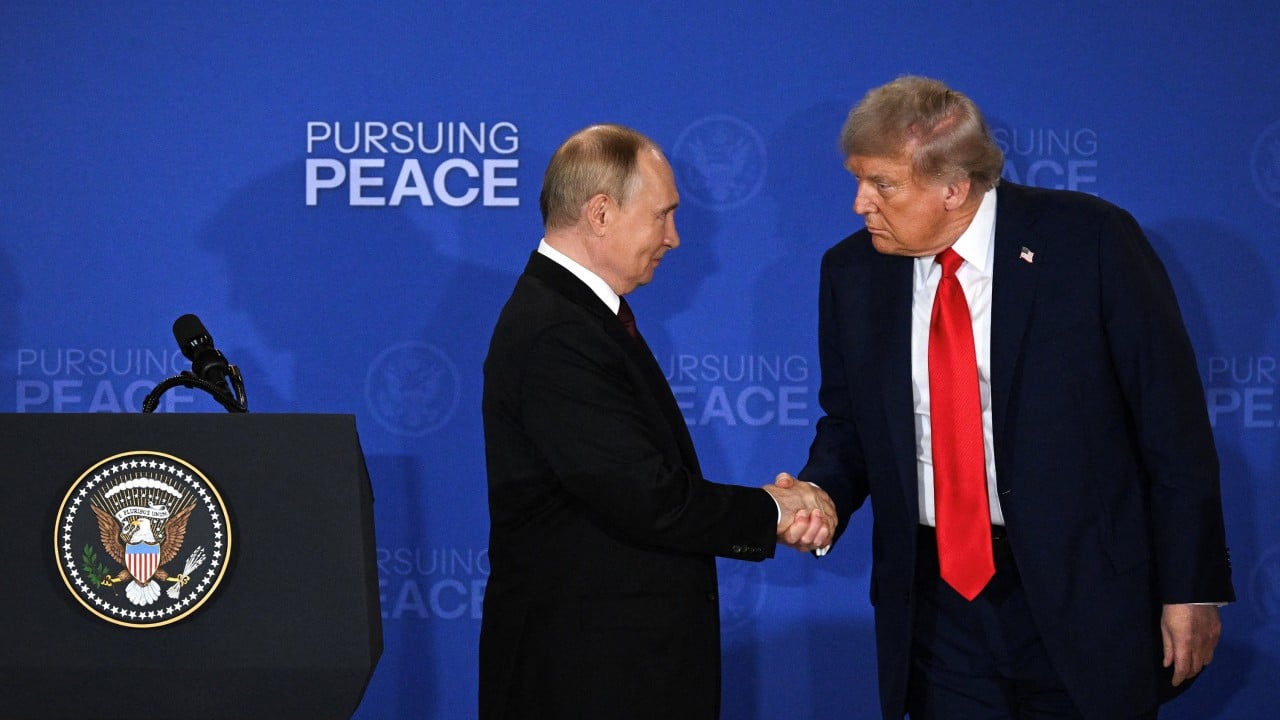
Recent events point squarely toward the latter. Just weeks after the midterms, Trump met with Chinese President Xi Jinping and Russian President Vladimir Putin in Shenzhen for a high-profile trilateral summit. While the meeting produced little concrete policy, the optics sent a chill through European capitals. A president frustrated by domestic gridlock and eager to secure a legacy achievement does not need Senate ratification to strike informal understandings with Moscow or Beijing—or to withhold diplomatic backing from NATO partners.
The Ukraine Funding Bottleneck
Nowhere is the gap between congressional intent and executive execution wider than in Ukraine. Kyiv welcomed the Democratic sweep, betting that a friendly Congress would unlock fresh military and financial assistance. Leading Democrats have fiercely criticized Trump's handling of the conflict, and appropriators on Capitol Hill can certainly write billions of dollars in new Ukraine aid into must-pass spending bills.
Writing a check and delivering weapons are two completely different operations.
Even when Congress authorizes funding, the White House controls the Pentagon's drawdown authority, export licenses, and delivery timelines. Existing defense industrial bottlenecks already mean that newly contracted air-defense missiles may not roll off assembly lines until the early 2030s. Kyiv's survival depends on rapid transfers from existing American stockpiles—transfers that require direct presidential sign-off.
Furthermore, Trump retains the ultimate veto pen over standalone aid packages. While Democrats hold majorities in both chambers, forcing aid through requires attaching it to broader government funding legislation and betting that the president will not shut down the federal government over foreign assistance. Given that voters just punished Republicans for economic disruption, a shutdown battle carries massive political risk for both sides, giving the White House substantial leverage to strip out or water down European security provisions.
Europe has tried to work around Washington's paralysis through mechanisms like NATO's Prioritised Ukraine Requirements List, which allows European governments to buy American-made weapons directly for Kyiv, alongside a proposed €45 billion EU loan to prevent a Ukrainian cash crunch. Yet money cannot instantly conjure artillery shells or interceptor missiles that European factories do not yet produce at scale.
Why European Populists Are Quietly Sweating
The conventional wisdom in Brussels suggests that a Democratic win in Washington deals a blow to Europe's nationalist right. Prime Minister Sánchez explicitly linked the American result to a broader setback for far-right movements across the Atlantic.
That reading misinterprets what actually happened at the American ballot box.
US voters did not stage a philosophical revolt against border enforcement or economic nationalism. They revolted against the cost of living. An August 2026 survey showed that 75 percent of Americans worried about affording basic groceries and household goods, with 83 percent of that group blaming tariffs for driving up prices. Combine tariff-induced inflation with anxieties over military escalation in the Middle East, and you have a textbook anti-incumbent wave.
Europe's far-right leaders grasped this nuance immediately and scrambled to put daylight between themselves and the White House.
- France: National Rally leader Jordan Bardella publicly criticized US strikes on Iran for inflicting heavy damage on the global economy.
- Spain: Vox leader Santiago Abascal brushed off comparisons to the Republican wipeout, reminding reporters that he is campaigning in Spain, not Michigan.
- Germany: Alternative for Germany co-leader Alice Weidel blamed Republican losses on Trump breaking his promise to avoid foreign military interventions.
For European leaders already governing from the right—most notably Italian Prime Minister Giorgia Meloni—the midterms serve as a stark warning. Inflation and geopolitical instability destroy incumbents regardless of ideology. If Trump responds to his midterm defeat by escalating trade wars with Europe or destabilizing energy markets through renewed strikes in the Gulf, the resulting economic pain will hit European households directly. Ironically, a retaliatory Trump presidency could end up destabilizing the very centrist European governments that quietly rooted for his defeat.
The Strategic Reality for Brussels
The real danger for Europe after November 3 is complacency. Treating the Democratic victory as a restoration of transatlantic normalcy repeats the exact mistake European capitals made after 2020, when leaders assumed American foreign policy had permanently snapped back to its Cold War defaults.
| Policy Arena | What a Democratic Congress Can Do | What Trump Can Still Do Unilaterally |
|---|---|---|
| Trade and Tariffs | Hold oversight hearings, block new statutory trade powers, and attach riders to spending bills. | Impose or raise tariffs under Sections 232 and 301, ignore WTO rulings, and trigger retaliatory spirals. |
| Ukraine and NATO | Authorize new aid funds, pass resolutions backing NATO, and investigate executive delays. | Delay Pentagon stockpile drawdowns, pursue bilateral deals with Moscow, and question mutual defense commitments. |
| Middle East and Energy | Pass War Powers resolutions (subject to veto) and scrutinize supplemental war funding. | Deploy troops, order airstrikes affecting global oil routes, and tighten unilateral sanctions. |
| Climate and Regulation | Defend green subsidies in budget negotiations and block formal treaty withdrawals. | Gut environmental enforcement, fast-track fossil fuel exports, and challenge EU carbon border taxes. |
German Defense Minister Boris Pistorius captured the only viable posture left for the continent. While welcoming the Democratic wins, Pistorius insisted that NATO must become far more European to survive, regardless of who holds power in Washington.
That means accelerating joint defense procurement, finalizing capital markets union to fund European industrial capacity, and preparing targeted, calibrated trade countermeasures that hit politically sensitive US exports without triggering an all-out recession at home. Brussels cannot outsource its economic security to Nancy Pelosi's successors on Capitol Hill, nor can it expect Chuck Schumer's Senate to restrain a president who views institutional friction as a personal challenge.
Trump no longer has to worry about running for reelection, and after November 3, he no longer has a Republican congressional majority to protect. A president with nothing left to lose at the ballot box and everything to prove to his base does not retreat quietly into lame-duck irrelevance—he uses every unilateral weapon still sitting on the Resolute Desk.