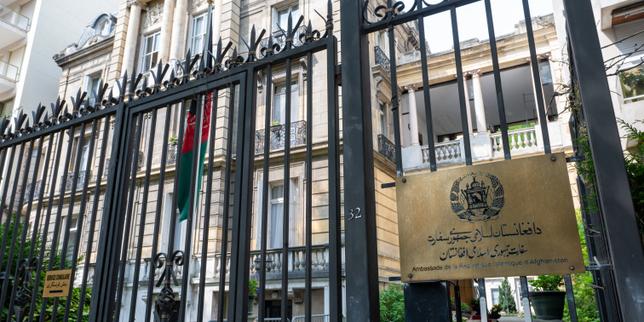
Publicly admitting to "technical discussions" with the Taliban is an exercise in diplomatic compartmentalization rather than a shift toward political legitimacy. When a Western state such as France acknowledges operational contact with the de facto authorities in Kabul, it is separating immediate functional requirements—consular logistics, humanitarian access, and security coordination—from formal diplomatic recognition. The analytical blueprint for understanding this posture rests on four mechanisms: the structural asymmetry between non-recognition and operational necessity, the signaling mechanics of "technical" framing toward domestic and international audiences, the friction points that constrain bilateral engagement, and the second-order effects on regional actors and multilateral institutions.
Evaluating these interactions requires distinguishing between verified structural constraints and analytical hypotheses. It is a documented fact that Western governments generally withhold formal recognition from the Taliban administration while maintaining episodic or ongoing channels to handle practical contingencies on the ground. It is an educated hypothesis—subject to shift as facts emerge—how any specific round of French technical contact balances consular throughput against broader counterterrorism or humanitarian objectives. Where exact figures on meeting frequency, attendance, or discrete operational outcomes are not publicly disclosed, analysis must trace the incentive structure and institutional bottlenecks governing the exchange rather than treating unverified details as settled data.
The Structural Trap of Non-Recognition
Diplomatic non-recognition creates a recurring operational dilemma for states with residual interests in a country governed by a non-recognized authority. Refusing formal diplomatic ties preserves legal and normative leverage, yet it removes standard channels for solving time-sensitive problems. If a citizen is detained, a humanitarian corridor requires clearance, or an embassy compound or diplomatic asset demands maintenance and security deconfliction, zero contact translates into zero control over immediate outcomes.
In international relations theory, this tension resembles a principal-agent problem complicated by lack of formal authority. The intervening state wants predictable execution on narrow operational tasks, while the de facto authority holds physical control over territory, borders, and local administrative machinery without being bound by normal diplomatic conventions. Because formal embassies and accredited ambassadors imply state legitimacy, governments rely on "technical" or "working-level" channels to conduct transactions without conferring sovereign status.
This mechanism operates across several distinct functional tracks:
- Consular and citizen affairs: Resolving documentation, exit clearances, or legal cases involving nationals or former local affiliates who remain inside the country.
- Humanitarian logistics: Securing movement permissions, customs clearance, and basic safety assurances for aid delivery without funding or endorsing administrative structures viewed as illegitimate.
- Security and threat monitoring: Exchanging minimal operational information or establishing deconfliction lines regarding regional militant groups or border dynamics.
- Asset and facility management: Addressing physical property, archives, or legacy obligations tied to prior diplomatic missions.
A common analytical error is reading every working-level contact as the first step toward embassy reopening. In practice, states often maintain low-tier operational contact for years as a containment measure. Functional engagement can actually reduce pressure for formal recognition by letting officials put out small fires quietly, removing the urgency to make a high-cost political concession just to get basic tasks done.
Why "Technical" Framing Carries Strategic Weight
The word "technical" does heavy political work. In diplomatic parlance, labeling an interaction "technical" signals to domestic voters, European partners, and international watchdogs that no political bargain has been struck. It draws a sharp boundary between practical administration and political endorsement, allowing officials to defend contact as a matter of duty or pragmatism rather than ideological accommodation.
Yet that boundary is porous. Every operational exchange implicitly acknowledges who exercises effective control on the ground. Even when a government insists that meeting with Taliban representatives carries no diplomatic weight, the act of negotiating access or clearances treats those interlocutors as decision-makers capable of enforcing outcomes. Over time, repeated technical contact normalizes routine interaction, lowering the political shock of future engagements even if formal recognition remains off the table.
Consider a hypothetical consular clearance request involving a dual national or a former contractor stuck in Kabul. A purely legalistic refusal to speak with local officials leaves the individual stranded, creating domestic political pressure on the foreign ministry. Using a technical channel to secure an exit permit solves the immediate crisis quietly, while the ministry can state that the interaction was strictly administrative and involved no political concessions. The tradeoff is subtle: the state gains tactical relief on a specific case while reinforcing the reality that nothing moves inside the country without local administrative consent.
This framing also serves an internal coordination function inside the intervening government. Foreign ministries, intelligence agencies, development agencies, and interior ministries often have competing priorities. Calling a channel "technical" lets specialized officials pursue narrow operational goals without triggering a cabinet-level debate over foreign policy doctrine, provided the contact stays tightly scoped.
The Cost Function of Engagement
Every step toward practical engagement carries costs that are rarely distributed evenly. Analysts often treat diplomatic contact as a low-cost tool because it requires no formal treaty or public ceremony. In reality, engagement has a distinct cost function shaped by reputational exposure, negotiation leverage, and internal coherence.
The first cost is reputational and normative friction. Western states frequently anchor their foreign policy rhetoric in human rights, women's rights, and international legal norms. Publicly acknowledging talks—even technical ones—with a regime widely criticized on those exact grounds invites accusations of inconsistency from civil society, opposition lawmakers, and human rights advocates. The more visible the contact becomes, the higher the political cost of explaining it without looking defensive.
The second cost is asymmetric leverage in transactional bargaining. When a foreign government approaches de facto authorities for a specific deliverable—such as safe passage, aid access, or information—the local side holds the gatekeeping power over physical territory. Unless the external party controls something the de facto authorities urgently need, such as unfreezing assets, lifting travel restrictions, or granting international visibility, negotiations can stall or extract small, incremental concessions for every operational favor.
The third cost is credibility risk among allies. European and Western partners closely watch one another for signs of unilateral movement on sensitive dossiers. If one capital acknowledges technical talks while another holds a stricter public posture, coordination can fray. Partners may worry that bilateral channels will undercut collective leverage or create competing tracks that dilute shared pressure.
There is also a fourth, often overlooked cost: information distortion. Relying on narrow operational contacts can skew situational awareness if officials mistake tactical cooperation on one file for broader moderation or reliability. A counterpart who cooperates on a consular or aid matter may still oppose the intervening state's core security or political interests elsewhere.
Second-Order Effects Across the Regional System
Bilateral contact between a European power and the Taliban does not occur in a vacuum. It ripples through regional capitals, multilateral bodies, and rival external actors that have long been active in Afghanistan and its neighborhood.
Neighboring states—such as Pakistan, Iran, and Central Asian republics—manage daily border security, trade flows, refugee movements, and militant spillover. Many of these regional actors already maintain pragmatic or transactional ties with Kabul driven by immediate geography and security exposure. When a European state acknowledges technical discussions, regional governments read it as confirmation that pragmatism is overriding pure isolation even among distant Western capitals, potentially stiffening local bargaining positions or prompting regional players to adjust their own diplomatic messaging.
Within multilateral frameworks such as the United Nations, fragmented engagement complicates unified strategy. Member states already disagree on how to balance humanitarian needs, counterterrorism standards, and human rights benchmarks. Separate bilateral tracks can give de facto authorities room to play external actors against one another, shopping for easier terms or using one channel's existence to pressure another.
At the same time, keeping channels strictly limited prevents complete informational blindness. States that cut off all contact often end up relying entirely on third-party intermediaries or indirect intelligence, which can be slower or more biased. A tightly bounded technical channel acts as a narrow sensor—useful for reading immediate intentions and operational realities, provided analysts do not over-interpret what it can see.
Operational Constraints and Failure Modes
Even well-designed technical engagement runs into hard practical limits. Unlike conventional diplomacy backed by embassies, accredited staff, and clear legal immunities, working-level contact with non-recognized authorities operates in a high-friction environment where misunderstandings carry real consequences.
One major failure mode is scope creep. A channel opened for a narrow purpose—say, humanitarian coordination or consular logistics—can gradually expand into broader political or security discussions without clear guardrails. Once scope creeps, the intervening state risks trading away strategic leverage piece by piece while still claiming it is only holding "technical" talks.
Another constraint is fragmented command and control on the counterpart side. Decision-making within the Taliban structure involves multiple centers of authority, regional commanders, and specialized ministries whose priorities do not always align. An assurance given by one interlocutor in a technical meeting may not bind local security forces or border officials weeks later. Relying on verbal assurances without verifiable execution is a recurring trap.
Finally, domestic political volatility in the intervening country can abruptly shut down or politicize a quiet channel. If a leak occurs, if a crisis spikes, or if domestic political pressure intensifies, officials may feel forced to freeze contact or adopt a harsher public stance overnight, disrupting ongoing operational work.
These limitations mean technical engagement is never a substitute for a coherent long-term strategy. It cannot resolve underlying governance disputes, guarantee lasting security improvements, or replace multilateral pressure where collective leverage is needed. Its value is strictly bounded: managing concrete problems at the margin while preserving room for maneuver.
Strategic Play for Managing Technical Channels
For policymakers and analysts evaluating or conducting technical engagement with the Taliban, the decisive move is to institutionalize strict ring-fencing around every operational channel while tying contact to verifiable, time-bound deliverables. Treat each technical track as a standalone transaction rather than an open-ended relationship. Define the exact objective in advance—whether consular resolution, aid access, or deconfliction—specify who is authorized to speak, and set clear thresholds for pausing or terminating talks if commitments are not met on the ground.
Pair that discipline with transparent internal alignment across security, diplomatic, and humanitarian teams, and candid coordination with allies so no partner is blindsided by disclosures. Technical discussions can solve practical problems when kept narrow and realistic; they become a liability only when allowed to drift into wishful thinking or unreciprocated concessions.


