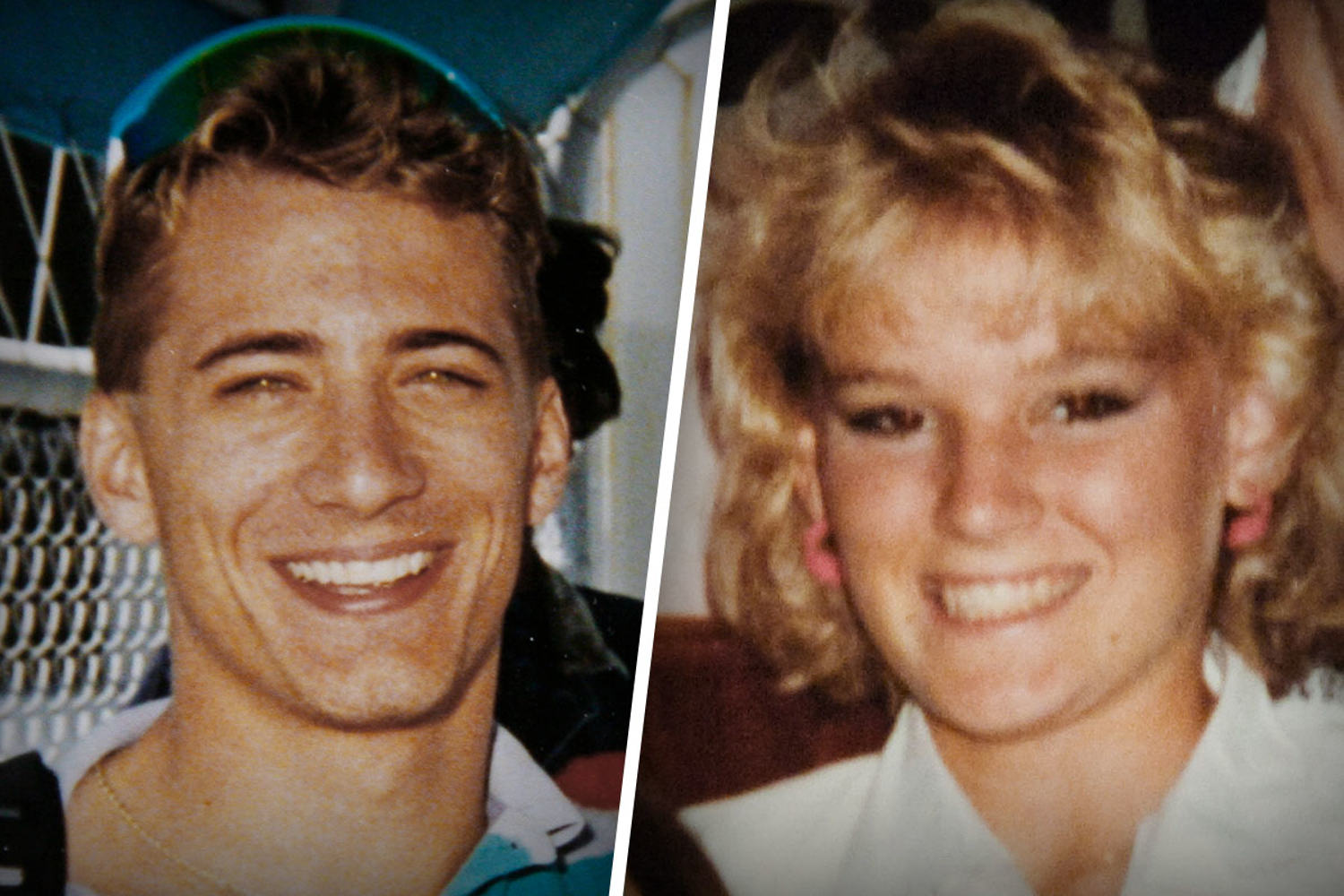
The gravel didn't crunch the same way in 1990. Back then, the outskirts of Houston felt like the edge of the world, a dark expanse where the humidity clung to your skin like a damp wool blanket. On a sweltering August night, two people went into the shadows of a secluded spot known to locals as Lovers' Lane. They didn't come out. For thirty-six years, their names—Cheryl Henry and Andy Atkinson—became shorthand for a specific kind of Texas tragedy: the unsolved, the senseless, and the frozen.
Evidence doesn't breathe, but it does wait.
Imagine a cardboard box sitting in a climate-controlled room. Inside, there are fragments of a night that ended in a nightmare. A piece of clothing. A biological trace. For decades, these items were just silent witnesses to a horror that investigators couldn't quite map out. The DNA technology of the early nineties was a blunt instrument, a flashlight with dying batteries. It could tell you someone was there, but it couldn't give them a face. It couldn't bring them to justice.
The Weight of a Cold Case
Cold cases are not merely files. They are holes in the lives of the living. To the families of Cheryl and Andy, the passage of time wasn't a healer; it was a thief. Every year that ticked by was another year the killer walked free, perhaps grabbing a coffee at the same shop, perhaps watching the same sunset, breathing the air two young people were denied. The detectives who inherited the case felt it, too. They walked into a precinct where the "Lovers' Lane" file sat like a physical weight on the shelf, a reminder of a puzzle with missing pieces.
The breakthrough didn't come from a dramatic confession or a sudden tip. It came from the relentless, microscopic march of science.
Forensic genealogy changed the rules. Think of it as a digital dragnet cast across the vast sea of public ancestry databases. By taking that decades-old DNA and comparing it to the millions of people who have voluntarily uploaded their genetic blueprints to find distant cousins, investigators began to build a family tree in reverse. They weren't looking for a direct match; they were looking for a trail of breadcrumbs left by relatives the suspect didn't even know he had.
The Man in the Mirror
In 2024, the trail led to a door. Behind it lived a man who had spent three and a half decades existing in the spaces between the headlines. When the police finally announced the arrest of 61-year-old Ronnie Wayne Massey, the shock didn't just ripple through the victims' families—it shattered the quiet of a cold case that many thought would stay buried in the Texas dirt forever.
Massey wasn't a monster from a movie. He was a man who had aged while his victims remained forever young in their high school photos. This is the part that burns. The reality that a person can commit an act of unspeakable violence and then simply... proceed. He went to work. He ate meals. He slept. Meanwhile, the echoes of that night in 1990 continued to vibrate through the lives of those left behind.
The legal system calls it "charging a suspect." The human heart calls it a reckoning.
The Invisible Stakes of Memory
We often talk about "closure" as if it’s a door you can shut and lock. It isn't. Closure is more like a scar. It’s a permanent mark that proves something happened, but it means the wound is finally finished being open. The arrest of a suspect in a case this old serves a purpose beyond the courtroom. It validates the grief of the survivors. It tells them that the world didn't forget, even when it seemed like it had moved on to the next tragedy, and the one after that.
Consider the technical precision required to bridge a thirty-six-year gap. Investigators had to maintain the integrity of evidence through decades of heat, moves, and changing personnel. One slip-up in 1995 could have ruined the chance for justice in 2026. This isn't just a win for the Houston Police Department; it is a testament to the quiet, boring, essential work of preservation.
But the real struggle lies in the "why." Why did it take so long? Why did these two lives have to be the ones to end on a dark road?
Science can give us a name. It can give us a fingerprint. It can give us a trial. What it cannot do is provide a reason that satisfies the soul. There is no logic in the dirt of Lovers' Lane. There is only the fact that a man lived a full life while his victims were denied their first act.
A Different Kind of Light
As the legal proceedings begin, the focus shifts from the "who" to the "how." How do we ensure that the thousands of other cold cases gathering dust in precincts across the country get the same chance at a resolution? The success here isn't an outlier; it’s a roadmap. It proves that no case is truly dead as long as the evidence exists and the will to pursue it remains.
The light that finally hit the Lovers' Lane case didn't come from a flashbulb. It came from a laboratory. It came from a detective refusing to let a file stay closed. It came from a family that kept the fire burning for nearly forty years.
Cheryl Henry and Andy Atkinson are no longer just names on a yellowing police report. They are the reason a 61-year-old man is sitting in a cell, facing the ghost of a night he thought he had outrun. You can run for thirty-six years, but the earth remembers where you stepped. The silence of the lane has finally been broken, and for the first time since 1990, the story isn't about the mystery. It’s about the end of it.
The shadow that hung over that stretch of road has moved. It’s now sitting in a courtroom, waiting for the gavel to fall.