Packing up a laboratory takes longer than anyone outside science ever imagines.
It is not a matter of tossing a few notebooks into a cardboard box and turning off the lights. A working molecular biology lab is a living, breathing ecosystem built over decades—a fragile architecture of sub-zero freezers humming at minus eighty degrees, custom-calibrated mass spectrometers worth more than luxury homes, thousands of glass vials containing irreplaceable chemical reagents, and invisible webs of trust connecting principal investigators to postdocs, grant officers, and clinical collaborators. When a scientist of Zhao Yingming’s stature decides to dismantle that architecture in Chicago and rebuild it in Hangzhou, the sound it makes is not a polite farewell. It is a seismic shift.
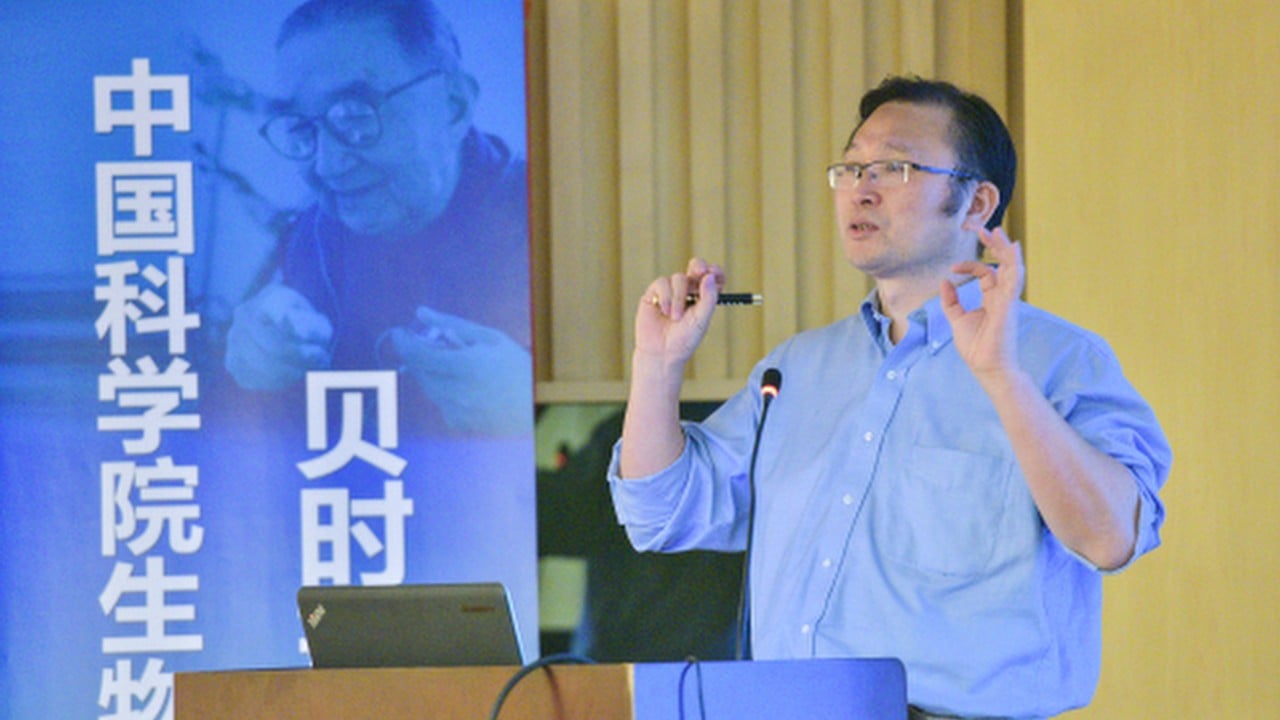
For years, headlines about academic migration read like dry shipping manifests. A name, an institution, a departure date. The competitor's account of Zhao’s move reduces a monumental human and geopolitical drama to a single, bureaucratic label—calling him a "10,000-tonne level talent" leaving the University of Chicago for Westlake University in Hangzhou.
That phrase sounds strange to Western ears, almost industrial, like cargo measured on a dock. Yet behind that translation lies the story of how global science is quietly rearranging its center of gravity, one reluctant packing crate at a time.
What Does "Ten-Thousand-Tonne" Actually Mean?
To understand why Zhao Yingming’s exit matters, you first have to decode the phrase that followed him across the Pacific. In Chinese academic and policy circles, researchers are informally tiered by the sheer displacement of their intellect—like ocean-going vessels. A thousand-tonne scholar is a respected leader in a niche field. A ten-thousand-tonne talent is an aircraft carrier. They do not merely publish papers; they invent entire sub-disciplines, command fleets of younger researchers, attract millions in translational funding, and alter the trajectory of medicine.
Zhao earned that weight class the hard way.
Born in China, trained in the crucible of American biomedical research—earning his doctorate at Rockefeller University before establishing himself at the University of Texas Southwestern Medical Center and later the Ben May Department for Cancer Research at the University of Chicago—Zhao spent more than three decades inside the engine room of Western science. His specialty sounds esoteric until you realize what it actually controls: epigenetics and protein post-translational modifications.
Think of your DNA as a massive, unchangeable library of cookbooks. Every cell in your body—from a neuron firing in your brain to a skin cell on your thumb—holds the exact same set of books. What makes a brain cell different from a liver cell, or a healthy cell different from a malignant tumor, is not the text inside the books. It is the sticky notes, bookmarks, and highlighted passages attached to the pages after they are printed.
Zhao spent his career discovering entirely new colors of sticky notes.
In 2007, his team identified lysine propionylation and butyrylation—chemical tags attached to histone proteins that had completely escaped detection despite decades of intensive study. Then came succinylation, malonylation, crotonylation, and, in a landmark 2019 Nature paper, histone lactylation. That last discovery upended ninety years of textbook biology. For nearly a century, doctors viewed lactate—the acid that burns in your muscles during a sprint—as mere metabolic waste. Zhao proved that cells actually use lactate as an epigenetic switch, rewriting gene expression during inflammation, sepsis, and cancer growth.
When a scientist who rewrites biology textbooks decides that his future no longer belongs in the American Midwest, you have to ask why.
The Invisible Friction on the South Side
Consider a hypothetical composite—let us call him David, a mid-career biomedical investigator working in a major American research corridor—to see what daily life behind the bench began to feel like over the past several years. David wakes up at five in the morning not to design experiments, but to edit federal grant applications whose funding paylines have dropped into the single digits. He spends forty percent of his waking hours justifying budgets, navigating compliance audits, and worrying whether an international collaboration from five years ago will trigger a formal inquiry.
I have walked those long, fluorescent-lit corridors in Chicago during late winter, when the wind off Lake Michigan cuts through heavy wool coats and the steam pipes clank inside neo-Gothic stone buildings. For generations, those buildings represented an unspoken bargain offered by the United States to the sharpest minds on earth: Come here. Leave behind whatever limits held you back at home. We will give you intellectual freedom, world-class infrastructure, and the benefit of the doubt.
That bargain began to fray long before Zhao booked his flight.
In 2018, the U.S. Department of Justice launched the China Initiative, an effort intended to counter economic espionage that quickly spilled over into university campuses. Even after the program was officially ended in 2022, the chill it left inside research departments never fully thawed. Federal funding agencies tightened disclosure rules; routine academic exchanges suddenly carried the weight of national security reviews; and researchers of Chinese descent found themselves caught between two suspicious superpowers.
At the same time, the economics of American academic science grew increasingly brittle. Winning a National Institutes of Health R01 grant—the lifeblood of a U.S. biology lab—became a grueling lottery. Brilliant ideas stalled in review committees because they were deemed too risky, while administrative overhead swallowed larger slices of every award.
Nobody wakes up one morning and casually abandons thirty years of colleagues, neighbors, and institutional memory. A departure like Zhao’s is almost never sparked by a single dramatic explosion. It is the cumulative result of a thousand tiny, exhausting drags on momentum—and the sudden appearance, half a world away, of an institution built specifically to remove them.
Why Hangzhou, and Why Westlake?
If you haven't visited Hangzhou recently, your mental picture of Chinese academia is probably fifteen years out of date.
For decades, top Chinese scientists abroad resisted returning because domestic universities were rigid, hierarchical, and obsessed with short-term publication metrics. Seniority mattered more than curiosity. Junior faculty waited years for basic equipment.
Westlake University was engineered from the ground up to break every one of those habits.
Founded in 2018 with the backing of prominent philanthropists and led by structural biologist Shi Yigong—himself a former Princeton professor who left New Jersey for Beijing a decade earlier—Westlake is China’s first modern private research university modeled explicitly on Caltech and Rockefeller University. Nestled in the lush, mist-draped hills of Hangzhou’s Yuhang District, far from the bureaucratic suffocation of older state ministries, Westlake operates on a radically different premise: hire the heaviest hitters on earth, hand them guaranteed long-term funding, strip away administrative busywork, and let them chase high-risk science.
Look closely at the contrast between the two worlds Zhao navigated:
- The Grant Treadmill vs. Institutional Backing: In Chicago, sustaining a large proteomics and chemical biology operation requires constant fundraising across multiple federal agencies. At Westlake, incoming chair professors receive multi-year, stable research packages designed to cover core equipment and personnel without endless grant writing.
- Translational Speed: Hangzhou has quietly transformed into one of Asia’s densest biotechnology hubs, sitting right beside Alibaba’s digital ecosystem and a booming ring of clinical hospitals and venture funds. Moving a discovery from a mass spectrometer to a therapeutic candidate happens across shorter distances and faster regulatory pathways.
- Mentorship Scale: Rather than fighting for a shrinking pool of postdoctoral fellows in the U.S.—where visa backlogs and stagnant stipends have caused a severe talent shortage—labs in Hangzhou draw directly from an enormous pipeline of top-ranked STEM graduates.
Zhao did not walk into a vacuum when he joined Westlake’s School of Life Sciences. He stepped into a growing constellation of returning luminaries—biologists, chemists, and physicists who knew each other from conferences in Cold Spring Harbor, Boston, and San Diego, and who were now rebuilding their academic neighborhood along the banks of the Qiantang River.
What Actually Leaves When a Lab Moves
There is a comforting myth that science is purely borderless—that because discoveries are eventually published in international journals, it makes no difference whether a breakthrough happens in Hyde Park or Hangzhou.
That myth collapses the moment you look at how innovation actually works.
Published papers are only the finished photographs of science; they never show the darkroom. The real engine of discovery lives in tacit knowledge—the unwritten intuition passed across a lab bench at two in the morning when an experiment fails for the sixth time. It lives in the graduate students trained by a master investigator, the biotech startups spun out within ten miles of the campus, the local clinicians who get early access to diagnostic biomarkers, and the intellectual gravity that attracts the next generation of ambitious twenty-somethings.
Zhao’s career is a textbook case of how fundamental chemistry turns into real-world medicine. By mapping previously invisible chemical modifications on proteins, his work opened doors to understanding how cancer cells hijack metabolism to survive chemotherapy, how immune cells become exhausted inside tumors, and why metabolic diseases like diabetes wreak systemic havoc on gene regulation. Before leaving Chicago, he had already co-founded biotechnology ventures aimed at turning these chemical insights into targeted therapies.
When a researcher of that caliber relocates, the ripple effects extend outward for decades:
- Training Pipelines Shift: Dozens of doctoral students and postdoctoral fellows who would have launched careers in American universities and pharmaceutical companies will instead build their networks in the Yangtze River Delta.
- Intellectual Property Anchors Elsewhere: Early-stage patents, proprietary chemical probes, and translational partnerships naturally cluster around the physical location of the laboratory.
- Institutional Momentum Compounds: Every high-profile departure makes the next one easier. Scientists rarely want to be the first to leap, yet once a critical mass forms, staying behind begins to feel like the riskier choice.
Between 2010 and 2021, data tracked by Stanford researchers showed a steady, accelerating climb in the number of Chinese-origin scientists leaving U.S. institutions—a trend that has only sharpened as elite Chinese universities matured from teaching-focused campuses into genuine powerhouses of basic discovery. Zhao’s move is not an isolated anomaly. It is a bellwether.
The Human Cost Nobody Counts
Still, reducing this story to a geopolitical scoreboard misses the quiet tragedy at its center.
Spend thirty years in any city and it becomes woven into your bones. You know which coffee shop opens before dawn, which lakefront path clears first after a spring snowstorm, which colleagues you can call when a manuscript gets rejected at midnight. You watch your children grow up speaking two languages, bridging two cultures that once seemed destined to grow closer through shared scientific curiosity.
For a whole generation of Chinese-American scientists, the laboratory was supposed to be neutral ground—a place where the only allegiance that mattered was to reproducible data and human health. Watching that neutral ground narrow into a contested borderland has left thousands of researchers with an impossible emotional calculus. Stay, and risk spending your most productive years fighting headwinds of suspicion and shrinking budgets. Leave, and uproot an entire life built over half a lifetime.
I will be honest: nobody knows how this realignment will end. It is entirely possible that intense competition between American and Chinese research ecosystems will accelerate cures for cancer, Alzheimer’s, and metabolic disease faster than either country could manage alone. Science thrives on rivalry just as much as it thrives on collaboration. Yet there is a profound difference between competing on the open field and watching one side accidentally bench its own all-stars.
On a crisp autumn morning in Hangzhou, the mist rises off West Lake while the centrifuges spin inside gleaming glass laboratories a few miles away. Thousands of miles east, inside a quiet office in Chicago, empty bookshelves catch the pale afternoon light, waiting for someone new to fill them.