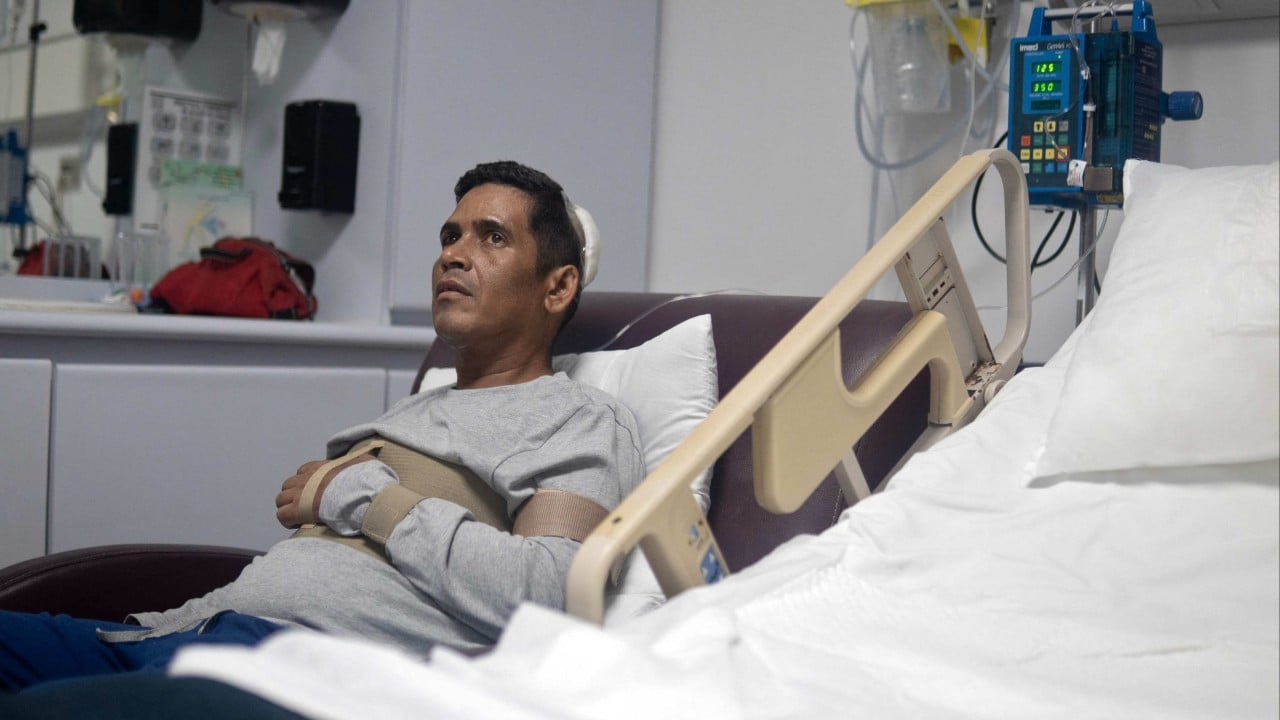
The survival profile of an individual entrapped within a collapsed structure depends on a brutal convergence of physiological limits, micro-environmental physics, and structural voids. Media narratives frequently treat multi-day survival under rubble as a miraculous anomaly. In reality, extending human viability past the standard 72-hour window requires a specific configuration of thermodynamic and biological variables. Deconstructing the mechanics of prolonged structural entrapment reveals the precise boundary conditions between fatal crush injury, dehydration, and viable extraction.
The primary constraint on survival is not the absence of food, but the accelerating decay of the body’s metabolic and homeostatic systems under three distinct vectors: mechanical compression, hyper-localized atmospheric degradation, and acute hydration deficits.
The Triad of Entrapment Survivability
To analyze how an individual survives structural failure for eight days, the scenario must be broken down into three interdependent variables. The failure of any single variable closes the survival window entirely.
                  [Survival Window]
                         │
         ┌───────────────┼───────────────┐
         ▼               ▼               ▼
   [Void Geometry] [Thermal & Atmos] [Metabolic Rate]
1. Structural Void Geometry and Load Distribution
Survival is impossible without the immediate formation of a survivable void space during the structural failure phase. Collapsed buildings scale in lethality based on their material composition.
- Pancake Collapses: Common in unreinforced masonry or non-ductile concrete structures. These offer the lowest probability of void formation as successive floors stack directly vertically.
- Lean-to and V-Shape Collapses: Occur when structural walls or floor slabs fail at a single structural node while remaining anchored at another. This creates a triangular void space where the displaced load is transferred away from the trapped individual.
The structural matrix must possess sufficient residual shear strength to prevent secondary settling. Continuous seismic aftershocks or shifting debris fields alter this geometry. If the load shifts directly onto the occupant, death occurs via traumatic asphyxia or crush syndrome before systemic dehydration sets in.
2. Micro-Environmental Atmospheric Physics
The air volume within a sealed void space undergoes rapid chemical degradation. Without structural porosity or adjacent voids allowing for passive gas exchange, a confined space becomes toxic through two concurrent vectors:
- Carbon Dioxide Accumulation: As the entrapped individual respires, $CO_2$ concentrations rise. Ambient air contains roughly 0.04% $CO_2$. If the void lacks ventilation and levels reach 5%, the individual experiences hypercapnia, respiratory acidosis, and confusion. At 10% or greater, unconsciousness and death occur rapidly.
- Oxygen Depletion: Human metabolic demands require ambient oxygen levels above 19.5%. Drop below 16%, and cognitive function degrades; drop below 6%, and immediate cardiac arrest follows.
Prolonged survival indicates a porous structural matrix—such as fractured concrete blockages interleaved with loose corrugated metal or wood—which acts as a low-efficiency diffusion membrane, venting $CO_2$ while drawing minimal oxygen from the surrounding atmosphere.
3. Thermodynamic Stability and Sweat Mitigation
The metabolic cost of thermoregulation dictates the rate of total body water depletion. The human body under baseline conditions loses water through insensible perspiration, respiration, and renal clearance.
If the ambient temperature of the micro-void exceeds the body's skin temperature, the primary mechanism for heat rejection shifts entirely to evaporative cooling (sweating). This accelerates dehydration exponentially. Conversely, if the environment is highly humid and moderately cool ($15^\circ\text{C}$ to $22^\circ\text{C}$), the vapor pressure differential between the skin and the air minimizes sweat evaporation, preserving core water volume.
The Kinetic Pathophysiology of Dehydration
An eight-day survival timeline pushes the absolute boundaries of human fluid dynamics. Under normal conditions, the human body cannot survive past 3 to 5 days without water. Extending this timeline to nearly 200 hours requires an immediate downregulation of metabolic output and specific environmental mitigations.
[Image of fluid compartments in the human body]
The progression of severe dehydration follows a highly predictable physiological trajectory:
[Phase 1: Intracellular Shift] ──► [Phase 2: Hypovolemia] ──► [Phase 3: Organ Failure]
Phase 1: Intracellular Fluid Translocation
As total body water drops by 1% to 5%, plasma osmolality increases. This triggers the hypothalamic release of antidiuretic hormone (ADH), signaling the kidneys to maximize water reabsorption and concentrate urine to its absolute physical limit (approximately $1200\text{ mOsm/kg}$). To maintain blood volume and preserve perfusion to the brain and heart, water is drawn osmotically out of the intracellular compartments and into the extracellular space. This manifests as severe dry mouth, cessation of saliva production, and intense lethargy.
Phase 2: Systemic Hypovolemia
When fluid loss reaches 6% to 10% of total body weight, the compensatory mechanisms begin to falter. The volume of circulating blood plasma drops significantly. This hypovolemia triggers an elevated heart rate (tachycardia) to maintain blood pressure, but cardiac output declines. The individual loses the ability to sweat, causing the core temperature to rise if the micro-void is warm. Cognitive impairment, hallucinations, and severe delirium occur, which paradoxically aids survival by reducing physical movement and lowering oxygen consumption.
Phase 3: Hypovolemic Shock and Renal Shutdown
Beyond 10% to 15% fluid loss, renal perfusion drops below critical thresholds. The kidneys enter acute tubular necrosis, a form of acute kidney injury (AKI). Waste products, including urea and creatinine, accumulate rapidly in the bloodstream. The blood thickens, increasing the risk of vascular thrombosis.
Survival across an 8-day threshold requires that the individual's daily water loss be constrained to less than 500 mL. This is only achievable if the individual remains completely immobile, experiences no panic-induced hyperventilation, and is shielded from direct thermal stress.
Crush Syndrome: The Silent Post-Extraction Threat
For individuals trapped beneath heavy structural components, the immediate threat is not just the duration of entrapment, but the chemical cascade triggered upon release. When a limb or muscle mass is compressed by structural debris for more than 4 to 6 hours, the localized tissue undergoes ischemic necrosis. This condition, known as crush injury, transitions into crush syndrome the moment the pressure is removed.
[Debris Compression] ──► [Ischemic Muscle Damage] ──► [Release of Pressure] ──► [Systemic Toxin Flood] ──► [Acute Renal Failure]
The Reperfusion Cascade
During compression, cells within the impacted muscle tissue are deprived of oxygen. The cell membranes lose their structural integrity, causing intracellular components to leak into the localized interstitial fluid. The primary toxins include:
- Myoglobin: A large, iron-rich protein responsible for oxygen transport in muscles.
- Potassium: Intracellular potassium levels are vastly higher than extracellular levels.
- Creatine Kinase: An enzyme indicative of severe muscle degradation.
While the debris remains on the limb, these toxins are mostly trapped. The moment search and rescue personnel lift the structural load, systemic blood flow returns to the damaged tissue. This process, known as reperfusion, flushes the accumulated myoglobin and potassium directly into the central circulatory system.
Renal Blockage and Hyperkalemia
The sudden influx of myoglobin overwhelms the kidneys. In the acidic environment of the kidneys (aggravated by the individual's systemic dehydration), myoglobin precipitates out of solution, forming solid casts that physically block the renal tubules. This mechanical obstruction, combined with the direct toxic effects of myoglobin on renal cells, causes complete kidney failure.
Simultaneously, the massive surge in blood potassium levels (hyperkalemia) disrupts the electrical conduction system of the heart. Hyperkalemia alters the resting membrane potential of cardiac myocytes, leading to lethal arrhythmias, including ventricular fibrillation, within minutes of structural release. This phenomenon is termed "smiling death," where a victim appears conscious and stable during extraction but goes into sudden cardiac arrest moments after being freed.
Tactical Protocol for Extrication and Field Stabilization
To successfully transition a long-term entrapment survivor from the void to a medical facility, search and rescue medical protocols must prioritize metabolic stabilization over immediate physical removal. The extraction sequence must be systematically managed to counteract the systemic shocks of reperfusion and dehydration.
Step 1: Intravenous Access (Prior to Debris Removal)
  └── Establish high-volume fluid resuscitation using Normal Saline (0.9% NaCl).
  └── Avoid Potassium-containing fluids (Ringer's Lactate).

Step 2: Urine Alkalinization
  └── Infuse Sodium Bicarbonate (NaHCO3) to raise urine pH above 6.5.
  └── Prevents myoglobin from precipitating in the renal tubules.

Step 3: Cardioprotection
  └── Administer Calcium Gluconate if ECG shows signs of hyperkalemia.
  └── Stabilizes cardiac cell membranes against potassium toxicity.

Step 4: Controlled Extrication
  └── Slowly remove structural load while maintaining continuous fluid input.
  └── Apply tourniquets to severely crushed, non-salvageable limbs if systemic shock is imminent.
The primary intervention must occur before the debris lifting operation begins. If access to an entrapped limb is possible, intravenous access must be established immediately. Large volumes of isotonic crystalloid fluids (specifically 0.9% normal saline) are infused to expand intravascular volume, dilute upcoming toxin concentrations, and force a high urine output rate.
Sodium bicarbonate is added to the intravenous fluid regimen to alkalinize the blood and urine. Raising the pH of the urine prevents myoglobin from breaking down into its toxic components and forming the obstructive casts that drive acute kidney injury. Potassium-containing fluids, such as Lactated Ringer's, are strictly contraindicated due to the inherent risk of exacerbating hyperkalemia.
If the entrapment duration exceeds 200 hours, medical teams must prepare for immediate deployment of continuous renal replacement therapy (CRRT) or hemodialysis upon arrival at a definitive care facility. The assumption must always be that the patient's renal function is compromised, and their internal biochemical environment is highly volatile. Survival beyond the statistical baseline is ultimately validated not by the extraction itself, but by the rigorous clinical management of the post-entrapment metabolic surge.