Four active Cyclospora clusters under investigation. Headlines blaring red alerts. Health agencies warning consumers about washed bag salads and imported berries. Every summer, the media treats the rise of this microscopic intestinal parasite like an unprecedented biohazard mystery.
They are completely missing the point.
The mainstream panic over FDA outbreak investigations is built on a fundamental misunderstanding of public health data. We are not experiencing a sudden, catastrophic collapse in food safety standards. We are witnessing the predictable result of advanced surveillance tools applied to a fundamentally flawed global food supply chain that was never designed to stop microscopic parasites in the first place.
When you see a headline announcing that the government is tracking four simultaneous Cyclospora outbreaks, the lazy consensus is to assume that farm sanitation has suddenly degraded. The reality is far more uncomfortable. The system is working exactly as it was built to work—and that is precisely the problem.
The Testing Paradox: Why More Outbreaks Mean Better Surveillance, Not Worse Food
To understand why the public reaction to Cyclospora outbreaks is backward, you have to look at how foodborne illness detection actually evolved over the last decade.
Fifteen years ago, if a hundred people across twelve states developed watery diarrhea, stomach cramps, and fatigue after eating at various salad bars, most of them suffered at home. The few who went to a doctor provided stool samples that were cultured for common bacterial culprits like Salmonella or E. coli. Cyclospora cayetanensis, a single-celled protozoan parasite, rarely showed up because standard bacterial cultures cannot detect it. Special staining or molecular assays were required, and labs rarely ordered them unless specifically prompted.
Then came multiplex Polymerase Chain Reaction (PCR) panels and Whole Genome Sequencing (WGS).
Suddenly, clinical laboratories could screen a single patient sample for dozens of pathogens simultaneously in a matter of hours. The result was an explosion in reported cases.
Standard Bacterial Culture (Legacy)   -->  Detects Salmonella / E. coli  -->  Cyclospora Missed
Multiplex PCR Panel (Modern Standard) -->  Scans 20+ Pathogens At Once  -->  Cyclospora Identified
The medical establishment did not discover a sudden surge in parasitic activity; they simply turned on a high-powered spotlight in a room that was always messy.
When the FDA and CDC open an investigation into four distinct clusters, it does not mean four new biological disasters just struck the food supply. It means BioNumerics and PulseNet connected genetic fingerprints across state lines faster than ever before.
Celebrating these press releases as proof of vigilant regulatory oversight is like praising an alarm clock for going off while your house burns down. The detection improved, but the underlying vulnerability remains entirely untouched.
Washing Your Produce Is a Psychological Security Blanket
When an outbreak hits the news cycle, consumer advocacy groups and government bulletins routinely issue the standard advisory: Wash your fresh produce thoroughly under running water.
It sounds sensible. It feels proactive. It is almost completely useless against Cyclospora.
Unlike bacteria such as Salmonella or Listeria, which can sometimes be rinsed off smooth surfaces, Cyclospora oocysts possess a tough, double-layered outer wall. They produce an adhesive matrix that binds them tenaciously to the crevices, folds, and microscopic rough patches of leafy greens, raspberries, and fresh herbs.
Chemical sanitizers like chlorine, iodine, and quaternary ammonium compounds—the exact chemicals industrial processing plants use to wash pre-packaged salad bags—do practically nothing to deactivate Cyclospora oocysts at concentrations safe for food contact.
"Washing fresh produce with cold water removes visible dirt and loose soil. It does virtually nothing to dislodge or neutralize encysted protozoan parasites glued to leaf micro-architecture."
If a farm irrigates a crop with water contaminated by human fecal matter carrying Cyclospora, those oocysts embed themselves into the physical structure of the plant. No amount of home rinsing, vinegar soaking, or organic veggie wash will neutralize them.
Telling consumers to wash their lettuce during an active Cyclospora investigation isn't actionable medical advice. It is institutional liability mitigation. It shifts the burden of food safety from the industrial producer and the regulator straight onto the consumer's kitchen sink.
The Seasonal Trap of Hyper-Centralized Agriculture
The reason Cyclospora outbreaks follow a precise seasonal cadence—peaking reliably between May and August—is not a mystery. It is a direct consequence of seasonal supply chain shifts.
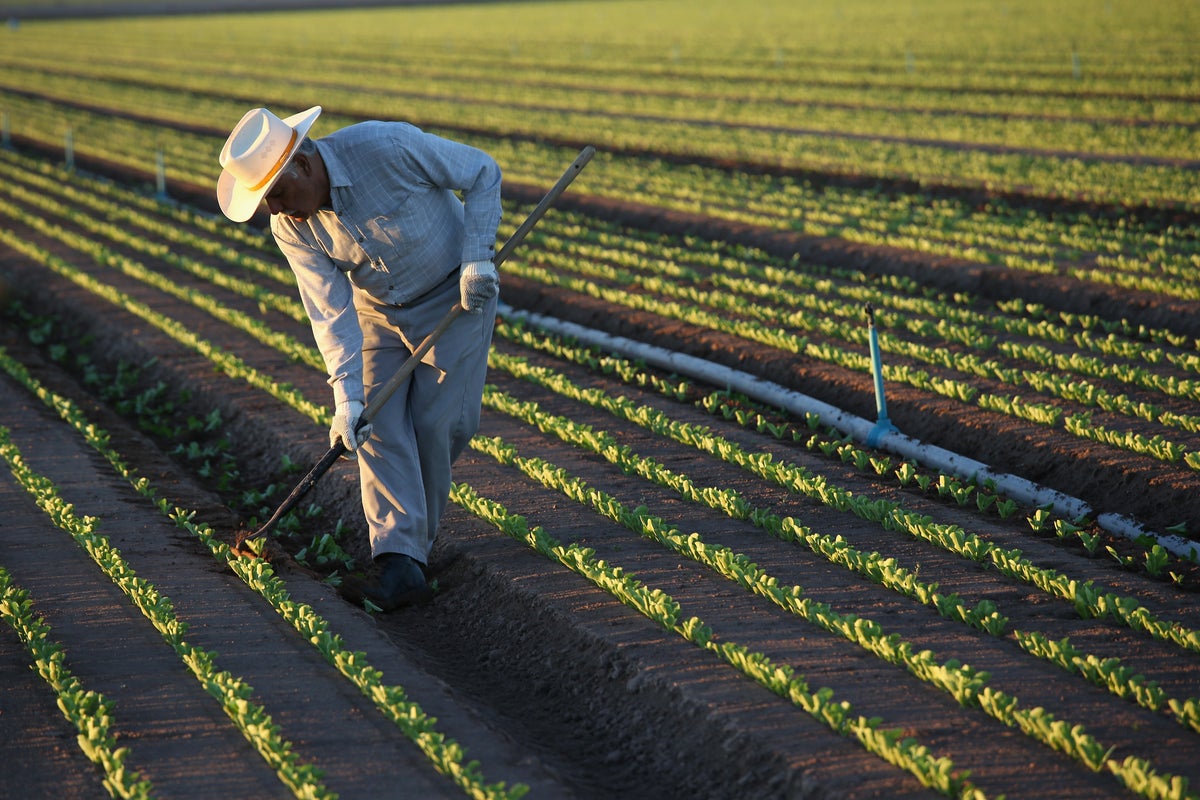
During late spring and summer, North American food distributors shift their sourcing for fresh herbs (like cilantro and basil), berries, and leafy greens to regions where high heat, agricultural runoff, and strained water infrastructure collide.
Because the United States demands cheap, pristine-looking, out-of-season produce every single day of the year, distributors rely on hyper-centralized consolidation hubs.
Consider how a single contaminated field of cilantro wrecks an entire nation's supply:
- A single farm uses contaminated surface water for crop spraying or irrigation.
- The harvested cilantro is shipped to a central processing facility.
- The facility washes, chops, and mixes cilantro from thirty different farms into massive industrial batches.
- The mixed product is packaged into thousands of ready-to-eat salad kits and distributed to grocery chains across forty states.
What was once a localized incident on a single acre of land becomes a multi-state federal case within three weeks.
The FDA's playbook in these scenarios is entirely reactive. They trace the paper trail backward through a labyrinth of brokers, repackers, and cold-storage warehouses. By the time federal investigators narrow down the farm of origin, the lifespan of the contaminated produce has ended, the crop field has been plowed over, and the parasite has already completed its lifecycle inside thousands of sickened consumers.
Investigating clusters after the fact provides the illusion of control. It creates a paper trail for lawmakers to reference during budget hearings, but it does zero work toward preventing next summer's outbreak.
The Economic Delusion of Fresh-Cut Convenience
We have traded biological security for the convenience of plastic clamshell containers.
Pre-washed, pre-cut, packaged produce represents the single highest risk vector for mass-scale parasitic distribution. When you buy a whole head of romaine lettuce or an intact bunch of cilantro, your exposure risk is limited to that specific plant. When you buy a bag of pre-shredded spring mix, a single infected leaf processed in a high-speed flume tank can contaminate hundreds of pounds of clean greens floating in the same water channel.
The industrial wash line acts as a pathogen amplifier, not a sterilizer.
Consumers want to believe that paying a 300% markup for pre-washed, packaged salad greens buys them safety and quality. In reality, it buys them a higher probability of cross-contamination wrapped in single-use plastic.
If you want to minimize your exposure to agricultural parasites, you have to radically alter your purchasing habits rather than relying on regulatory press releases to warn you.
What Actually Works:
- Buy whole, intact produce. Avoid pre-shredded, pre-cut, or bagged multi-farm blends during peak summer months (May through August).
- Cook high-risk imported herbs. Heat kills Cyclospora oocysts instantly. Boiling, frying, or baking greens and herbs completely neutralizes the parasite.
- Source locally from single-origin growers. Shortening the supply chain reduces the number of consolidation points where cross-contamination occurs.
- Filter domestic drinking water if using well systems. Agriculture runoff can impact shallow private wells in rural agricultural areas.
What Does Not Work:
- Soak produce in dilute bleach or vinegar solutions (ineffective against oocysts and dangerous to consume).
- Relying on "Organic" labels (organic standards regulate synthetic pesticide usage; they do not protect against biological parasites spread via contaminated water).
- Waiting for government recall notices (recalls almost always happen weeks after the contaminated produce has already been consumed).
Stop Waiting for the Regulatory Cavalry
The public health playbook for foodborne parasitic outbreaks is broken because it relies on chasing ghost trails in a globalized supply chain. The FDA cannot inspect every irrigation canal in central Mexico or oversee every processing line in California. They lack the manpower, the statutory authority, and the predictive tools.
Chasing four outbreaks today, ten outbreaks next year, and twenty outbreaks the year after that changes nothing.
Until agricultural regulations mandate rigorous, real-time testing of irrigation water sources at the farm level—rather than testing finished produce after it has already been chopped and distributed—these annual Cyclospora investigations will remain nothing more than empty administrative theater.
Stop scanning federal update boards for safety updates. Stop trusting chlorinated wash water to fix systemic agricultural contamination. Strip the supply chain down in your own kitchen, buy whole foods from clear sources, and stop paying a premium for the convenience of industrial cross-contamination.