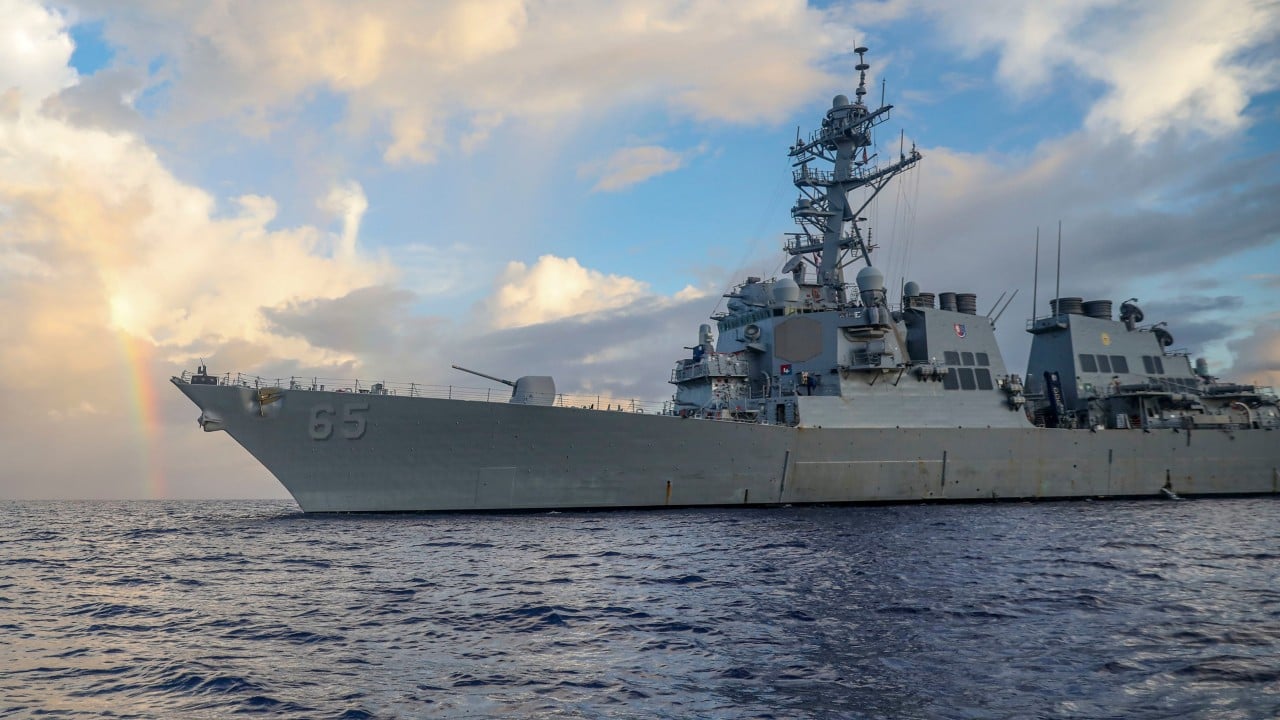
The USS Benfold drifted in the South China Sea for four days in late July, effectively a ghost ship in a region defined by high-stakes power projection. For ninety-six hours, the guided-missile destroyer lacked basic electrical power. This was not a minor glitch. The failure of the ship's generators stripped 300 sailors of sanitary facilities, climate control, and hot meals. In a theater where the United States maintains a delicate balance against regional adversaries, a warship without propulsion or power is a liability that exposes the thin margins of current naval operations.
While the Navy emphasizes the resilience of the crew, the reality on the water tells a story of an aging, overstretched fleet pushed beyond its maintenance envelope. The Benfold incident, which required the vessel to be towed to the Philippines for repairs, marks the second significant engineering casualty involving an Arleigh Burke-class destroyer in the Indo-Pacific this year. The USS Higgins suffered a similar loss of propulsion and power in May. When the backbone of the surface force begins to falter with such regularity, the issue moves beyond isolated mechanical bad luck and settles firmly into the realm of structural readiness failure.
The Arleigh Burke-class destroyer has served as the primary workhorse for the fleet for decades. There are more than 70 of these vessels in commission today, and they are tasked with everything from ballistic missile defense to routine presence patrols. However, high operational tempos have meant that many of these ships spend more time at sea than in dry dock. When maintenance schedules are compressed to accommodate the relentless demands of a global presence, something eventually snaps. In the case of the Benfold, that snap occurred in a maritime environment where temperatures routinely climb into the high 90s, turning the interior of a powerless ship into a furnace for the sailors trapped inside.
Strategic planners often speak of "presence" as a deterrent, but presence is only as credible as the capability behind it. By pulling assets like the USS George Washington carrier strike group to support operations elsewhere, the Navy is effectively thinning its defensive line in the Pacific. If the primary deterrent in the South China Sea—the destroyer—cannot sustain itself during a routine deployment, the perception of American strength erodes. Adversaries do not see a "resilient crew" overcoming a minor casualty; they see a platform that can be sidelined by a generator failure.
The broader conversation about these casualties is tethered to the welfare of the sailors. Reports of shortages in supplies and morale issues aboard the USS Abraham Lincoln have already stirred domestic political concern. When the machinery of the ship fails, the human cost is immediate. Operating a warship is inherently dangerous, but it becomes untenable when the infrastructure required for basic human sanitation and cooling vanishes. A sailor who cannot shower, eat a warm meal, or sleep in a climate-controlled environment is a sailor whose performance degrades rapidly.
There is a distinct lack of transparency regarding the root causes of these recurring electrical failures. The Navy has categorized these events as "engineering casualties" and launched investigations, but the recurring nature of the problem suggests a deeper systemic issue. Is the supply chain for replacement parts insufficient? Are the ships being operated at speeds or under load conditions that exceed original design specifications? Without honest answers, the cycle of breakdown and repair will continue.
An Arleigh Burke destroyer is essentially a complex, floating power plant wrapped in armor and weapon systems. It is not designed to sit dead in the water. The fact that the Benfold was left in such a state for four days suggests that the support network in the region is also stretched thin. While the cruiser USS Robert Smalls was able to provide food, the reliance on other ships to sustain a disabled vessel highlights a vulnerability in decentralized fleet operations.
The military cannot simply rely on the grit of its crews to compensate for failing hardware. Professionalism is an asset, but it is not a spare generator. As the Indo-Pacific remains the primary theater of geopolitical friction, the U.S. Navy must reconcile its ambition for global coverage with the physical limits of its surface fleet. If the current trend of mechanical failures continues, the next breakdown might occur at a moment when the ship is not conducting routine operations, but is instead needed to maintain a critical line of defense.
Reliability is the currency of naval power. If the currency is devalued, the entire strategy falters. The transition from a mission-ready fleet to a reactive, maintenance-heavy one is a slow process, but the signs of that decline are now visible on the open sea.
US Navy destroyer power failure analysis
This video provides additional context regarding the specific conditions faced by the crew of the USS Benfold during their four-day blackout in the South China Sea.