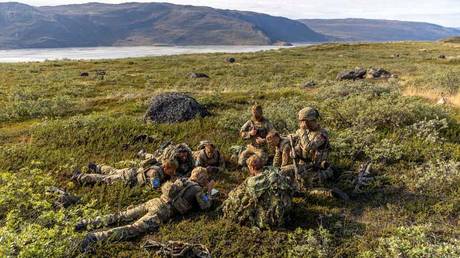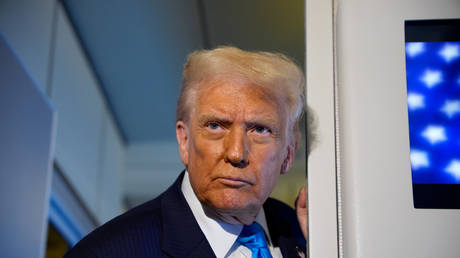
Foreign policy rarely turns on a single, petulant rejection, yet Washington and Seoul find themselves locked in a dangerous spiral born from exactly that. When Donald Trump ordered the Pentagon to substantially scale back joint military exercises with South Korea, the move was widely characterized as a sudden pivot or a diplomatic miscalculation. It was neither. It was the predictable collision of a transactional presidency with a middle power unwilling to be conscripted into an unrelated Middle Eastern quagmire.
President Donald Trump is mad at South Korea because Seoul flatly refused his request to contribute military assets to the ongoing campaign against Iran, combining that refusal with long-running grievances over defense cost-sharing and an idiosyncratic desire to coddle Pyongyang. For decades, the architecture of American hegemony in East Asia relied on predictable commitments. Today, that architecture is being stress-tested by an administration that views security guarantees less as a strategic necessity and more as an unpaid subscription service.
To understand how a routine bilateral partnership devolved into public recriminations, one must examine the ledger-book diplomacy that defines modern statecraft in Washington.
The Ledger and the Strait
The friction did not begin with the Korean Peninsula. It began in the Strait of Hormuz. As the protracted military campaign against Iran strained American munition stockpiles and choked vital shipping lanes, the White House began looking outward for burden-bearing partners. Trump turned to South Korean President Lee Jae-myung with a straightforward demand: join the maritime security operations and help neutralize the Iranian threat.
The answer from Seoul was a polite, diplomatic rejection.
For South Korea, entanglement in the Middle East represents a strategic luxury it cannot afford. Its economy depends heavily on uninterrupted energy imports passing through those very same troubled waters, yet deploying naval assets away from home waters directly compromises its immediate defense posture against a nuclear-armed North Korea. Seoul chose prudence. Trump chose to take it personally.
In the Oval Office, foreign policy is personal. When a nation housing roughly 28,500 American troops says no to an American commander-in-chief, the refusal triggers an immediate transactional retaliation. Trump made the calculation explicit during subsequent public remarks, pointing squarely at the deployment.
"We have soldiers over there guarding you from your next-door neighbor, and you're not going to help us on a very easy military operation in Iran? I see. Well, why are we involved in helping you?"
This logic reduces a 73-year-old mutual defense treaty down to a neighborhood protection racket. It ignores the reality that American forces remain stationed in South Korea to project American power in the Indo-Pacific and check Chinese expansionism, not out of pure altruism. Yet within the West Wing, nuance is routinely sacrificed on the altar of immediate reciprocity.
The Pyongyang Paradox
Compounding the friction over Iran is Trump's persistent infatuation with North Korean leader Kim Jong Un. While generations of American strategists treated the Kim regime as an intractable menace requiring strict isolation and deterrence, Trump views the relationship through the lens of interpersonal chemistry.
When ordering the reduction of the Ulchi Freedom Shield exercises—the cornerstone drills designed to prepare allied forces for potential missile strikes and cyber incursions—Trump cited his self-described great relationship with Kim. He declared the routine defensive exercises to be hostile and inappropriate provocations against an unthreatening neighbor.
This inversion of reality left regional specialists stunned. North Korea's official state media regularly threatens pre-emptive nuclear strikes, and its artillery remains zeroed in on the Seoul metropolitan area. Labeling defensive readiness drills as the primary obstacle to peace while ignoring Pyongyang's expanding missile inventories creates a profound strategic hazard.
Seoul was placed in an impossible bind. President Lee Jae-myung spent months attempting to flatter the American president, even leaning into discussions about architectural aesthetics and speculative real estate ventures to buy goodwill. None of that flattery could insulate South Korea from the fallout of its refusal on the Iran file. Diplomacy built entirely on flattery collapses the moment an ally asserts its own national interest.
The Cost-Sharing Churn
Beneath the diplomatic theater lies the ever-present friction over money. The financial upkeep of the alliance has been a perennial sore spot. While Seoul and Washington recently negotiated a cost-sharing framework covering contributions through the end of the decade—with South Korea paying billions of won toward base maintenance—the executive branch in Washington continually moves the goalposts.
Internal administration documents indicate that Washington desires an even steeper financial commitment, pushing Seoul to elevate defense spending closer to extreme GDP benchmarks. When an ally resists these sudden fiscal demands, the pressure manifests as erratic policy pronouncements delivered via social media rather than through structured diplomatic channels.
The danger of this approach extends far beyond the Korean Peninsula. When security commitments are openly subordinated to whether an ally cooperates in an unrelated regional war or flatters the executive's ego, the credibility of the entire American alliance network fractures. Tokyo watches nervously. Taipei calculates its own vulnerabilities. Beijing and Moscow take note of the internal discord weakening the democratic coalition.
By treating security guarantees as flexible instruments of personal grievance, the White House risks achieving the exact opposite of its stated goals. Instead of compelling South Korea to become a more compliant junior partner, these erratic shocks encourage domestic factions within Seoul to seriously question the long-term reliability of the American nuclear umbrella.
A partnership forged in the blood of the Korean War cannot indefinitely survive on the shifting whims of transactional petulance. When the ledger-keeper rules the foreign policy apparatus, the alliance is left paying an unsustainable price for a war it never chose to fight.