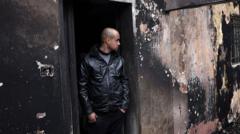
The first day of Eid al-Fitr in East Darfur was not marked by the traditional quiet of prayer, but by the high-pitched whine of a drone motor followed by a series of concussions that tore the Al-Daein Teaching Hospital apart.
By the time the smoke cleared on March 20, 2026, 64 people were dead. The toll included 13 children, two nurses, and a doctor. This was not a stray shell or a crossfire accident. It was a calculated strike on a known medical hub, the primary lifeline for hundreds of thousands in a region already hollowed out by three years of civil war.
The World Health Organization (WHO) confirmed the scale of the massacre this weekend, noting that the facility is now entirely non-functional. The emergency department is a shell of collapsed concrete; the maternity ward, where three pregnant women were among the victims, has no roof. This event marks a grim milestone: more than 2,000 people have now been killed in verified attacks on Sudanese healthcare facilities since the conflict began in April 2023.
But the tragedy at Al-Daein is more than a statistic. It represents a fundamental shift in how the war between the Sudanese Armed Forces (SAF) and the Rapid Support Forces (RSF) is being fought. We are witnessing the "ukrainization" of African conflict, where cheap, imported drone technology has turned hospitals into high-priority targets for remote operators sitting hundreds of miles away.
The Architecture of a Medical Massacre
Al-Daein Teaching Hospital was not a hidden military outpost. It was a massive, two-story complex serving as the only functional surgical and dialysis center for the state of East Darfur. When the drones struck, the facility was crowded with families who had gathered there not just for treatment, but for the relative perceived safety of a protected civilian site during the Eid holiday.
The mechanics of the attack suggest a deliberate attempt to maximize structural damage. Witnesses reported multiple strikes targeting the emergency wing and the male surgical ward. These are the areas most likely to be occupied during a holiday. The result was a total collapse of essential services, including a dialysis unit. For the hundreds of kidney patients in Darfur, the destruction of this equipment is a delayed death sentence.
The SAF and the RSF have spent the last 48 hours trading blame. The RSF, which controls East Darfur, pointed to the SAF’s growing fleet of Iranian and Turkish-made drones. Military sources, speaking on condition of anonymity, claimed they were targeting a nearby police station. Yet the precision of modern UAVs makes "accidental" hits on massive hospital complexes increasingly difficult to justify.
The Drone Proliferation Crisis
The sheer lethality of the Al-Daein strike is a direct result of a massive influx of foreign drone technology over the last 24 months. Sudan has become a live-fire testing ground for a variety of unmanned systems.
- The SAF Arsenal: The regular army has heavily integrated the Iranian Mohajer-6. This is a combat UAV capable of carrying four precision-guided munitions with a range of 2,000 kilometers. They have also reportedly acquired Turkish Bayraktar TB2s and locally assembled "Safaroog" models.
- The RSF Arsenal: Lacking a traditional air force, the paramilitary RSF has pivoted to Chinese-made FH-95 kamikaze drones and modified commercial quadcopters. They have become experts at "loitering" tactics—staying over a target for hours before diving into soft spots in civilian infrastructure.
These machines have changed the cost-benefit analysis of the war. In 2023, an attack on a hospital required a ground assault or a piloted jet, both of which carried high political and physical risks. Today, a technician can launch a 40kg explosive payload from a mobile site, view the target in high definition, and fly away without ever seeing the faces of the people in the wards.
The data supports this escalation. In 2023, recorded drone incidents in Sudan resulted in roughly 38 deaths. In 2025, that number skyrocketed to over 1,600. The Al-Daein massacre suggests that 2026 will be the bloodiest year yet.
Why Hospitals Are Being Targeted
The cynical logic of targeting healthcare in Sudan is simple: it is the most effective way to force a population to flee. When a hospital is destroyed, the surrounding city becomes uninhabitable. Without maternal care, emergency surgery, or even basic vaccinations, the social fabric of a community dissolves.
The WHO’s Surveillance System for Attacks on Health Care (SSA) has documented 213 distinct attacks on medical targets since the war’s inception. The pattern is clear. These strikes often occur in areas where the opposing side has recently made gains or where a "cleansing" of the civilian population is intended to simplify territorial control.
The humanitarian fallout is catastrophic. Over 80% of hospitals in conflict zones are now shuttered. In East Darfur, the closure of Al-Daein means that pregnant women with complications or children with severe malaria now have to travel hundreds of kilometers through active war zones to find a doctor. Most will not make it.
The Failure of International Deterrence
The international community’s response has been characterized by "condemnation fatigue." WHO Director-General Tedros Adhanom Ghebreyesus stated that "enough blood has been spilled," calling for an immediate de-escalation. However, these statements carry little weight when the supply lines for the drones remain wide open.
Russia, Iran, and various regional actors continue to use Sudan as a marketplace for influence, trading military hardware for access to gold mines or Red Sea ports. As long as the warring parties can acquire advanced aerial platforms with no strings attached, the incentive to respect "red lines" like hospitals is non-existent.
The Al-Daein strike was not a malfunction. It was a demonstration of a new reality where civilian life is viewed as an acceptable variable in a remote-controlled math equation. If the global powers providing these weapons do not face consequences, the hospital ward will remain the most dangerous place in Sudan.
The survivors in East Darfur are currently digging through the rubble of the emergency wing, searching for bodies and any medical supplies that might have survived the heat of the blasts. They are doing so under a sky that is no longer empty, but filled with the constant, low-frequency hum of the next strike.
Would you like me to investigate the specific international supply chains and companies providing drone components to the warring factions in Sudan?