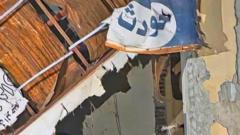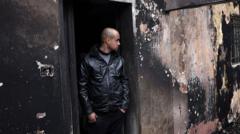
The smoke rising over Palestinian olive groves isn't just a sign of a brush fire. It's often the aftermath of a coordinated raid. If you've been following the news out of the West Bank lately, you know the situation has shifted from a slow simmer to a violent boil. We aren't just talking about isolated scuffles between neighbors anymore. This is a systemic surge of Israeli settlers targeting Palestinian villages, destroying property, and attacking civilians with a frequency that has reached record highs.
United Nations monitors and human rights organizations like B'Tselem have documented a terrifying uptick in these incidents. Since late 2023, the intensity of these confrontations has fundamentally changed the daily lives of thousands. Farmers can't reach their trees. Children are afraid to walk to school. Entire communities are living in a state of constant vigil. It's a grim reality that demands more than just a passing glance at a headline.
Why settler violence is reaching a breaking point
To understand why this is happening now, you have to look at the political air in the room. For years, the expansion of Israeli settlements in the West Bank—land Palestinians see as the heart of a future state—has been a point of global contention. But recently, the guardrails seem to have vanished.
Many observers point to the current Israeli government composition as a primary catalyst. When high-ranking ministers hold views that openly favor annexation and settlement expansion, it sends a clear signal to the more radical elements of the settler movement. They feel emboldened. They feel protected. This isn't just an opinion; data from the UN Office for the Coordination of Humanitarian Affairs (OCHA) shows that in many cases, Israeli security forces are present during these attacks but fail to intervene or, worse, actively shield the perpetrators.
This environment has created a "culture of impunity." When there are no consequences for burning an orchard or throwing stones at a family car, the behavior repeats. It scales. It becomes a strategy rather than a random outburst.
The human cost on the ground
Let’s get specific about what these "attacks on property" actually look like. We’re talking about the backbone of the Palestinian rural economy. Olive trees are more than just plants in this part of the world. They represent heritage, land ownership, and the primary source of income for many families.
Systematic destruction of livelihoods
During harvest seasons, groups of masked individuals frequently descend on groves. They don't just steal the crop. They use chainsaws to cut down trees that have stood for centuries. They use chemicals to poison the soil. According to OCHA, thousands of trees are destroyed annually in these raids.
Then there's the livestock. Sheep and goats are often targeted, either stolen or killed in the middle of the night. For a shepherd in the hills near Hebron or Nablus, losing a flock is financial ruin. It's not something you just bounce back from next month.
Physical violence and intimidation
The violence against people is even more chilling. Attacks often happen in the dead of night or during broad daylight in areas where Palestinians are most vulnerable. Houses are pelted with stones. Incendiary devices are tossed through windows. In villages like Burqa or Turmus Ayya, residents have described scenes of hundreds of settlers entering the village, setting fire to cars and homes while families are inside.
The psychological toll is massive. Imagine living in a home where you have to install iron bars over every window not to keep out burglars, but to prevent a firebomb from landing in your child’s bedroom. That's the daily reality for many in "Area C," the 60% of the West Bank under full Israeli military and administrative control.
The role of the Israeli Military
This is where things get complicated and, frankly, quite upsetting. The official stance of the Israel Defense Forces (IDF) is that their job is to maintain order and protect all residents. However, the testimony from the ground tells a different story.
Groups like "Breaking the Silence"—composed of former Israeli soldiers—have detailed how the military often prioritizes settler security over Palestinian safety. In some recorded incidents, soldiers are seen standing by as settlers throw stones. In others, when Palestinians try to defend their property, the military uses crowd-control measures like tear gas and rubber bullets against the Palestinians, not the attackers.
It’s a lopsided dynamic. One side is armed and backed by the state, while the other is legally restricted and often left defenseless. This power imbalance is the engine driving the current crisis.
International reaction and the 2026 landscape
The world hasn't stayed silent, though the impact of that noise is debatable. We've seen a shift in how Western allies view the situation. In a rare move, countries like the United States, the UK, and France have started imposing sanctions on specific "extremist settlers" and organizations involved in West Bank violence.
These sanctions usually involve visa bans and freezing financial assets. It's a symbolic step, but it shows that the international community is starting to see settler violence not as a series of criminal acts, but as a political obstacle to peace. They recognize that you can't talk about a "two-state solution" while the land for the second state is being systematically seized or rendered uninhabitable through terror.
But sanctions on a few individuals don't stop a movement. The settlement population in the West Bank now exceeds 500,000 (excluding East Jerusalem). This isn't a fringe group anymore. It's a massive political bloc with significant sway in the Knesset.
Common misconceptions about the conflict
People often get a few things wrong when they talk about the West Bank. They think it's just a religious war. It's not. At its core, this is a struggle over land, resources, and basic civil rights.
Another mistake is thinking all settlers are violent. That's not true either. Many live in large "bloc" settlements that look like any other suburb. However, the "outpost" settlers—those living in small, often illegal clusters on hilltops—are frequently the ones driving the aggression. These outposts are often built specifically to seize more land and create "buffer zones" that cut off Palestinian villages from one another.
Finally, don't buy the "both sides" argument when it comes to the West Bank violence statistics. While there are certainly attacks by Palestinians against Israelis, the scale, frequency, and state-backed nature of settler violence against Palestinian civilians are objectively different in scope and impact. The UN data is very clear on this disparity.
What happens next
If you're looking for a silver lining, it's hard to find one right now. The trajectory suggests more friction, not less. As long as the political leadership in Israel views the West Bank as "Judea and Samaria"—land to be settled rather than occupied territory—the friction will continue.
For those watching from afar, staying informed means looking past the "clash" headlines. Look for the reports from organizations like Yesh Din, which tracks the legal side of things. They’ve found that the vast majority of complaints filed by Palestinians against settlers are closed without an indictment. That’s the "actionable" part of the problem. Without legal accountability, the cycle stays in motion.
If you want to support change, look toward grassroots organizations that bring together Israelis and Palestinians who oppose the occupation. Groups like "Standing Together" or "Combatants for Peace" work on the ground to provide a counter-narrative to the violence. They don't get as much press as a burning olive grove, but they're the only ones trying to build a different future.
The immediate priority has to be protection. Whether that comes from international observers or a shift in Israeli military policy, the current state of "wild west" lawlessness in the West Bank is a humanitarian disaster waiting to get even worse. You can't have a stable region when an entire population feels they're being hunted out of their own homes.