The Kinetic Depreciation Vector
Running shoes degrade along two distinct degradation curves: material compaction and structural fatigue. While consumer-facing fitness content frequently reduces footwear replacement to a crude odometer threshold—traditionally cited between 300 and 500 miles—this metric ignores user mass, strike mechanics, and thermal environmental variables.
The primary functional element of any modern running shoe is the midsole, typically composed of Ethylene-Vinyl Acetate (EVA) foam, Supercritical fluids-infused PEBA (Polyether Block Amide), or TPU (Thermoplastic Polyurethane). These polymers rely on cellular micro-structures trapped within a matrix to absorb ground reaction forces, which can reach up to three times body weight per footstrike. Under repetitive loading, the internal gas bubbles within the foam experience cell-wall rupture and permanent plastic deformation.
When a foam loses its elastic memory, it fails to rebound between strides. This collapse eliminates energy return and transfers shock attenuation duties directly to the musculoskeletal system. The kinetic depreciation of a shoe is therefore a function of cumulative impulse rather than simple linear distance. A runner generating a high ground reaction force through a heavy heel strike degrades foam integrity faster than a lighter runner utilizing a midfoot strike, even at identical mileages.
The Tripartite Failure Matrix
Evaluating structural integrity requires separating wear into three distinct mechanical domains: midsole cellular failure, outsole traction depletion, and upper structural shear.
Midsole Energy Absorption Loss
The most critical point of failure remains invisible to the casual observer. EVA foam exhibits progressive hysteresis under cyclic loading. As the polymer chains break down, the energy returned to the runner drops sharply, while impact transmission increases.
- The Compression Set Test: Manual inspection via thumb indentation provides a crude binary diagnostic. If the foam fails to spring back immediately or leaves a permanent depression, the cellular matrix has collapsed.
- Asymmetric Creep: Wearers must inspect the lateral and medial walls of the midsole for horizontal wrinkling. These wrinkles indicate that the foam has buckled under shear stress, losing its capacity to stabilize the subtalar joint.
Outsole Rubber Abrasion
Outsole degradation compromises friction coefficients rather than shock absorption. Carbon rubber compounds applied to high-wear zones protect the softer midsole foam from abrasive contact with asphalt and concrete.
- Tread Depth Threshold: When the patterned lugs or flat carbon rubber sections wear down to expose the underlying midsole foam, the friction coefficient drops significantly on wet surfaces.
- Differential Wear Maps: The geometry of outsole wear charts strike anomalies. Heavy localized erosion at the lateral heel or medial forefoot highlights hyper-pronation or supination paths that overload specific structural columns of the shoe.
Upper Matrix and Heel Counter Fatigue
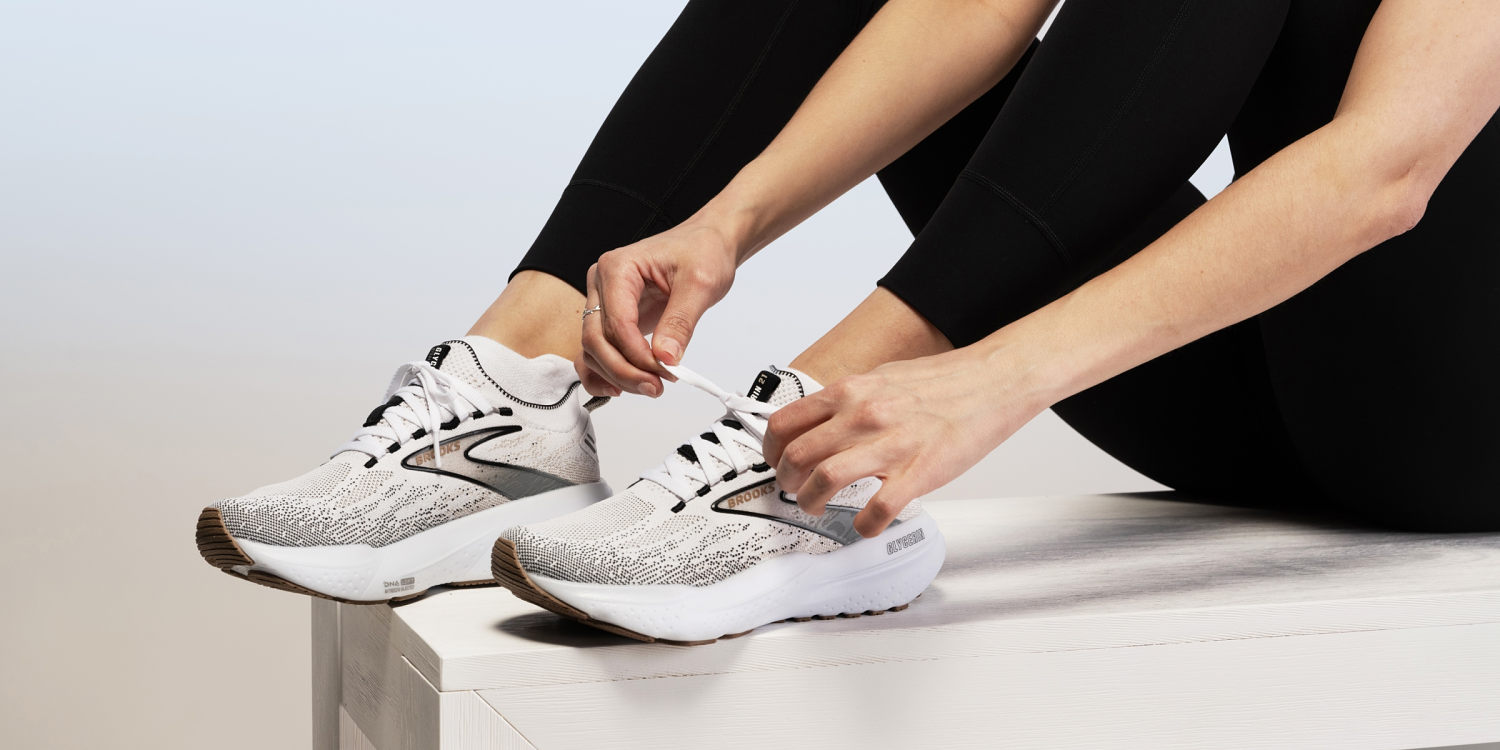
The upper mesh secures the foot atop the platform, while the internal heel counter locks the calcaneus in place.
- Internal Friction Points: Perforations in the internal lining or degradation of the heel collar foam permit micro-slippage. This movement forces the intrinsic foot muscles to work harder to stabilize the foot inside a loose chassis.
- Eyestay Rigidity Loss: When the structural overlays around the lacing system stretch out, the upper can no longer apply consistent pressure across the dorsal aspect of the foot, leading to compensatory toe-clawing.
The Biomechanical Cost Function
Operating in compromised footwear alters the body's kinematic chain. The human body functions as a dynamic spring-mass system, tuning leg stiffness to match the compliance of the running surface and footwear.
When midsole cushioning degrades, the nervous system detects an increase in impact shock and unconsciously alters joint kinematics. Runners often exhibit increased knee flexion angles at touchdown and higher loading rates at the tibia to compensate for the lack of shock absorption. This behavioral shift trades footwear compliance for biological tissue strain.
The physiological cost manifests as localized micro-trauma. Without adequate energy return from the shoe, the plantar fascia, Achilles tendon, and soleus muscle must generate higher propulsive force. Over thousands of repetitive cycles, this surplus mechanical stress exceeds the tissue remodeling threshold, leading to overuse pathologies such as medial tibial stress syndrome, plantar fasciitis, and patellofemoral pain syndrome.
Environmental Accelerants of Material Decay
Mileage is merely a proxy variable for time-dependent material degradation. Chemical and environmental factors accelerate the breakdown of shoe components independently of mechanical use.
- Thermal Cycling: Storing running shoes in high-temperature environments, such as the trunk of a car during summer, accelerates the thermal degradation of EVA foam, causing premature stiffening and loss of resilience.
- Hydrolysis: Moisture exposure from sweat and wet running conditions breaks down polyurethane-based foams through chemical hydrolysis, weakening the molecular bonds of the polymer matrix.
- UV Exposure: Ultraviolet radiation oxidizes synthetic upper materials and degrades exposed foam, leading to embrittlement and micro-cracking of the outer layers.
Consequently, a pair of shoes sitting idly in a closet for two years can experience significant structural compromise due to ambient oxidation and polymer breakdown, rendering high-mileage thresholds irrelevant if the physical substrate has degraded chemically.
The Quantitative Replacement Protocol
To remove subjectivity from equipment management, runners must replace mileage tracking with a multi-variable performance audit.
- Calculate Cumulative Impulse: Multiply total weekly mileage by average runner mass and terrain hardness coefficients to determine true structural wear rather than relying on distance alone.
- Execute the Twist Test: Hold the shoe at the heel and toe, then attempt to twist it along its longitudinal axis. If the midfoot resists torsion effortlessly or creases in the center of the arch rather than the metatarsal heads, the structural shank has failed.
- Perform the Flat-Surface Balance Test: Place both shoes on a completely flat surface and observe them from eye level from behind. If the heel counters lean inward or outward significantly, the midsole has deformed asymmetrically, forcing the ankle into uncompensated mechanical alignment.
- Monitor Subjective Leg Hardness: Track the onset of unusual post-run deep bone ache in the shins or persistent muscular fatigue in the calves that correlates with shoe age rather than training load increases.
Rotate between two distinct pairs of running shoes of different models or batch dates during heavy training blocks to distribute mechanical stress profiles and allow foam matrices adequate recovery time to decompress between sessions.