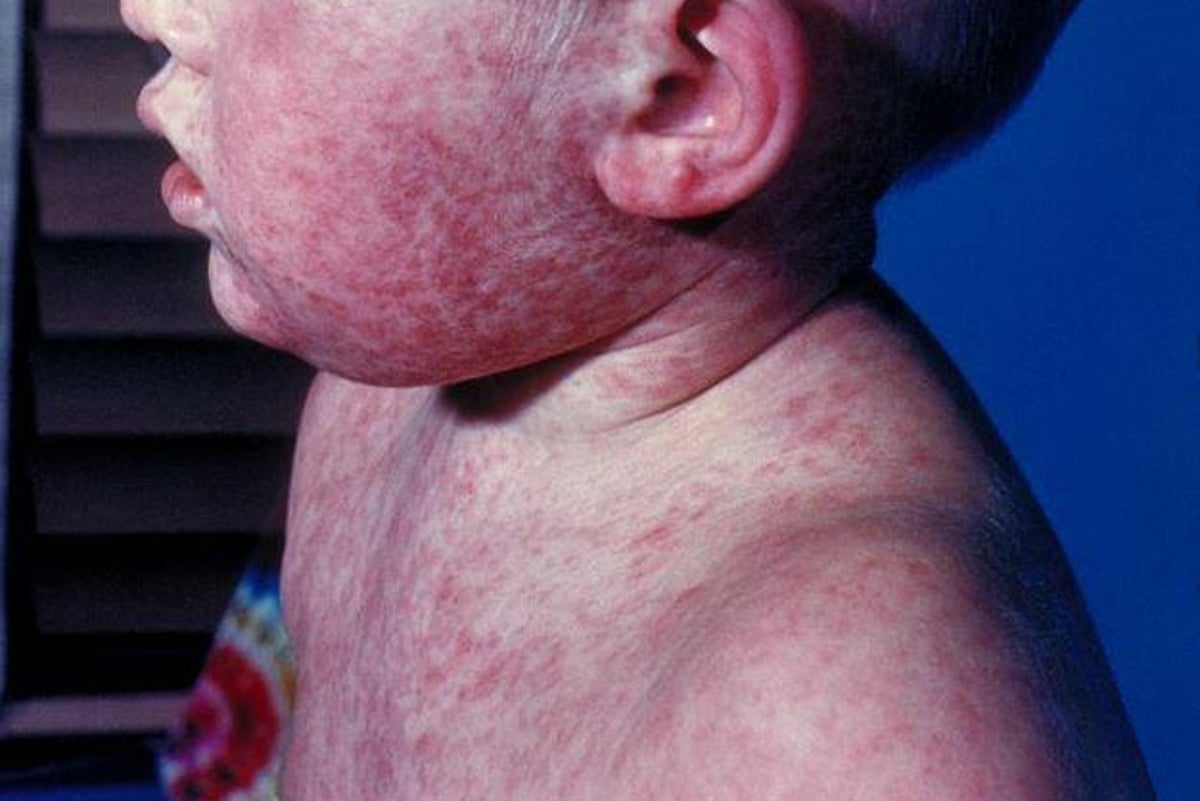
Two unvaccinated residents of Lancaster County, Pennsylvania, have died from measles, marking the Commonwealth's first fatalities from the virus in 35 years and signaling a grim milestone for a nation grappling with historic public health regression. State health authorities confirmed that nearly 400 cases have rippled through 28 counties this year, transforming what was once a routine childhood annoyance of a previous era into an acute, life-threatening danger. The deaths are the first recorded in the United States this year, exposing the devastating cost of eroding community immunity and decades of collective amnesia regarding a vaccine-preventable disease.
For over a generation, measles was treated by the general public as a historical footnote. Medical textbooks described it, parents rarely saw it, and public health campaigns treated its elimination as permanent. That permanence was an illusion. When vaccination rates drop below the critical ninety-five percent threshold required for herd immunity, pathogens do not negotiate; they exploit the gaps.
Pennsylvania Health Secretary Dr. Debra Bogen noted the core vulnerability bluntly. Because the virus had been absent from daily life for more than thirty years, public familiarity plummeted, taking basic understanding of its potential severity down with it. People forgot that measles is not merely a rash and a fever. It is an immune-suppressive powerhouse that wipes away immune memory of past infections, leaving victims uniquely vulnerable to secondary bacterial infections like pneumonia and fatal brain swelling known as subacute sclerosing panencephalitis.
The geography of the Pennsylvania outbreak centers on Lancaster County, home to substantial traditional communities whose religious and cultural skepticism toward modern medical interventions is well documented. Kindergarten vaccination coverage in the county lagged at roughly eighty-eight percent during the prior academic term, sitting well below the safety line. When a pathogen as astonishingly infectious as the measles virus enters a population with clusters of unimmunized individuals, the math is unforgiving. One infected person can transmit the virus to up to eighteen unprotected contacts, meaning outbreaks escalate exponentially before local clinics even recognize the initial cluster.
Nationwide data reveals that this is not an isolated regional anomaly. Federal statistics released by the Centers for Disease Control and Prevention highlight a steady, multi-year retreat in childhood immunization rates. Kindergarten exemption rates have climbed to all-time highs, with over four percent of children entering school bearing exemptions from at least one required vaccine. More than two dozen states now report school exemption rates exceeding five percent. This steady accumulation of unprotected individuals creates geographic tinderboxes from coast to coast.
Public health analysts point to a toxic mix of administrative policy shifts, online misinformation, and a waning appreciation for the biomedical triumphs of the twentieth century. When political figures amplify long-debunked myths linking standard immunizations to chronic conditions, the residual trust binding citizens to public health infrastructure frays. Parents navigating conflicting messages online often choose inaction, failing to realize that opting out of a two-dose measles, mumps, and rubella series is a gamble with high stakes. Two doses of the vaccine confer roughly ninety-seven percent protection against the virus, making severe illness among the fully vaccinated vanishingly rare.
The human toll in Pennsylvania underscores a hard truth about modern medicine. Its greatest victories breed the conditions for their own undoing. When a disease is successfully beaten back, subsequent generations grow up without witnessing its devastation, opening the door for skepticism to replace caution.
As international health organizations prepare to evaluate whether the United States has permanently lost its measles elimination status, the deaths in Lancaster County serve as a stark warning. Viruses do not care about political debates, administrative exemptions, or historical nostalgia. They measure their success entirely in the vulnerability of human hosts, and right now, those hosts are handing the advantage back to the disease.