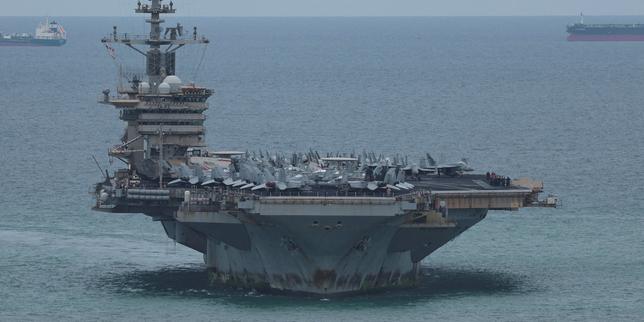
Long-duration maritime deployments impose severe operational strain on naval personnel, exposing fundamental flaws in personnel management, mental health resource allocation, and readiness evaluation models. Recent admissions by the United States Navy regarding a cluster of suicides aboard the USS Abraham Lincoln during an extended Middle East deployment highlight an urgent need to examine how systemic operational pressures interact with individual psychological resilience.
When naval commands extend operational timelines without proportional adaptations in support structures, the resulting friction points generate measurable decay in force readiness. This analysis deconstructs the structural variables driving high-stress maritime deployments, isolates the systemic failures in psychological intervention frameworks, and establishes an objective model for evaluating operational risk in extended naval missions.
The Operational Cost Function of Extended Deployments
Military effectiveness depends upon balancing operational tempo against human capital depreciation. Every day a carrier strike group remains at sea past its baseline operational window, the marginal utility of its presence decreases while the psychological and operational costs increase exponentially. This relationship defines a clear cost function where human endurance acts as the primary finite variable.
Operational Friction = (Deployment Duration x Tempo Intensity) / (Logistics Support + Psychological Interventions)
As deployment durations stretch due to strategic shifts or geopolitical crises, three distinct categories of friction emerge:
- Temporal Compression: The erosion of predictability. Personnel lose reliable markers of time and return dates, creating an open-ended psychological horizon that impairs coping mechanisms.
- Resource Depletion: The degradation of onboard amenities, spare parts for maintenance, and fresh provisions, which compounds daily friction and lowers baseline morale.
- Fatigue Accumulation: Sleep deprivation resulting from constant watch rotations, high alert states, and crowded living conditions, which directly degrades cognitive function and emotional regulation.
When the numerator in the operational friction equation outpaces the denominator, systemic breakdowns manifest as disciplinary infractions, retention drops, and acute mental health crises.
Systemic Flaws in Naval Mental Health Infrastructure
Traditional military mental health paradigms are built around reactive care models rather than predictive risk mitigation. In a high-stress operational environment like a nuclear-powered aircraft carrier housing thousands of personnel, the structural barriers to effective mental healthcare are magnified by institutional culture and physical constraints.
The Access-to-Care Bottleneck
Medical departments aboard deployed vessels are typically optimized for acute physical trauma, emergency surgery, and routine preventative medicine. Mental health professionals are scarce relative to the population size. This structural limitation creates a massive ratio imbalance:
- A single mental health provider or small medical team is often responsible for thousands of sailors.
- The physical location of mental health services within the chain of command introduces perceived or real confidentiality concerns, discouraging personnel from seeking early intervention.
- Operational demands routinely supersede clinical needs. A sailor cannot easily step away from critical watchstanding duties without impacting unit readiness, leading individuals to suppress symptoms until crisis points are reached.
The Stigma Feedback Loop
Military culture historically prioritizes mission execution and individual toughness. This creates a feedback loop where psychological distress is interpreted as personal weakness rather than an occupational injury. Consequently, sailors avoid reporting depressive symptoms or suicidal ideation out of fear of administrative separation, loss of security clearances, or professional ostracization. The system thus filters out early indicators of distress, ensuring that intervention only occurs after acute structural failure.
Environmental Stressors Unique to Carrier Operations
An aircraft carrier functions as a floating industrial city combined with a high-stakes airfield. The physical environment is inherently hostile to sustained psychological well-being.
- Sensory Overload and Isolation: Constant noise, artificial lighting, vibration, and cramped berthing areas prevent restorative rest. Simultaneously, physical isolation from family support networks removes critical external psychological buffers.
- Loss of Agency: Sailors experience near-total control surrender regarding their daily schedules, physical movement, and personal privacy. This chronic lack of autonomy is a primary driver of learned helplessness and clinical depression.
- High-Consequence Accountability: The operational environment leaves zero margin for error. Operating multi-million-dollar aircraft, nuclear propulsion plants, or weapons systems under extreme fatigue creates persistent low-grade adrenaline taxation.
Evaluating the Metrics of Force Degradation
To understand why traditional reporting mechanisms fail to capture the true toll of extended deployments, we must examine the metrics currently utilized by defense organizations and identify their盲 spots.
| Metric Type | Current Measurement Focus | Blind Spot / Failure Mode |
|---|---|---|
| Readiness Reporting | Operational capability, equipment status, certification cycles | Excludes human capital depletion and cumulative cognitive fatigue |
| Morale Assessment | Climate surveys, retention rates, non-judicial punishment counts | Fails to capture hidden psychological distress due to reporting bias |
| Incident Tracking | Completed suicides, diagnosed major depressive disorders | Measures only terminal outcomes rather than leading indicators of distress |
Relying on lagging indicators like completed suicides guarantees that corrective actions are implemented post-failure rather than proactively.
Strategic Recommendations for Force Preservation
Mitigating the psychological attrition of extended naval operations requires a structural overhaul of deployment management and support systems. Incremental adjustments to counseling availability will yield negligible results without addressing the root causes of operational friction.
- Hard Caps on Deployment Windows: Establish non-negotiable thresholds for continuous deployment durations. When strategic imperatives force extensions, implement mandatory mid-deployment crew rotations or intermediate port visits that decouple personnel from the operational environment entirely.
- Decentralized Peer Support Networks: Move beyond traditional medical hierarchies by institutionalizing decentralized, anonymous peer-support frameworks trained to identify early behavioral shifts before they escalate into clinical crises.
- Redefining Readiness Metrics: Incorporate cognitive fatigue and mental health density indices directly into fleet readiness evaluations. If a unit's psychological degradation score crosses a critical threshold, the unit must be cycled out of active tasking regardless of geopolitical convenience.
The preservation of maritime force effectiveness is fundamentally tied to the psychological sustainability of the individual sailor. Ignoring the human cost function in favor of short-term strategic presence guarantees long-term operational decay.