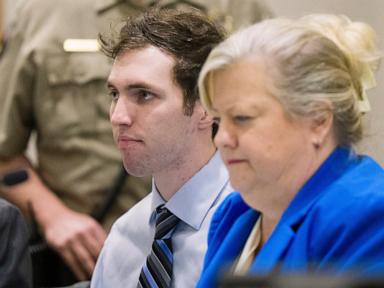
Every major wire service is treating a Utah judge’s scheduling hearing like the starting gun of a race. They want you to stare at the calendar. They want you to circle a date in red ink, set your notifications, and wait for the gavel to drop in the prosecution of Charlie Kirk’s killer.
That is amateur-hour legal reporting. Meanwhile, you can find other developments here: The Mechanics of High-Profile Trial Scheduling and Judicial Docket Control.
If you think a trial date is the headline here, you do not understand how high-profile capital and homicide litigation actually works in the American judicial system. By the time a single juror walks into that Utah courtroom, the outcome will already be ninety percent decided. The calendar date isn't the story. The pre-trial trench warfare over venue, evidentiary suppression, and jury questionnaires is the entire ballgame.
Wire services love scheduling hearings because they are easy to cover. A reporter sits in a pew, writes down a month and a year, quotes a prosecutor saying the state is ready, quotes a defense attorney asking for more time, and files five hundred words before lunch. It requires zero legal literacy. It feeds the public a comforting lie that justice moves on a predictable, linear track toward a dramatic courtroom climax. To see the bigger picture, check out the excellent analysis by NBC News.
I have spent twenty years watching complex criminal trials unravel—and occasionally solidify—months before opening statements. I have seen airtight prosecutions gutted by a single poorly drafted search warrant affidavit. I have watched defense teams blow through millions of dollars in expert witness fees only to lose the entire case on a routine motion in limine. The public watches the theater of the trial; the practitioners win or lose the war in the paper filings that nobody reads.
The Illusion of the Scheduling Hearing
When a Utah District Court judge sets a trial date in a case carrying this level of political voltage, that date is a placeholder, not a promise.
Under Utah Rule of Criminal Procedure 25 and the broader constitutional framework of the Sixth Amendment, a defendant has a right to a speedy trial. Yet in practice, high-profile homicide defense attorneys treat the speedy trial clock like a weapon to be waived, stretched, and manipulated. Delay is oxygen for the defense. Memories fade. Witnesses relocate or lose their edge. Public outrage, which burns hot in the weeks immediately following a high-profile killing, inevitably cools into ambient background noise over eighteen to twenty-four months.
When mainstream outlets report that a judge is "expected to set a trial date," they imply momentum. They imply inevitability. In reality, setting a date simply triggers the backward-counting clock for the real battleground: the pre-trial motion deadlines.
Think about the mechanics of a Utah felony prosecution. Once that date hits the docket, the court locks in deadlines for:
- Rule 12 Motions: Challenges to the sufficiency of the charging documents and the admissibility of physical and digital evidence.
- Rule 702 Challenges: Daubert-style hearings to disqualify the opposition's forensic, ballistic, or digital experts.
- Change of Venue Motions: The constitutional fight over whether an impartial jury can even be seated in the county where the crime occurred.
If you are watching the calendar for the trial, you are looking at the scoreboard while ignoring the offensive line.
Why Venue Is the Hidden Kill Switch
Let’s talk about the elephant in the Utah courtroom that polite legal analysts tiptoe around: the jury pool.
Charlie Kirk was not an anonymous victim. He was a polarizing political figure, the founder of Turning Point USA, and a lightning rod in American cultural politics. In a state like Utah, where political engagement runs deep and ideological demographics vary wildly from Salt Lake County to Utah County to rural districts, where this trial happens matters almost as much as what the evidence shows.
The lazy consensus assumes that modern courts rarely grant changes of venue because judges can simply screen out biased jurors during voir dire. That assumption ignores how pervasive media saturation works in 2026. You cannot un-ring a viral bell. Every potential juror in that district has seen the clips, read the partisan post-mortems, and absorbed the algorithmic outrage.
Imagine a scenario where the defense files a meticulously documented motion to move the trial out of the district, backed by localized polling data showing that eighty-five percent of the county's jury-eligible residents have already formed an opinion on the defendant's guilt or the victim's political legacy. If the judge denies that motion to save county resources and keep the docket moving, the court just handed the defense an automatic, built-in appellate issue before a single witness is sworn in. If the judge grants it, the entire logistical and demographic calculus of the prosecution shifts overnight.
Yet the headlines fixate on the trial date.
Dismantling the Questions You Should Actually Be Asking
When high-profile criminal cases hit this procedural milestone, search engines flood with the same predictable, surface-level questions. Most of them are built on a flawed understanding of criminal procedure. Here is the brutal reality behind what people are actually trying to figure out.
Will the trial actually happen on the date the judge sets?
Almost certainly not. In complex homicide prosecutions—especially those involving potential aggravating circumstances or extensive digital forensics—the initial trial date is a judicial fiction designed to force both sides to stop stalling and start exchanging discovery. Expect at least two continuances. Defense counsel will argue they need additional time to review terabytes of ballistics data, social media records, and surveillance footage. Prosecutors will file supplemental witness lists. Treating the first scheduled date as gospel is a rookie mistake.
Does a fast trial date favor the prosecution or the defense?
Neither side gets an automatic advantage from speed alone; the advantage goes to whichever side has their forensic house in order first. Prosecutors generally want to strike while witness recollections are sharp and physical evidence chains are fresh. However, rushing a high-profile case onto the docket before the state crime lab has finished every single DNA, trace, and digital extraction is catastrophic. One sloppy lab report exposed on cross-examination can poison an entire prosecution. Conversely, a defense team that pushes for an immediate trial is usually bluffing, hoping the state will stumble over unvetted discovery.
Can the defendant really get a fair jury in Utah?
Yes, but not through the standard three-hour questioning process people see on television dramas. Seating a fair jury in a politically charged homicide requires an exhaustive, multi-week written questionnaire process followed by individual, sequestered voir dire. The goal isn't finding twelve people who live under a rock and have never heard of Charlie Kirk. That standard doesn't exist under Supreme Court precedent like Irvin v. Dowd or Skilling v. United States. The legal threshold is whether a juror can set aside preexisting impressions and render a verdict based solely on the evidence presented in court. Achieving that takes surgical questioning, not a fast calendar.
What happens if the defense tries to suppress the key evidence?
If the defense succeeds in suppressing a confession, a murder weapon, or critical digital location data under the Fourth or Fifth Amendments, the trial date vanishes immediately. The prosecution will either file an interlocutory appeal to the Utah appellate courts—freezing the case for another year—or quietly pivot to plea negotiations behind closed doors. That is why pre-trial suppression hearings are the true climax of modern criminal litigation.
The Digital Forensics Trap Nobody Mentions
We live in an era where prosecutors treat digital footprints like infallible gospel. Cell-site location information, geofence warrants, encrypted messaging metadata, and cloud backups form the backbone of modern homicide cases.
The conventional wisdom says this makes the prosecution's job easier. The insider reality is that it creates massive constitutional vulnerabilities.
Utah courts have been at the forefront of digital privacy litigation, navigating the intersection of the Fourth Amendment and state constitutional protections. When police execute broad digital sweeps in the immediate aftermath of a high-profile shooting, speed often overrides precision. Investigators write broad warrants to lock down servers before data is deleted.
Months later, in a quiet courtroom during a pre-trial hearing, a sharp defense attorney will dissect every clause of those warrants. Were they overbroad? Did they lack particularity? Did law enforcement exceed the scope of the magistrate's authorization?
If a Utah judge finds that investigators cut constitutional corners in the chaotic hours after the killing, the exclusionary rule doesn't care how high-profile the victim was. The evidence gets thrown out. The jury never hears it. And the trial date everyone spent months obsessing over becomes completely irrelevant.
How to Actually Track This Case Like an Insider
If you want to know where this prosecution is actually heading, stop reading wire summaries of scheduling conferences. Start tracking the docket mechanics that actually dictate outcomes.
- Watch the Expert Witness Designations: Look at who the defense hires. If they bring in top-tier out-of-state forensic pathologists, digital privacy specialists, or jury consultants, they are preparing for a scorched-earth trial. If the defense motion practice stays thin and reactive, they are posturing for a plea deal.
- Track the Protective Orders and Gag Orders: The tighter the judge clamps down on public disclosures and discovery leaks, the more likely it is that sensitive, potentially inflammatory evidence exists in the file—evidence the court fears will taint the local jury pool beyond repair.
- Read the Motions in Limine: Filed usually thirty to sixty days before the scheduled trial, these motions determine what words, photos, political affiliations, and prior acts the jury is allowed to hear. In a case touching on political speech and public figures, the battle over whether the victim's political work is admissible context or prejudicial distraction will define the narrative of the trial.
- Ignore the Pundit Class: Cable news legal analysts who have never tried a felony case in a state district court will spend months predicting dramatic courtroom moments. Tune them out. Watch the court clerk's register of actions instead.
The Downside of the Trench-Warfare Approach
There is a steep price to running a prosecution—or a defense—through exhaustive pre-trial litigation, and anyone who pretends otherwise is lying to you.
Dragging out pre-trial motions for eighteen months inflicts brutal collateral damage. For the victim's family and the public, delayed justice feels indistinguishable from denied justice. Every continuance fuels conspiracy theories online, eroding public trust in the judiciary regardless of how meticulous the judge is being.
For the defense, aggressive pre-trial motion practice runs the risk of tipping their entire hand. Every time you file a motion to suppress or exclude evidence, you educate the prosecution on the exact weaknesses in their case. You give smart prosecutors months to patch holes, subpoena corroborating witnesses, and bulletproof their theory before a single juror is seated. Sometimes, ambushing a sloppy prosecution at trial works better than educating them in pre-trial briefs.
Stop Watching the Clock
The Utah judge will sit on the bench, look at the attorneys' calendars, and announce a date. News alerts will ping across millions of phones. Commentators will declare that the countdown to justice has officially begun.
Do not fall for it.
A trial date is just ink on a docket sheet—easily erased, routinely moved, and completely powerless against a well-timed constitutional motion. Real lawyers don't win cases when the jury walks into the box; they win them in the quiet, brutal months beforehand while everyone else is staring at the calendar.