Everyone is reading the headlines backward.
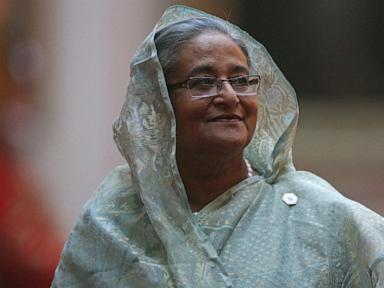
When news broke that Bangladesh’s ousted Prime Minister Sheikh Hasina applied for a new passport to return from exile, the mainstream press immediately defaulted to its favorite lazy trope: the desperate, deposed autocrat begging to reclaim her throne. Wire services ran breathless updates framing the move as an urgent bid for physical repatriation. Pundits dissected the legalities of Bangladeshi travel documents as if Hasina were sitting by a window in New Delhi with a packed suitcase, waiting for a courier to hand her a boarding pass to Dhaka.
Stop believing the surface narrative. Sheikh Hasina is not trying to get on a plane.
If you have spent any real time analyzing South Asian statecraft, high-level extradition battles, or the mechanics of diplomatic asylum, you recognize this maneuver immediately. Applying for a passport after the interim government revoked her diplomatic credentials is not a logistical step toward returning home. It is a calculated piece of political theater designed to force the interim administration in Dhaka into a bureaucratic trap, manufacture international standing, and freeze her legal status in India.
The Anatomy of a Diplomatic Trap
To understand why this passport appeal is a weapon rather than a travel plan, look at the reality on the ground in Dhaka.
Following the student-led uprising in August 2024 that ended her fifteen-year rule, the interim government led by Muhammad Yunus moved swiftly. They revoked the diplomatic passports of Hasina, her advisors, and former lawmakers. They initiated proceedings at Bangladesh’s International Crimes Tribunal (ICT)—the very court Hasina’s own administration once used to prosecute opposition figures—issuing arrest warrants for crimes against humanity tied to the state crackdown on protesters.
Returning to Bangladesh right now does not mean returning to politics. It means walking straight from Hazrat Shahjalal International Airport into a holding cell, facing domestic tribunals with zero political immunity, and risking violent public backlash in a country where her party, the Awami League, has been shattered at the grassroots level.
Hasina is 79 years old. She survived the 1975 assassination of her father, Sheikh Mujibur Rahman, and almost the entirety of her family. She survived the 2004 grenade attack in Dhaka that killed twenty-four people around her. She is one of the most battle-hardened political survivors in modern history. People with her survival instincts do not voluntarily walk into a buzzsaw without a shield.
So why file the paperwork? Because the application itself puts the Yunus administration in a lose-lose bind.
- Scenario A: Dhaka approves the passport. By issuing a standard passport to a citizen it has accused of mass murder and corruption, the interim government legitimizes her status as an ordinary citizen with full constitutional rights to mobility, complicating its own narrative that she is an outlaw fugitive.
- Scenario B: Dhaka denies or ignores the appeal. This is the outcome Hasina actually wants. A formal denial allows her legal team and international lobbyists to argue to Western governments and human rights bodies that she is being rendered stateless. Under international law—specifically the principles reflected in the 1954 Convention Relating to the Status of Stateless Persons, even among non-signatories—arbitrarily depriving a citizen of travel documentation triggers diplomatic scrutiny. It gives her a fresh grievance to wave in front of Geneva, London, and Washington, shifting the conversation from her administration’s human rights record to the interim government’s procedural fairness.
Why India Needs That Paperwork More Than She Does
Look past Dhaka and look at New Delhi. That is where the real pressure points sit.
India has hosted Hasina since August 2024, walking a diplomatic tightrope that grows thinner by the month. New Delhi’s intelligence and foreign policy establishment—the heavy hitters at South Block—spent over a decade betting the house on Hasina. She delivered stability on India’s eastern border, cracked down on anti-India insurgent groups operating out of Bangladeshi territory, and opened transit corridors to India’s landlocked northeastern states.
When she fell, New Delhi lost its primary strategic asset in the region overnight. Now, India is stuck managing an awkward houseguest while trying to rebuild working ties with the Yunus government in Dhaka.
Under Indian immigration law, specifically the Foreigners Act of 1946, hosting a foreign national without a valid passport requires special executive exemptions or long-term visa regularization. While New Delhi can easily issue emergency travel documents or grant extended stay permits on humanitarian or political grounds, doing so unilaterally looks like overt political patronage. It infuriates Dhaka and fuels anti-India sentiment across Bangladesh.
By formally applying for a Bangladeshi passport, Hasina gives New Delhi bureaucratic cover. She demonstrates to Indian authorities that she is attempting to regularize her documentation through proper channels. If Dhaka refuses to process the application, India can justify extending her stay indefinitely on purely technical grounds—she has nowhere to legally travel because her own government won't issue her papers.
I have watched exiled leaders from Southeast Asia to the Horn of Africa pull this exact lever. You do not apply for a passport to leave your host country; you apply for a passport so your host country has a legal excuse to let you stay.
What Everyone Gets Wrong About Extradition
If you look at search trends and commentary surrounding this story, the dominant question is simple: Will India extradite Sheikh Hasina if she gets a passport or if Dhaka demands her back?
The question itself misunderstands how extradition treaties actually function in the real world.
India and Bangladesh signed an extradition treaty in 2013, which was amended in 2016 to speed up the transfer of fugitives by removing the requirement to provide prima facie evidence of guilt—a clause Hasina’s government originally pushed for to get insurgent leaders handed over by India.
On paper, Dhaka can demand her return tomorrow. In practice, treaties are not automated vending machines. Every bilateral extradition agreement contains a "political offense exception," and Article 6 of the India-Bangladesh treaty explicitly states that extradition may be refused if the offense is of a political character. Furthermore, the treaty allows refusal if the request is not made in good faith in the interests of justice.
New Delhi will never hand Sheikh Hasina over to face a tribunal in Dhaka. Doing so would destroy India’s credibility as a reliable partner to every political leader across South Asia, from Colombo to Kathmandu to Malé. If regional leaders believe India will hand them over to their domestic enemies the moment the political winds shift, India’s regional influence evaporates.
The Awami League’s Real Endgame
Let’s address the counter-argument, because pretending Hasina has no vulnerabilities would be dishonest.
The downside to Hasina’s legal maneuvering is that it cannot fix the rot inside her own party. The Awami League is fractured, leaderless on the ground, and deeply unpopular among a generation of young Bangladeshis who remember rigged elections in 2014, 2018, and 2024, alongside extrajudicial disappearances and economic stagnation. Even if she held a valid passport, a diplomatic immunity badge, and an army of lawyers, she cannot manufacture street-level support out of thin air.
Furthermore, playing bureaucratic chess from exile carries a steep risk of irrelevance. Politics in Dhaka is moving fast. New student-led political formations are organizing, the Bangladesh Nationalist Party (BNP) is positioning itself for the next election cycle, and constitutional reforms are actively reshaping the state apparatus to prevent another concentration of executive power. Every month Hasina spends fighting over travel documents in Delhi is another month the political reality in Dhaka hardens without her.
That is precisely why her strategy is focused on survival and disruption, not immediate return.
Dismantling the "Return From Exile" Myth
When historical figures actually return from exile to reclaim power, they do not announce it by filling out routine consular forms.
Think about the mechanics of real political returns:
- Benazir Bhutto in 2007: Her return to Pakistan was preceded by months of backchannel negotiations brokered by Washington and London, resulting in the National Reconciliation Ordinance—a formal legal amnesty signed by Pervez Musharraf before her plane ever touched down in Karachi.
- Nawaz Sharif in 2023: He did not fly back to Lahore until Pakistan’s military establishment had systematically dismantled Imran Khan’s party, cleared Sharif’s pending court convictions, and guaranteed him protective bail on arrival.
- Thaksin Shinawatra in 2023: After fifteen years abroad, he returned to Thailand on the exact day his political party struck a parliamentary coalition deal with its former military rivals, ensuring his eight-year prison sentence would be immediately commuted by royal pardon.
Notice the pattern? In every single case, the legal clearance, military backing, and political pact came first. The travel documents were an afterthought.
Hasina has none of those guarantees. The Bangladeshi military refused to fire on protesters to save her in August 2024, signaling a decisive break between the cantonment and her family. The judiciary has been overhauled. The street belongs to the forces that ousted her.
To suggest that a passport application is a prelude to her triumphant return ignores every rule of political gravity.
How to Actually Read Political Exile News
If you want to stop getting fooled by surface-level geopolitical reporting, stop reading press releases and start tracking institutional incentives. Whenever a deposed leader makes a public move from abroad, run it through three filters:
- Filter 1: Who is the real audience? Hasina’s passport appeal is not aimed at the passport office in Agargaon, Dhaka. It is aimed at the Ministry of External Affairs in New Delhi, the UN Human Rights Council in Geneva, and the remaining loyalists inside Bangladesh who need proof that their leader is still fighting.
- Filter 2: What legal status does the move protect? In exile, your entire existence depends on paperwork. Visa extensions, asylum claims, asset freezes, and Interpol Red Notices all hinge on technical classifications. A rejected passport application is gold dust for an immigration lawyer arguing against deportation.
- Filter 3: Where is the military? Until the armed forces in a post-coup or post-uprising state signal a willingness to accommodate an exiled leader, any talk of a political comeback is pure fantasy.
The mainstream media loves a cinematic story about an exiled queen trying to cross the border back into her kingdom. It sells clicks because it feels like a movie script.
Real geopolitics is far colder and infinitely more cynical. Sheikh Hasina isn't packing her bags for Dhaka—she is building a legal fortress in New Delhi, using Dhaka's own bureaucracy as the bricks.