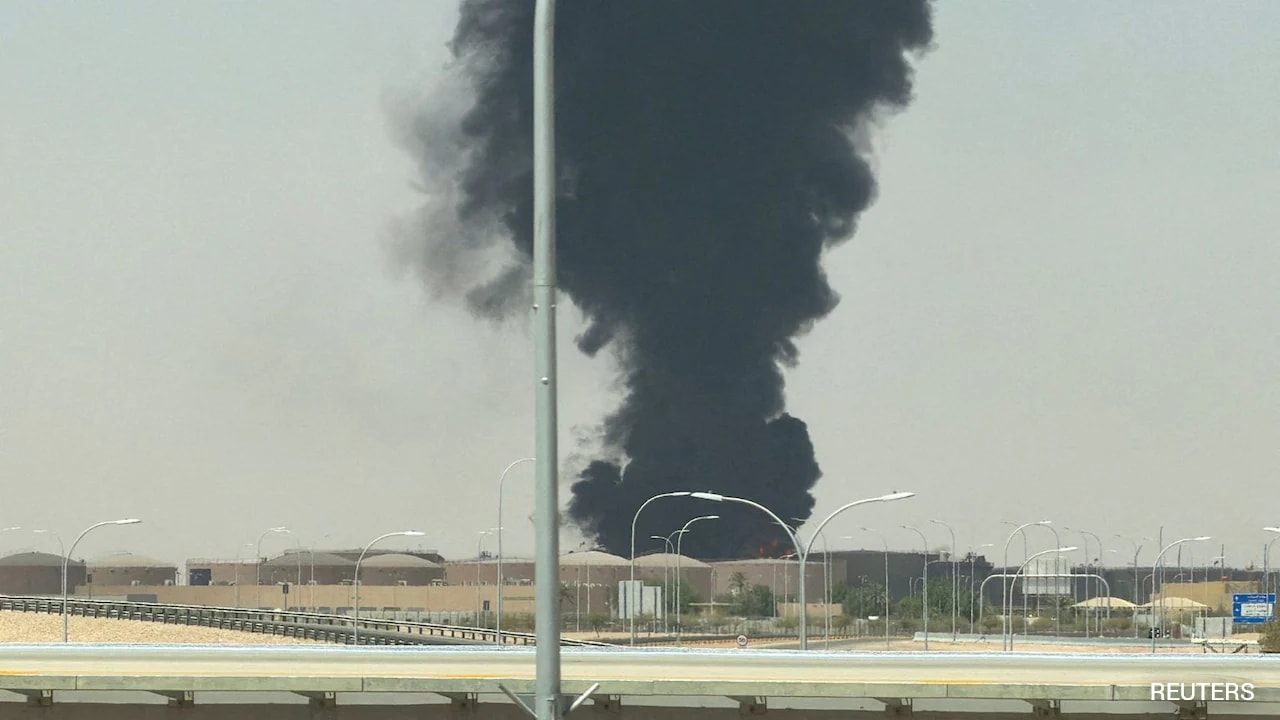
The plume of dense black smoke rising near the perimeter of King Khalid International Airport in Riyadh was not merely another localized disruption; it served as a stark physical manifestation of a mutating security crisis in the Arabian Gulf. When Houthi forces claimed responsibility for striking sensitive sites near the Saudi capital, international headlines focused on the immediate threat to civil aviation. That perspective misses the broader structural evolution occurring across Middle Eastern skies. This incident highlights a dangerous shift from asymmetric harassment to strategic coercion, exploiting the economic and psychological vulnerabilities of major regional capitals.
Understanding how a faction based in the rugged mountains of northern Yemen can regularly threaten infrastructure thousands of kilometers away requires examining the industrialization of proxy warfare. For years, Western and Gulf defense planners operated under the assumption that long-range strike capabilities belonged exclusively to major state actors with sophisticated satellite guidance and multi-billion-dollar aerospace budgets. That monopoly evaporated. The proliferation of low-cost, long-range loitering munitions and commercial-grade guidance systems transformed the regional balance of power long before anyone in Riyadh or Washington fully adjusted their defensive posture.
The Economics of Asymmetric Attrition
The core dynamic driving these aerial incursions is economic asymmetry rather than outright military conquest. Intercepting a crude delta-wing drone carrying a modest explosive payload typically requires a Patriot missile battery, an asset costing millions of dollars per launch, deployed alongside sophisticated radar tracking arrays and elite operator training. When defensive expenditures outpace offensive costs by a factor of fifty or a hundred to one, the strategic math heavily favors the attacker.
This financial imbalance creates a grinding attrition model. Gulf capitals cannot afford to let a single explosive-laden aircraft slip past their air defense umbrella, given the potential loss of life, structural damage, and reputational harm to foreign investment climates. Consequently, defense ministries are forced into a permanent posture of hyper-vigilance, burning through interceptor stockpiles faster than supply chains can replenish them.
The strategy behind targeting sites near major transportation hubs like Riyadh Airport involves calculated psychological impact. Civil aviation hubs represent the intersection of global commerce, national prestige, and international mobility. Disrupting operations at these facilities triggers immediate global attention, driving up insurance premiums for regional shipping and aviation while signaling to foreign investors that no financial center is entirely insulated from peripheral conflicts.
The Technological Evolution of Long-Range Drones
The technical architecture underpinning these modern proxy strikes relies on commercial off-the-shelf components that bypass traditional international arms embargoes. Gone are the days when precision-guided munitions required specialized microprocessors manufactured in restricted environments. Today, flight controllers, GPS-denied navigation modules, and cellular telemetry gear can be sourced through global supply chains, assembled in makeshift workshops, and programmed to follow pre-determined waypoint coordinates across vast stretches of desert.
Engineers familiar with these systems point out that early iterations relied heavily on crude, line-of-sight remote controls or basic timing mechanisms. Contemporary variants utilize commercial inertial measurement units combined with satellite navigation spoofing resistance, allowing them to navigate complex terrain and evade standard radar horizons by flying at extremely low altitudes. By hugging natural contours and riverbeds, these projectiles exploit blind spots in traditional ground-based early warning radar grids.
Countering this threat requires more than upgrading surface-to-air missile batteries. Defense contractors are racing to deploy directed-energy weapons, high-powered microwaves, and tactical electronic jamming systems capable of severing the command links or blinding the onboard guidance computers of incoming swarms. Yet, these technologies remain expensive, sensitive to extreme weather conditions, and difficult to scale across thousands of square kilometers of critical infrastructure.
The Diplomatic Fallout and Regional Realities
Military countermeasures alone cannot resolve a conflict rooted in deeply entrenched regional power struggles. The regular cadence of aerial threats against Saudi and Emirati territory fundamentally alters diplomatic calculations in capitals from Washington to Tehran. Every explosion near a civilian airport hardens political positions, complicates delicate normalization talks, and reinforces the perception that regional stability remains fragile despite periodic detentes and economic diversification initiatives.
For Riyadh, the imperative to secure Vision 2030 megaprojects against external disruption clashes with the messy reality of an unresolved proxy war on its southern border. Economic transformation relies on predictability, foreign capital inflow, and seamless global connectivity. When the skyline is punctuated by interception flares, prospective investors are reminded of geopolitical risk factors that spreadsheets and promotional brochures prefer to ignore.
The incident near Riyadh Airport demonstrates that modern warfare has democratized long-range destruction. As long as the technological barriers to entry remain low and the political motivations for asymmetric pressure persist, the skies above the Gulf will remain a contested frontier where billion-dollar air defense shields struggle to neutralize cheap, mass-produced flying explosives.