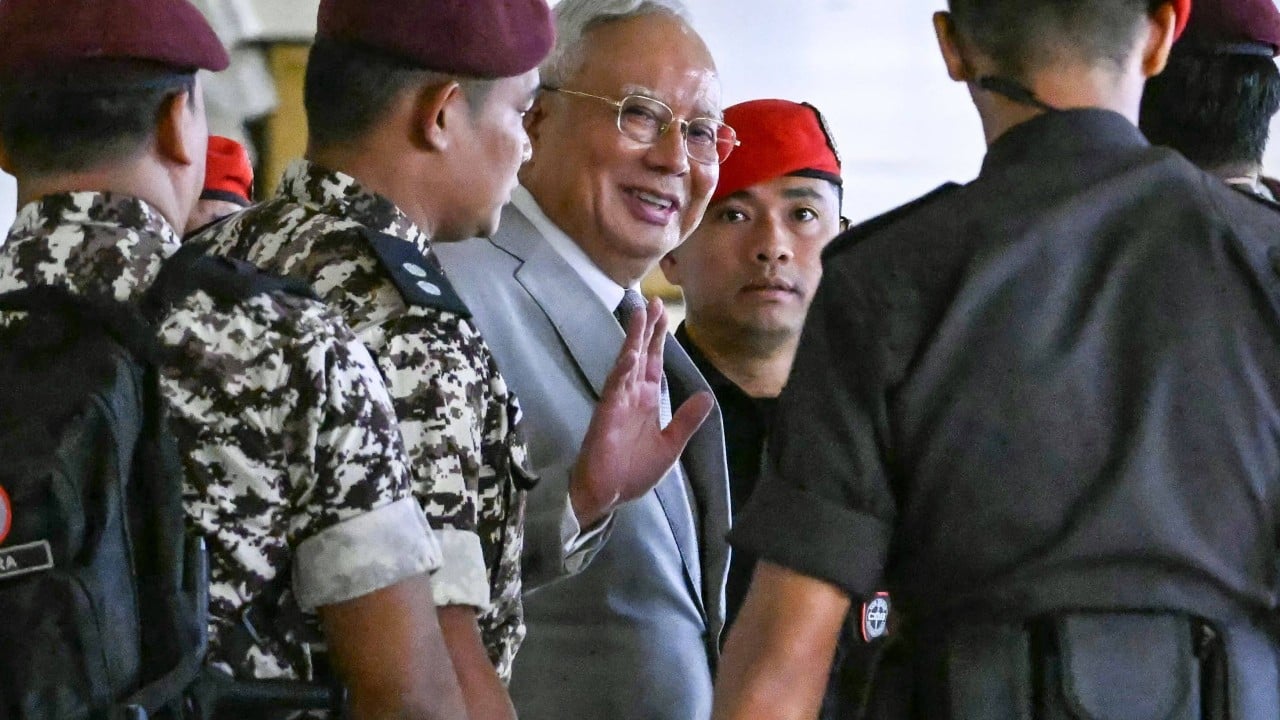
Former Malaysian Prime Minister Najib Razak has transitioned from Kajang Prison to his upscale residence in Kuala Lumpur under a conditional house arrest order, but the mechanics behind his freedom reveal a tense intersection of royal authority, party loyalty, and staggering financial penalties. The settlement of a 50 million ringgit, roughly US$12.3 million, court-ordered fine by his political party, the United Malays National Organisation (UMNO), cleared the final hurdle for a royal pardon granted by King Sultan Ibrahim. Yet, this maneuver does not wipe away his legal liabilities, nor does it quiet the broader political fallout shaking Malaysia's fragile governing coalition.
The financial engineering required to meet the court's demands exposed deep veins of allegiance within UMNO. Through a coordinated crowdfunding and donor campaign, the party scraped together the multi-million-dollar sum to satisfy the conditions set by the Pardons Board. For an organization that once ruled Malaysia uninterrupted for decades before suffering a historic defeat in the wake of the 1MDB sovereign wealth fund scandal, bailing out its former leader is an act of institutional survival as much as personal debt. It signals that even behind bars, Najib's faction retains structural leverage within the party, casting a long shadow over current Prime Minister Anwar Ibrahim's reformist credentials.
Transitioning from a prison cell to home detention is rare for high-profile white-collar convicts, turning the former premier's sentence into a stress test for Malaysia's separation of powers. The path to his residence on Jalan Langgak Duta was far from straightforward. Days before his ultimate release, legal friction between the Attorney-General's Chambers and the royal decree momentarily pulled him back behind bars before a definitive High Court order finalized the conditional release. Sultan Ibrahim asserted that the royal pardon was unambiguous, leaving lower courts and administrative bodies little room for maneuver.
Crucially, this house arrest applies exclusively to Najib's reduced six-year sentence tied to the SRC International corruption case. It provides no legal shelter against a separate 15-year prison term handed down in late 2025 for additional money laundering and abuse of power charges linked to the broader 1MDB asset looting. That second conviction remains under active appeal, meaning the former leader's legal purgatory is far from over. Even under house arrest, he is barred from active political participation, though his mere presence at home keeps his political machinery humming in the background.
Public sentiment outside the capital remains jagged. While party loyalists celebrate the homecoming as a matter of humanitarian clemency and political justice, critics view the transaction as a troubling compromise of the rule of law. The optics of a convicted architect of a multibillion-dollar financial scandal serving his time on a luxurious estate—facilitated by party fundraising—deepen cynicism among voters who had hoped the 2018 political upheaval permanently closed the book on elite impunity.
As guards monitor the perimeter of the Kuala Lumpur property and watchdogs parse every clause of the conditional release, the wider political apparatus is forced to calculate the cost. Anwar Ibrahim's coalition government must navigate the tightrope of keeping UMNO inside the tent while weathering public backlash over perceived double standards in the justice system. The 12.3 million dollars bought a change of scenery, but it cemented a permanent fault line in modern Malaysian politics.