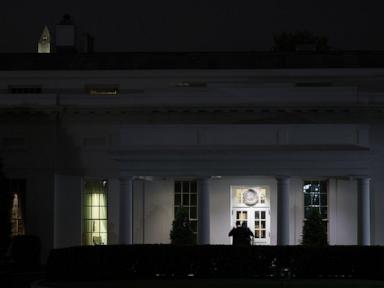
The revelation that Prime Minister Benjamin Netanyahu concealed a prostate cancer diagnosis during the height of a multi-front war with Iran and its proxies is more than a medical footnote. It is a fundamental breach of the unspoken contract between a democratic leader and the electorate. In a country where the premier’s heartbeat is effectively a matter of national security, the decision to withhold a life-threatening diagnosis suggests a government operating in a vacuum of transparency. Netanyahu maintains the silence was necessary to avoid projecting weakness to Tehran. However, the reality of political survival often blurs the line between state interests and personal preservation.
The timeline of the diagnosis intersects with some of the most volatile months in Middle Eastern history. While Israeli jets were striking targets in Lebanon and intelligence agencies were tracking Iranian shipments, the man at the top was privately managing a malignancy. This creates a terrifying lag in the chain of command. If a leader is undergoing treatment or dealing with the cognitive load of a serious illness, the public deserves to know who is truly holding the wheel. In Israel, there is no formal mechanism that automatically triggers a transfer of power for a "temporary" medical incapacity unless the Prime Minister declares it himself. Netanyahu chose not to. If you liked this article, you might want to look at: this related article.
The Strategic Logic of Secrecy
Netanyahu’s defense rests on the concept of deterrence. In his view, a leader battling cancer is a leader seen as vulnerable. In the cold calculus of Middle Eastern geopolitics, vulnerability invites aggression. He argues that if the Ayatollahs in Tehran sensed any physical frailty at the top of the Israeli command structure, they would have accelerated their regional escalations.
This logic is consistent with the persona Netanyahu has spent decades building. He is the "Mr. Security" of Israeli politics, a figure who presents himself as the indispensable shield against existential threats. Admitting to a serious illness would shatter that image of the iron-clad statesman. It would also embolden his domestic rivals, who have long argued that his age and legal troubles make him unfit for the grueling demands of the office. For another look on this story, see the latest update from BBC News.
But the "deterrence" argument is a double-edged sword. While it might keep enemies guessing, it leaves the Israeli public in the dark about the stability of their own government. If a crisis had erupted while the Prime Minister was under anesthesia or recovering from a procedure, the resulting chaos could have been more damaging than any admission of illness.
A History of Medical Omerta
This is not the first time a world leader has treated their health as a state secret. The history of the 20th and 21st centuries is littered with examples of cabinets and inner circles conspiring to hide the physical decline of their bosses. From Woodrow Wilson’s stroke to Francois Mitterrand’s decade-long concealment of his own prostate cancer, the pattern is clear. Leaders fear that a diagnosis is a death sentence for their political careers long before it becomes a literal one.
In Israel, the precedent is particularly sensitive. The memory of Ariel Sharon’s sudden collapse in 2006, which left the country in a state of shock and a leadership vacuum, remains a cautionary tale. Sharon’s health had been a subject of speculation for months before his massive stroke, yet the full extent of his risk factors was never fully disclosed to the voters. Netanyahu, a student of Israeli political history, likely saw Sharon’s exit as a scenario to be avoided at all costs.
The Medical Reality of Prostate Cancer
To understand the gravity of the situation, one must look at what a prostate cancer diagnosis actually entails for a man in his 70s. While many forms of the disease are slow-growing and manageable, the treatment protocols—whether surgery, radiation, or hormone therapy—come with significant side effects. Fatigue, "brain fog," and the emotional toll of a cancer battle are not conducive to managing a high-intensity war.
If the Prime Minister was receiving treatment, the question of his "fitness for duty" becomes a medical debate as much as a political one.
- Cognitive Function: Does the stress of treatment impair quick decision-making during a 2:00 AM security cabinet meeting?
- Physical Stamina: Can a patient undergoing therapy maintain the 18-hour workdays required of a wartime leader?
- Succession: Who was briefed on the contingency plan if the Prime Minister’s condition worsened suddenly?
The Iran Factor as a Political Shield
Netanyahu has frequently used the Iranian threat as a catch-all justification for controversial decisions. By framing his medical secrecy as a tactical move against Tehran, he effectively wraps his personal health in the national flag. It makes criticism of his lack of transparency seem like an attack on national security itself.
This tactic is effective but dangerous. It sets a precedent where any personal failing or potentially disqualifying information can be suppressed under the guise of "not helping the enemy." If health can be hidden, what about financial improprieties or strategic blunders? The "Iran War" becomes a permanent emergency that justifies the erosion of democratic norms.
The Iranian leadership, for their part, likely find the irony rich. They lead a regime where the health of the Supreme Leader is the most guarded secret in the country. For Israel, a nation that prides itself on being the only democracy in the region, adopting the secretive habits of its adversaries is a step backward.
Accountability in the Shadow of War
The Israeli press and the opposition have been hesitant to hammer Netanyahu on this issue while soldiers are in the field. There is a sense of "not now" that pervades the national discourse. However, the questions are starting to surface. Why were the senior members of the coalition not informed? Was the Defense Minister kept in the loop?
In a functioning cabinet, the health of the Prime Minister should be a shared concern, not a private burden. The fact that Netanyahu kept this within a tiny circle of confidants—possibly excluding key security officials—suggests a level of mistrust at the very top of the Israeli government. It paints a picture of a leader who trusts no one, not even the people he task with defending the nation.
The Legal Gray Zone
Israel lacks a formal "Twenty-Fifth Amendment" equivalent that is clear and easy to execute. The Basic Law: The Government mentions that a Prime Minister can be replaced if they are "temporarily unable to discharge their duties," but it doesn't define what that means or who makes the call if the PM refuses to. This ambiguity is what Netanyahu exploited.
Legal experts argue that a cancer diagnosis, especially one requiring active intervention, should trigger a mandatory disclosure. The public has a right to know if their leader’s judgment might be clouded by medication or the physical strain of a serious illness. Without a change in the law, the health of future Prime Ministers will remain a matter of personal discretion rather than public record.
The Cost of the Indispensable Man Myth
The "indispensable man" is a recurring theme in Netanyahu’s rhetoric. He has successfully convinced a large portion of the Israeli public that he is the only person capable of navigating the complex threats facing the state. When a leader becomes synonymous with the state, their personal health becomes a state crisis.
This myth is what makes the concealment so toxic. If the system is so fragile that the illness of one man could cause it to crumble, then the system itself is the problem. A healthy democracy should be able to withstand the temporary absence or even the passing of its leader. By hiding his condition, Netanyahu prioritized the maintenance of his own power over the institutional health of the Israeli government.
The war with Iran and its proxies is a generational struggle. It will outlast Netanyahu’s tenure, regardless of his health. By using the war as a reason to hide his cancer, he has inextricably linked his biological survival with the nation’s military success. This is a burden no single individual should carry, and no public should have to bear in secret.
A Crisis of Trust
Ultimately, the issue isn't that Benjamin Netanyahu got sick. He is a human being in his mid-70s; illness is a statistical probability. The issue is the culture of opacity that allowed him to hide it. If the Prime Minister can hide a cancer diagnosis while the country is at war, it raises the question of what else is being kept from the public.
The trust between the governed and the governor is the most valuable currency in a democracy. Once it is spent, it is nearly impossible to earn back. Netanyahu’s decision to keep his health a secret may have served his immediate political interests and his ego, but it has left a permanent stain on the transparency of the office.
Israelis are now left wondering if the decisions made during the most critical moments of the conflict were influenced by a man fighting a private battle with his own body. That doubt is a poison that lingers long after the physical symptoms of the disease have faded. The next time the Prime Minister speaks about the necessity of a specific military action or a shift in strategy, a segment of the population will inevitably wonder if they are getting the full story, or just the version that keeps the man in power.
The precedent has been set. The "Security Prime Minister" has shown that for him, security starts with protecting his own image at all costs. Whether the Israeli public will continue to accept this trade-off is a question that will be answered in the next election cycle, provided the voters are given the full facts before they head to the polls. The era of the "Iron Man" is over; the era of the human, flawed, and aging leader is the reality, whether the leadership wants to admit it or not.
Stop viewing the health of national leaders as a private matter and demand a mandatory, independent medical review for anyone holding the nuclear codes or the authority to declare war.