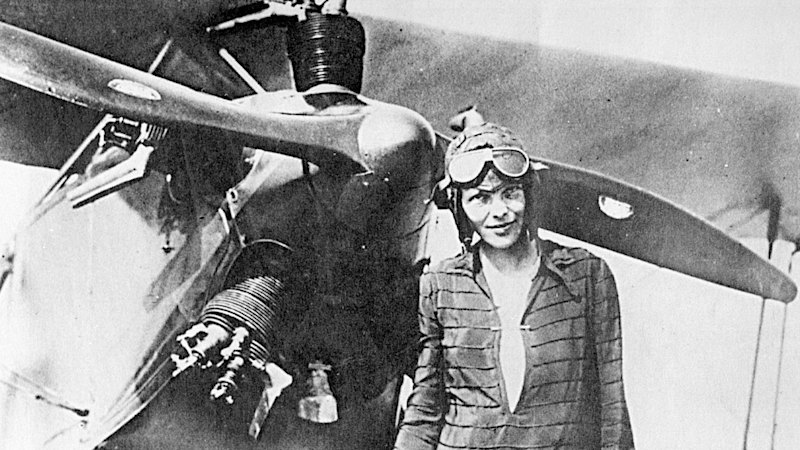
The mystery surrounding the disappearance of Amelia Earhart remains one of the most enduring puzzles in aviation history. Decades after her Lockheed Electra vanished over the Pacific Ocean in July 1937, expeditions continue to launch toward remote atolls, driven by the persistent hope of finding physical proof of her final flight. This ongoing search is not merely about locating a lost aircraft; it is a testament to human curiosity and the profound desire to close a historic chapter that has stayed open for nearly a century.
When Earhart and her navigator, Fred Noonan, disappeared during their ambitious attempt to circumnavigate the globe near the equator, the immediate rescue operation was the largest in US history up to that point. When those initial efforts failed, speculation took over. Over the decades, theories branched into countless directions, ranging from official naval conclusions of fuel exhaustion and a watery grave to more elaborate espionage scenarios. Yet, the physical evidence has always remained frustratingly thin.
Modern expeditions focus heavily on remote locations like Nikumaroro Island, previously known as Gardner Island, situated in the southwestern Pacific Republic of Kiribati. Proponents of this theory suggest that Earhart and Noonan managed to land the twin-engine plane on a flat reef flat, where the aircraft eventually succumbed to rising tides while the aviators survived temporarily as castaways. This hypothesis relies on archival clues, historical photographs, and faint radio signals heard in the days following the disappearance. Critics, however, point out the vastness of the Pacific and the lack of definitive artifacts positively linked to the Electra.
Sonar technology and underwater autonomous vehicles have transformed the modern search playbook. Teams now deploy sophisticated marine equipment capable of scanning deep ocean trenches and reef drop-offs where an aircraft might have slid decades ago. Despite these technological leaps, the ocean environment proves unforgiving. Heavy currents, coral growth, and deep-sea sediment complicate every pass made by sonar gear. Finding metallic wreckage in a vast expanse of blue water requires an extraordinary alignment of precision, funding, and luck.
Beyond the hardware and historical archives, these expeditions spark debate regarding resource allocation and the romanticization of history. Critics sometimes question whether pouring hundreds of thousands of dollars into remote Pacific island surveys is justified when so many contemporary maritime mysteries remain unsolved. Yet, the pull of Amelia Earhart is unique. She represents an era of pioneering aviation risk, breaking gender barriers and pushing the boundaries of mechanical endurance.
Each new expedition sets sail with better tools than the last, building upon the rigorous research of archival sleuths and marine scientists. Whether a future mission finally yields the missing pieces of the Lockheed Electra or simply adds another footnote to the legend, the drive to find the truth persists. The Pacific remains guarded, keeping its secrets beneath the waves while the searchers continue looking toward the horizon.