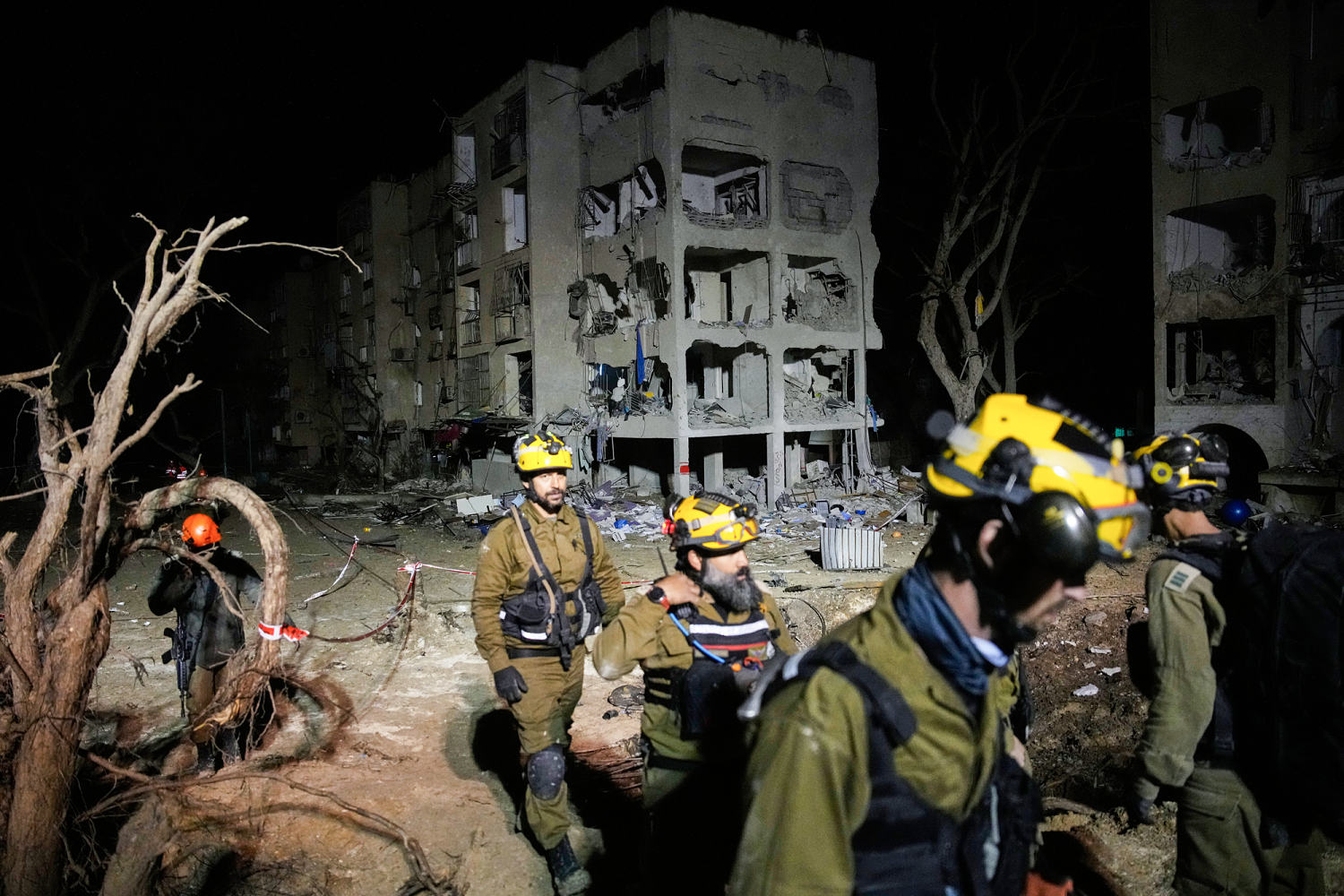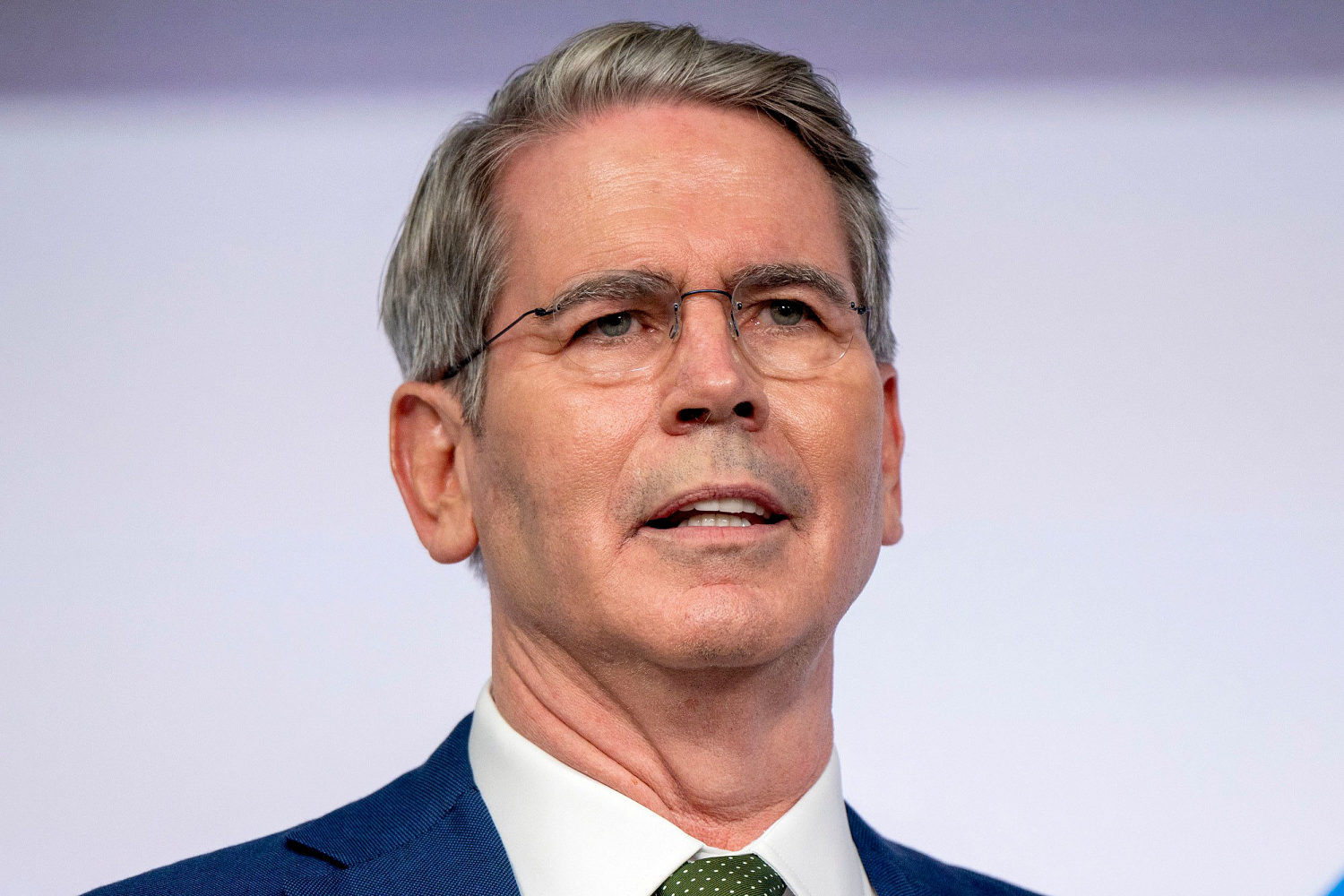
The concept of "escalating to de-escalate" sounds like a paradox designed in a windowless room at a think tank. It is a strategy that suggests the only way to bring a concrete peace is to first move the needle toward total war. Recently, Scott Bessent, a key economic advisor and a figure frequently mentioned for high-level Treasury roles, stepped into the middle of this geopolitical firestorm. By defending the necessity of military pressure on Iran, Bessent is not just talking about missiles and drones. He is signaling a fusion of financial warfare and kinetic action that would redefine American foreign policy in the Middle East.
Bessent’s core argument rests on the belief that Iranian regional influence has grown precisely because the United States has allowed the "deterrence gap" to widen. To close it, he suggests a posture where the threat of force is not just a last resort but an active tool of diplomacy. If the U.S. makes the cost of Iranian provocation high enough—specifically through targeted military strikes and a "maximum pressure" 2.0 economic campaign—Tehran will eventually be forced to the negotiating table. This is the gamble. It assumes the Iranian leadership responds to pain with pragmatism rather than a desperate, scorched-earth retaliation.
The Economic Architect of Conflict
Bessent is a man of markets. He views global stability through the lens of capital flows and risk premiums. When he speaks on Iran, he is calculating the price of inaction. To his mind, a nuclear-capable Iran or a Middle East controlled by Iranian proxies creates a permanent "instability tax" on the global economy. He argues that a short-term, high-intensity escalation might be cheaper than a decade of low-level attrition.
This isn't just about ideology. It's about the mechanics of the petrodollar and the security of the Strait of Hormuz. If a few well-placed strikes can restore the perception of American dominance, Bessent believes the markets will eventually reward that clarity. However, he often skips over the messy reality of what happens when the first strike doesn't lead to a white flag. Markets hate uncertainty, and a hot war with Iran is the definition of a "black swan" event.
The Deterrence Gap and the Shadow War
For years, the U.S. and Iran have engaged in a shadow war. It is a dance of cyberattacks, tanker seizures, and proxy strikes in Yemen, Iraq, and Lebanon. Bessent’s "escalate to de-escalate" philosophy wants to bring this conflict out of the shadows. The theory is that by making the conflict overt, the U.S. regains the initiative.
Deterrence is a psychological state. It exists when your enemy believes that the cost of an action exceeds the benefit. Bessent contends that Iran no longer fears the "consequences" promised by Washington. By advocating for military action, he is trying to restore the "fear" component of the equation. But history shows that "escalating to de-escalate" is a tightrope walk over an abyss. In 1914, every power in Europe thought they were taking "defensive" steps to prevent a larger war. We know how that ended.
The Flaw in the Escalation Ladder
The primary risk of Bessent’s strategy is a misunderstanding of the "escalation ladder." In game theory, each side takes a step up, expecting the other to stop. But if both sides believe they cannot afford to lose face, they keep climbing until they hit a level of conflict that neither originally intended.
Iran's military doctrine is built on "asymmetric warfare." They know they cannot win a conventional carrier-group battle against the U.S. Navy. Instead, they focus on swarming tactics, ballistic missiles, and internal destabilization of neighboring oil producers. If the U.S. escalates, Iran’s logical move isn't necessarily to back down—it is to make the cost of that escalation unbearable for American allies like Saudi Arabia and the UAE.
Hardliners and the Domestic Trap
When an American leader or advisor talks about "escalating" against Iran, it feeds the narrative of the hardliners within the Islamic Revolutionary Guard Corps (IRGC). These factions thrive on external threats. It justifies their budget, their grip on power, and their suppression of domestic dissent.
A strike intended to "de-escalate" could actually unify a fractured Iranian public behind a flag they were previously ready to burn. Bessent’s calculated, market-driven approach to war fails to account for the raw emotion of nationalism. You can't always model a martyr complex in a spreadsheet.
The Financial Frontline
Bessent’s unique contribution to this debate is the integration of the Treasury’s power with the Pentagon’s. He sees sanctions not as a standalone tool, but as a primer for military action. He has advocated for "secondary sanctions" that would effectively cut off any country—including China—that continues to buy Iranian oil.
This is a "scorched earth" economic policy. If the U.S. forces China to choose between Iranian oil and the American financial system, it creates a massive rift in global trade. This is where Bessent’s background as a hedge fund manager becomes clear. He is willing to take a massive "short position" on global stability in exchange for a potential "long-term" payoff of a neutered Iran.
The Regional Domino Effect
If the U.S. follows the "escalate to de-escalate" path, it isn't acting in a vacuum. Israel is the most significant variable in this equation. Prime Minister Netanyahu has long sought a more aggressive U.S. stance on Tehran. A green light from Washington for "escalation" would likely be seen in Jerusalem as a mandate for a direct strike on Iranian nuclear facilities.
Once those facilities are hit, the de-escalation phase becomes almost impossible to reach. Iran has spent decades burying its nuclear program deep into mountains. A strike that fails to completely destroy the program—but succeeds in killing Iranian scientists and soldiers—only incentivizes Tehran to dash for a nuclear weapon as a survival mechanism.
The Ghost of the Iraq War
Critics of Bessent’s stance point to the 2003 invasion of Iraq as the ultimate warning. That war was also sold as a way to "reorder" the Middle East and ensure long-term security. Instead, it created a power vacuum that Iran filled. The irony of the current situation is that the very "Iranian threat" Bessent wants to escalate against was empowered by the last major American attempt to "de-escalate" through force.
Bessent argues this time is different because the goal is not "regime change" but "behavior change." It is a subtle distinction that often disappears once the first Tomahawk missile leaves its tube. Once the shooting starts, the "goal" is defined by the enemy’s reaction, not your original intent.
The Cold Reality of the Energy Market
A military escalation in the Persian Gulf would send oil prices into a vertical climb. For an economic advisor, this is a dangerous game to play. Even a 20% spike in global crude prices could trigger a recession in the West, potentially tanking the very economy Bessent would be tasked with managing as Treasury Secretary.
He seems to believe that the U.S. energy independence—thanks to the shale boom—provides a shield against this. While the U.S. is a net exporter, oil is a global commodity. If the price goes up in Dubai, it goes up in Dallas. The political blowback from five-dollar-a-gallon gas would likely drain the American public’s appetite for "escalation" within weeks.
The Strategy of the Pivot
Bessent’s rhetoric suggests a pivot toward a more muscular, unilateral foreign policy. He is weary of international agreements like the JCPOA, which he views as a temporary patch on a leaking dam. His preference is for a "grand bargain" forced through strength.
This approach ignores the fact that America’s traditional allies in Europe are terrified of a full-scale conflict. They view Bessent’s "escalate to de-escalate" theory as a reckless gamble with their security and their economies. By moving forward with this strategy, the U.S. risks a "diplomatic decoupling" that could be just as damaging as the Iranian threat itself.
The Asymmetry of Risk
In any conflict between the U.S. and Iran, the risks are fundamentally asymmetric. For the U.S., a failure in this strategy means a lost election, a damaged economy, or another "forever war." For the Iranian regime, failure means the end of their existence. This disparity makes the Iranian leadership far more likely to take "irrational" risks.
When you corner a regime that believes it is fighting for its life, the "de-escalate" part of your plan rarely happens. They don't look for an exit ramp; they look for a way to take you down with them.
The military-economic fusion that Bessent proposes is a sophisticated evolution of "Peace through Strength." It assumes that the world is a giant market where every actor has a price and can be moved by the right amount of pressure. But the Middle East is not a market; it is a graveyard of "sophisticated" strategies.
The danger of Bessent’s worldview is its clinical nature. It treats war as a necessary market correction. It views the "escalate to de-escalate" theory as a way to "re-price" Iranian aggression. But when the bullets start flying and the oil fields start burning, the math changes. You cannot hedge against the chaos of a regional war.
If the U.S. chooses to climb the escalation ladder, it better be certain there is a way back down before the ladder catches fire. There are no stop-loss orders in a hot war. Reach for the lever of military force, and you might find it’s the only thing left to hold onto as the ground disappears beneath you.