When Tehran accuses Washington of threatening to starve Iranians, and Washington counters that humanitarian goods remain legally exempt from sanctions, both sides are relying on talking points that obscure how global trade actually functions.
The public debate around US sanctions and Iranian food security usually splits into two predictable camps. One side argues that broad economic sanctions constitute collective punishment that directly restricts food and medicine. The other side points to legal carve-outs under US law, asserting that food, agricultural commodities, and medical supplies are explicitly permitted.
Neither narrative captures the operational reality on the ground. According to international trade specialists, humanitarian organizations, and legal analysts who have studied the Iranian market over the past decade, food shortages and price spikes in Iran are rarely caused by a direct legal ban on grain or medicine. Instead, they are driven by a complex intersection of secondary financial sanctions, risk-averse global banking, and domestic economic mismanagement inside Iran.
The Legal Exemption Versus Practical Reality
Under the Trade Sanctions Reform and Export Enhancement Act of 2000 (TSRA) and subsequent executive orders, the US Department of the Treasury’s Office of Foreign Assets Control (OFAC) maintains general licenses authorizing the export of agricultural commodities, food, medicine, and medical devices to Iran. On paper, a European or Asian grain trader can legally sell wheat, rice, or cooking oil to an Iranian buyer without violating US law.
In practice, however, modern international trade does not move on paper licenses alone. It moves through commercial banks, marine insurers, and shipping lines.
As documented in reports by Human Rights Watch and the International Crisis Group, the primary barrier to humanitarian trade with Iran is "over-compliance" or "de-risking" by international financial institutions. Following the US withdrawal from the Joint Comprehensive Plan of Action (JCPOA) in 2018 and the reimposition of comprehensive secondary sanctions—including the designation of the Central Bank of Iran (CBI) under counter-terrorism authorities in 2019—major global banks largely severed ties with Iranian financial institutions.
For a bank in Zurich, Frankfurt, or Seoul, processing a payment for an exempt agricultural shipment to Iran carries high compliance costs and severe regulatory risk. If a transaction inadvertently touches a sanctioned entity, or if due diligence documentation falls short of US Treasury standards, the bank faces massive fines and potential exclusion from the US dollar clearing system. Because humanitarian transactions generate relatively small fees compared to the potential liability of a compliance failure, many international banks simply refuse to process Iran-related payments altogether.
The Role of Foreign Currency Reserves and Shipping
Even when a bank agrees to facilitate an exempt trade, payment requires accessible foreign currency. Oil exports have historically been Iran’s primary source of hard currency. US sanctions targeting Iran’s energy sector sharply reduced oil revenues and restricted Iran’s access to foreign exchange reserves held in banks abroad.
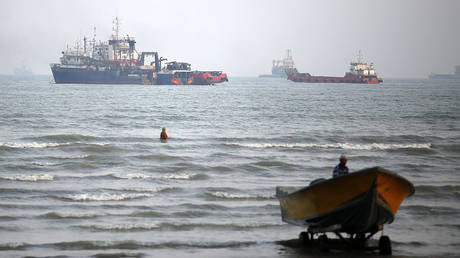
Without accessible hard currency in international accounts, Iranian importers struggle to pay foreign suppliers upfront. Meanwhile, international shipping companies and protection and indemnity (P&I) clubs—which provide essential maritime insurance—often hesitate to cover vessels calling at Iranian ports due to overlapping sanctions on port operators and shipping entities. Higher insurance premiums, longer shipping routes, and the need to use complex payment intermediaries add substantial transaction costs, which are passed directly onto Iranian consumers in the form of higher food prices.
Domestic Factors Inside Iran
Focusing exclusively on external sanctions, however, ignores the significant role of domestic policy in shaping Iran’s food inflation. Economists analyzing the Iranian economy, including researchers at the World Bank and independent Iranian analysts, point to several internal drivers that compound external pressures:
- Currency Devaluation and Inflation: Chronic budget deficits and high money supply growth have driven persistent inflation and a steep depreciation of the Iranian rial. As the rial loses value against the US dollar, imported agricultural inputs—such as animal feed, fertilizers, and seeds—become drastically more expensive, raising the cost of domestically produced meat, dairy, and bread.
- Subsidy Reforms and Price Controls: For years, the Iranian government subsidized essential imports through a preferential exchange rate (known as the Nima or previously the 42,000-rial rate). While intended to keep basic staples affordable, economists and Iranian officials themselves have noted that the multi-tiered currency system created widespread opportunities for corruption, arbitrage, and hoarding, where subsidized goods were diverted or sold at free-market rates. When the government moved to cut these subsidies in 2022, prices for staples like cooking oil, chicken, and dairy surged overnight.
- Water Scarcity and Agricultural Policy: Decades of policies prioritizing agricultural self-sufficiency, combined with inefficient irrigation and prolonged droughts, have depleted groundwater aquifers across Iran. This environmental strain has reduced domestic crop yields and increased the country's reliance on food imports at a time when foreign currency is scarce.
Why Alternative Payment Channels Have Struggled
Recognizing the friction caused by banking de-risking, governments have periodically attempted to create dedicated humanitarian channels. In 2020, the Swiss government, in coordination with the US Treasury, launched the Swiss Humanitarian Trade Arrangement (SHTA) to facilitate the sale of food and medicine to Iran using vetted companies and banks. Similarly, European nations established INSTEX (Instrument in Support of Trade Exchanges) to enable non-dollar trade.
Both mechanisms saw limited volume. Critics and trade practitioners noted that the strict compliance and auditing requirements demanded by SHTA—requiring exhaustive end-user verification and transparency regarding the source of Iranian funds—made the channel difficult to scale, while INSTEX was formally liquidated by its European shareholders in 2023 after facilitating only a single transaction.
A Multi-Layered Crisis
Framing the issue purely as a deliberate US effort to starve civilians, as Tehran frequently does, overlooks the extensive legal exemptions maintained by Washington and the deep structural problems of Iran’s own subsidy and monetary policies. Conversely, claiming that legal exemptions ensure uninterrupted humanitarian access ignores the reality of how secondary sanctions deter the global banking and shipping networks required to deliver food.
Until both the financial friction of secondary sanctions and the domestic structural distortions within Iran's economy are addressed, ordinary Iranians will continue to bear the brunt of rising food costs, caught between geopolitical standoff and economic fragility.