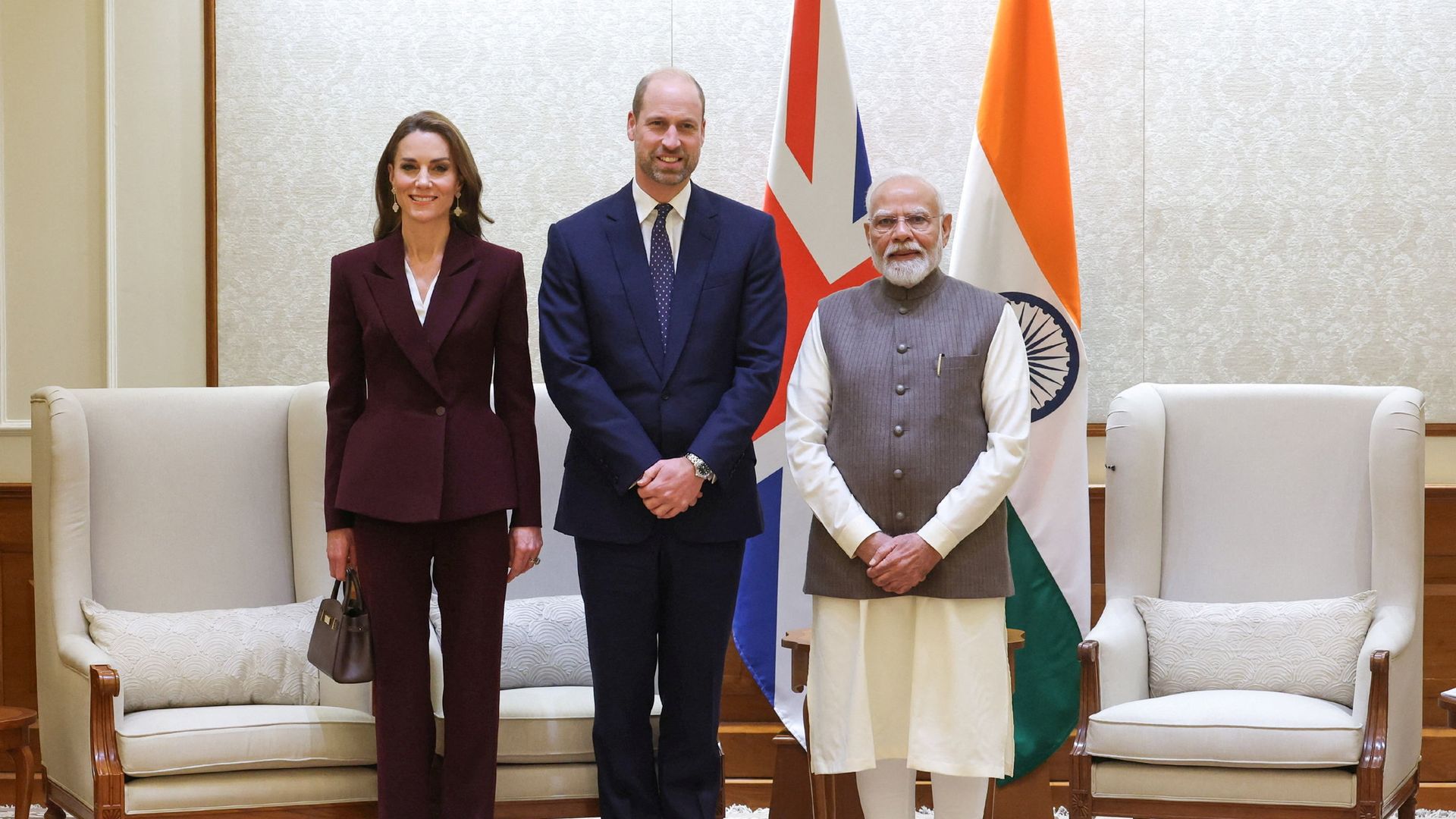
Mainstream coverage of British royal tours treats every handshake in New Delhi like a historic geopolitical breakthrough. It isn't. When Prince William and Catherine, Princess of Wales, wrap up a high-profile visit to India with a photo-op alongside the Indian Prime Minister, the press corps dutifully churns out puff pieces about "strengthening bilateral ties" and "soft power triumph."
That narrative is lazy, outdated, and fundamentally misunderstands how modern global influence actually works.
If you look past the designer wardrobes, the carefully staged cricket matches, and the breathless commentary about diplomatic warmth, a much colder reality emerges. Royal tours to former colonies do not drive trade deals, they do not shift foreign policy, and they certainly do not erase centuries of complex geopolitical friction. Instead, they serve as high-budget PR exercises designed primarily to shore up the British monarchy's relevance back home while offering host nations a flattering, low-stakes media spectacle.
The Soft Power Myth
Political scientists love the term soft power, coined by Harvard professor Joseph Nye in the late 1980s to describe a country's ability to co-opt rather than coerce through cultural attraction and political values. Royal commentators have hijacked Nye's framework and stretched it beyond recognition. They argue that sending senior members of the House of Windsor to India generates intangible goodwill that somehow translates into billions of pounds in trade and investment.
The data tells a completely different story.
Look at the actual mechanics of UK-India trade negotiations over the past decade. Despite repeated royal charm offensives—including the famous 2016 tour where the Duke and Duchess of Cambridge met Prime Minister Narendra Modi at Hyderabad House—a comprehensive UK-India Free Trade Agreement stalled for years over hard, unglamorous sticking points. Visa rules for Indian workers, tariffs on Scotch whisky and British automobiles, intellectual property protections, and data localization laws do not budge because a prince played a good round of street cricket in Mumbai.
I have watched corporate executives and trade delegations spend millions positioning themselves around state visits, assuming the royal halo effect would open ministerial doors that were otherwise locked. Nine times out of ten, those companies walked away with glossy souvenir photos and zero signed contracts. Indian bureaucrats in the Ministry of External Affairs are among the sharpest, most unsentimental negotiators on the planet. They do not alter sovereign economic calculations for pomp and pageantry.
What the Press Corps Misses About New Delhi
The standard media framing treats India as a passive recipient of royal charm, grateful for the attention of Buckingham Palace. That framing gets the power dynamic completely backward.
Modern India is the world's fifth-largest economy, a nuclear power, a spacefaring nation, and the most populous country on Earth. When the Indian Prime Minister hosts British royals, New Delhi is not seeking validation from London. New Delhi is projecting its own global stature to a domestic audience of over a billion voters.
Consider the visual optics of a meeting at Hyderabad House. To a British tabloid reader, it looks like the Crown exercising historic influence on the world stage. To an Indian voter watching evening news in Uttar Pradesh or Gujarat, it looks like the leaders of the former colonial empire coming to pay respects to an ascendant Indian superpower. Both sides get the domestic headlines they want, which is precisely why both governments keep staging the theater.
The Colonial Hangover Nobody Mentions
Legacy media outlets almost always gloss over the historical friction baked into these visits, burying any mention of the British Raj beneath paragraphs about fashion choices and charity appearances. That omission misses the central tension of the entire trip.
Every time a British royal steps onto Indian soil, they walk a diplomatic tightrope over the unresolved legacy of empire. A single unscripted remark about the Koh-i-Noor diamond, the Jallianwala Bagh massacre, or colonial-era wealth extraction can turn a multi-million-pound PR tour into an international incident overnight. Because the risk of a gaffe is so high, royal handlers sanitize the itinerary to the point of sterility.
- Sanitized stops: Visits focus strictly on safe, apolitical themes like wildlife conservation, youth sports, and tech entrepreneurship.
- Scripted interactions: Every conversation is pre-vetted by Foreign, Commonwealth and Development Office (FCDO) officials to prevent historical controversies from surfacing.
- Zero policy substance: Royals are constitutionally barred from discussing actual legislation, defense pacts, or immigration quotas.
When you strip out politics, history, and policy to avoid offending anyone, what is left? Expensive tourism paid for by taxpayers.
Answering the Questions People Actually Ask
When news breaks of a royal tour wrapping up in India, search engines light up with variations of the same basic questions. Most answers online parrot official palace press releases. Here is what the reality actually looks like.
Does the British Royal Family Have Any Real Power in India?
None. Zero. India became a sovereign republic on January 26, 1950, severing all constitutional ties to the British monarch. Unlike Commonwealth realms such as Canada or Australia, where King Charles III remains head of state, India recognizes the British monarch strictly as the symbolic head of the Commonwealth—a voluntary association of 56 independent nations. When William and Kate meet the Indian Prime Minister, they hold no constitutional authority, no diplomatic mandate to negotiate treaties, and no political leverage over Indian governance.
Who Pays for Royal Tours to India?
The bill is split, and neither side likes advertising the exact total. British taxpayers fund the travel, logistics, and staff expenses through the Sovereign Grant and the FCDO's diplomatic travel budget. Meanwhile, the host government—in this case, the Government of India—absorbs the massive cost of domestic security, motorcades, venue lockdowns, and state hospitality. In a country still balancing massive infrastructure and public health budgets, locking down major urban arteries for days to accommodate foreign ceremonial guests draws quiet criticism from Indian taxpayers and opposition commentators alike.
Do Royal Visits Actually Boost Tourism Between the UK and India?
Slightly, and mostly in the wrong direction. Media coverage of royal visits to iconic sites like the Taj Mahal or Kaziranga National Park generates temporary spikes in British search traffic for luxury Indian holidays. However, the primary driver of UK-India travel is not royal sightseeing; it is the massive Indian diaspora in Britain visiting family, alongside business and student migration. Visa processing backlogs at the UK Home Office have a far greater impact on bilateral travel numbers than any royal photo-op ever could.
The Real Audience Is Back in London
If royal tours do not move trade deals and do not shift Indian foreign policy, why does the British government keep sending the Prince and Princess of Wales abroad?
Because the true target audience is sitting on sofas in Surrey, Manchester, and Edinburgh.
The British monarchy faces an existential branding challenge at home. Younger generations in the UK are increasingly indifferent—or actively hostile—toward the institution. Polling from YouGov consistently shows sharp generational divides on whether Britain should keep the monarchy, with support dropping dramatically among adults under 35. Domestic ribbon-cuttings at community centers in rainy English towns do not generate the kind of global prestige that justifies a multi-million-pound Sovereign Grant.
International tours solve that domestic PR problem instantly. Putting William and Kate next to world leaders in exotic, visually striking locations makes the monarchy look indispensable, glamorous, and globally relevant. The images beam straight back to British front pages, reinforcing the illusion that the Royal Family is out there doing heavy diplomatic lifting for Britain's post-Brexit future.
It is domestic political theater dressed up as foreign policy.
Where the Contrarian Argument Has Limits
To be completely fair, dismissing royal diplomacy as 100 percent useless ignores one narrow area where it genuinely moves the needle: convening power.
While royals cannot negotiate tariffs or sign defense contracts, their presence in a room changes the guest list. If the British High Commission in New Delhi hosts a reception for UK clean-tech startups, mid-level bureaucrats might show up out of polite obligation. If the Prince and Princess of Wales are hosting that same reception, billionaire industrialists, cabinet ministers, and top venture capitalists clear their schedules to attend.
In business and philanthropy, access is currency. Charitable initiatives—like William's Earthshot Prize or conservation partnerships in Assam—genuinely benefit from the media spotlight and elite networking that only top-tier royals can command. Ignoring that convening power would be dishonest.
The problem is not that royal visits have zero value. The problem is that commentators confuse convening power with geopolitical power. Getting wealthy people into a ballroom is a useful networking tool; pretending it substitutes for serious economic statecraft is a delusion.
How Modern Diplomacy Should Actually Be Measured
If Britain wants to build genuine, lasting influence in India over the next twenty years, it needs to stop relying on nineteenth-century diplomatic rituals and start competing on twenty-first-century terms.
Imagine a scenario where the UK government redirected the diplomatic bandwidth spent orchestrating a week-long royal pageant into three concrete, unglamorous initiatives:
- Streamlined STEM and entrepreneurial visas: India produces millions of engineering and tech graduates every year. Competing with the US, Germany, and Australia for top Indian talent requires fast, predictable visa pathways—not ceremonial banquets.
- Joint defense and semiconductor manufacturing: New Delhi is actively diversifying its defense supply chains away from Russia and building domestic chip fabrication capacity. Co-developing dual-use technology and aerospace components creates decades of structural interdependence that no speech can match.
- Aggressive institutional investment: British pension funds and sovereign wealth vehicles should be co-investing directly in Indian renewable energy grids and logistics corridors alongside Indian conglomerates.
Real geopolitical alignment is built through supply chains, capital flows, talent exchanges, and shared security interests. Those mechanisms survive changes in government, survive public relations cycles, and survive generational shifts in public opinion.
A royal handshake at Hyderabad House makes for a great front-page photograph on a Tuesday morning. By Friday, the motorcades are gone, the streets reopen, and the trade negotiators go right back to arguing over tariffs. Stop confusing the pageantry for the power.