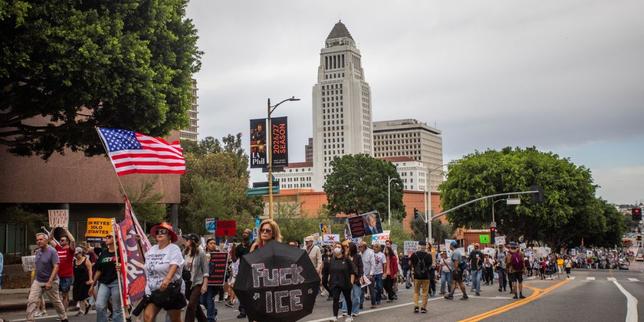
Street corners in major American metropolitan areas carry a distinct friction lately. Banners bearing the phrase No Kings stretch across intersections, held by citizens whose faces reflect a volatile mix of grim determination and persistent anxiety. These demonstrations represent a direct ideological pushback against Donald Trump and the broader populist movement surrounding his political trajectory. Yet, beneath the surface chants and the sea of homemade placards lies a profound strategic uncertainty. Activists find themselves caught between the urgent necessity of mobilization and the demoralizing realization of systemic political gridlock.
Understanding this phenomenon requires stepping past the conventional media framing of routine political protests. This is not merely about opposing a single political figure. It is an organized collision between decentralized grassroots resistance and an entrenched, highly disciplined electoral machine. For another view, consider: this related article.
The Mechanics of Decentralized Opposition
Traditional political rallies rely on centralized committee structures, union bus fleets, and pre-approved permits. The modern No Kings assemblies operate differently. They draw heavily on a decentralized playbook perfected over the last decade of civil unrest. Coordination happens through encrypted messaging groups and hyper-local neighborhood networks.
This structure grants the movement impressive agility. When law enforcement or municipal authorities attempt to restrict a specific plaza, the crowd disperses and reforms three blocks away before midnight. However, this lack of hierarchical leadership comes with severe operational costs. Without a unified command structure, the demonstrations struggle to translate raw street energy into durable legislative leverage. Similar analysis regarding this has been shared by The New York Times.
Veteran organizers on the ground acknowledge this structural tension privately. A protest can shut down traffic for six hours, generate millions of digital impressions on social media platforms, and still fail to influence a single vote in a closely contested congressional district. The friction between symbolic expression and legislative power remains the primary unresolved contradiction of the current resistance cycle.
Psychological Fatigue on the Front Lines
The emotional profile of these gatherings has shifted significantly. Early iterations of anti-Trump mobilization pulsed with euphoric defiance. Participants viewed themselves as part of an imminent democratic correction. Years of institutional endurance, legal battles, and shifting judicial appointments have eroded that initial optimism.
Today, the dominant emotional current is defensive vigilance. Protesters are acutely aware that their opponents have constructed a comprehensive blueprint for executive expansion. The rhetoric from the populist right no longer hides its institutional ambitions. Consequently, every sign held in the air functions less like a celebratory banner and more like a warning flare.
Consider the demographics of the crowds. While younger activists manage digital outreach and direct-action logistics, the core turnout frequently features middle-aged and older citizens. These are individuals who previously viewed civic participation as voting every four years and attending a local town hall. Their presence on pavement for hours at a time signals a profound breakdown in trust regarding standard institutional guardrails. They march because they believe the traditional alarms no longer function.
The Strategic Dilemma Ahead
As political campaigns gear up for upcoming electoral cycles, the No Kings movement faces an existential fork in the road. Will these coalitions institutionalize their efforts into precinct-level organizing, voter registration drives, and primary challenges? Or will they burn out in a cycle of perpetual street-level protest that exhausts participants without altering the balance of power?
History suggests that movements relying solely on moral witness eventually fragment under the weight of political disappointment. Sustained pressure requires not just showing up when the political climate feels threatening, but maintaining disciplined, unglamorous organization long after the television cameras have packed up and moved to the next breaking story. The banners will remain on the streets, but the real test of the resistance will be decided far away from the cameras, in quiet rooms where party machinery and legislative strategies are actually built.