The narrative surrounding the United Kingdom's departure from the European Union has long been dominated by macroeconomic despair. A decade of hard data confirms the damage, showing that Brexit has left the UK economy roughly 6% to 8% smaller than its peers, frozen business investment by 18%, and erected punishing border friction. Yet, the black-and-white framing of the national debate misses a cynical reality. Wealth does not disappear into thin air; it shifts. While British households bear the brunt of an ongoing inflation hangover and a devalued currency, a distinct class of corporate and geographic opportunists has quietly capitalised on the friction.
The real winners of Brexit are not the idealized sovereign industries promised in 2016. Instead, they are the entities that monetize administrative chaos: Dublin financial hubs, EU-based maritime fleets, automated customs software providers, and highly specialized British service exporters who successfully bypassed the physical constraints of cross-Channel freight. By analyzing how capital moved when the borders closed, we can see exactly who turned geopolitical disruption into a historic windfall.
The Paperwork Cartel and the Customs Boom
Border friction is poison for a manufacturing plant or a fresh food supplier. For a customs agent, it is a goldmine. When the UK exited the single market and the EU-UK Trade and Cooperation Agreement took effect, it introduced a mountain of regulatory obligations overnight.
Before the referendum, a British truck could drive from Birmingham to Bologna with nothing more than a standard bill of lading. Today, that same journey requires a dizzying array of paperwork:
- Safety and security declarations
- Export health certificates for livestock and food products
- Rules-of-origin forms proving the goods were actually made in the UK
- Rules of chemical compliance under independent UK REACH regimes
This administrative friction gave birth to a thriving logistics consultancy sector. Companies specializing in customs brokerage and trade compliance have seen demand skyrocket. They do not need the UK to prosper; they only need the rules to remain complicated. The independent Treasury watchdog, the Office for Budget Responsibility, explicitly noted that the trade agreement created vastly more friction for tangible goods than for intangible services.
Every extra hour a truck spends idling at Kent or Calais represents a billable fee for a clearance agent. For these intermediaries, the inefficiency is the business model.
Ireland and the Great Financial Flight
When the referendum results shocked the global markets, international investment funds faced an existential dilemma. They needed guaranteed access to the EU single market, but their European operations were anchored in the City of London. The response was swift and calculated.
Instead of waiting for a political miracle, banks, insurers, and asset managers initiated an unprecedented capital migration. More than $1 trillion in banking assets was systematically transferred out of Britain to continental hubs. A parallel shift occurred in asset management, with firms moving billions in investment vehicles to preserve their passporting rights.
+-------------------------------------------------------------+
|               BREXIT FINANCIAL SECTOR MIGRATION             |
|   Destination Share of Confirmed Corporate Relocations      |
+-------------------------------------------------------------+
|  Dublin (Ireland)        |||||||||||||||||||||||||||| 30%   |
|  Luxembourg              |||||||||||||||| 18%               |
|  Frankfurt (Germany)     |||||||||||| 12%                   |
|  Paris (France)          |||||||||||| 12%                   |
|  Amsterdam (Netherlands) |||||||||| 10%                     |
+-------------------------------------------------------------+
Dublin emerged as the undisputed capital of this migration, capturing 30% of all confirmed post-Brexit corporate relocations. The Irish capital offered an English-speaking workforce, a familiar common-law legal system, and an unwavering commitment to EU regulatory frameworks. While London watched its dominance over euro-denominated derivatives trading erode, Dublin and Luxembourg expanded their fund administration empires.
The financial loss to London was not an immediate, catastrophic crash. It was a slow, deliberate bleeding of high-paying jobs, corporate tax receipts, and future venture funding.
Bypassing Britain on the High Seas
The geographic reality of the UK made it a natural "landbridge" for Irish trade with mainland Europe. For decades, Irish exporters shipped their goods by ferry to Welsh ports, drove across the British highway network, and took another short ferry ride from Dover to Calais. It was fast, cheap, and predictable.
Brexit destroyed that predictability. The threat of customs bottlenecks at British ports forced logistics giants to rethink European supply chains entirely.
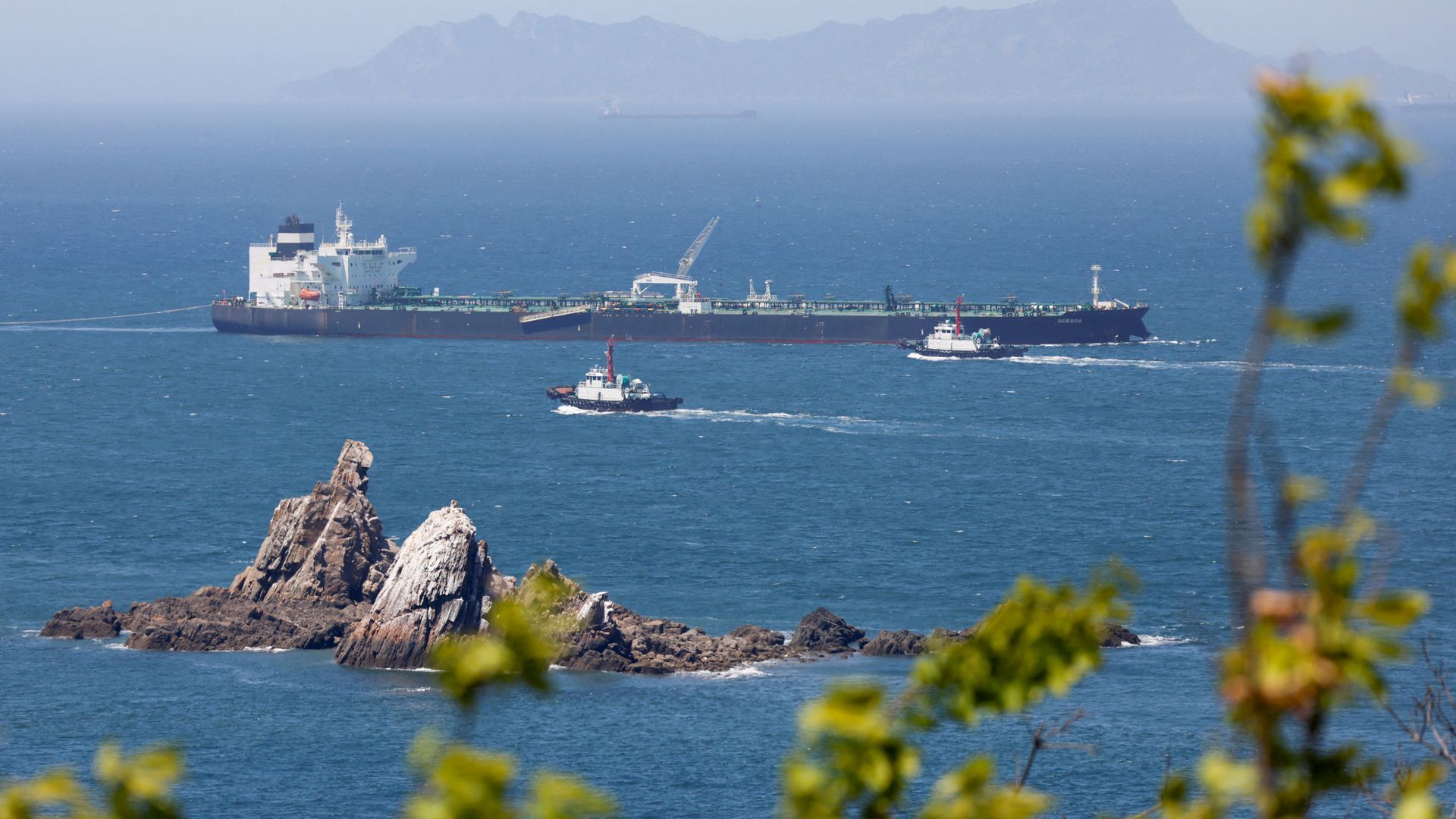
European ferry operators like DFDS and CLdN recognized the vulnerability and executed an aggressive strategic pivot. They bypassed the British landbridge completely. By launching direct, high-capacity roll-on/roll-off ferry routes between Irish ports like Cork and Rosslare and continental destinations like Dunkirk, Cherbourg, and Zeebrugge, they cut the UK out of the loop.
This shift was a commercial triumph for European maritime companies. Irish hauliers gladly accepted longer sea voyages over the bureaucratic lottery of British border checks. The infrastructure built to handle this direct trade remains permanent, leaving British ports with reduced transit volumes and diminishing their role as regional logistics linchpins.
The Resilience of Elite Service Exporters
The macroeconomic data makes it clear that UK goods exports have lagged significantly behind the rest of the G7. However, this grim reality masks an extraordinary counter-trend. British service exports have performed with remarkable strength.
The explanation lies in the nature of modern cross-border commerce. Physical goods require ports, warehouses, and physical inspections. Services require an internet connection, intellectual property, and institutional prestige.
High-end British architecture firms, management consultancies, legal conglomerates, and tech developers found ways to decouple themselves from the local economic stagnation. Because these elite service providers deal in high-margin, bespoke solutions, they can absorb the increased legal costs of setting up local branches within the EU to serve continental clients.
Consider a hypothetical elite engineering consultancy based in London. While a small British cheese manufacturer is ruined by the cost of export health certificates, the engineering consultancy can simply establish a paper subsidiary in Amsterdam, transfer its European contracts to that entity, and continue auditing global infrastructure projects without a single physical asset crossing a border. The winners here are not the average workers; they are the highly mobile, specialized professionals whose output cannot be stopped by a customs official.
Levelling Up by Levelling Down
The political slogan that defined the post-Brexit era was "levelling up"—a promise to revitalize forgotten industrial towns and narrow the wealth gap between London and the rest of the country. Economic analysis shows that regional inequalities did technically narrow, but it happened through a process economists describe as levelling up through levelling down.
The structural shocks of Brexit hit the UK's most prosperous, trade-exposed regions the hardest. London, the South East, and the industrial Midlands saw their international trade links disrupted, driving down their overall economic output.
+-------------------------------------------------------+
|          THE "LEVELLING DOWN" PHENOMENON              |
+-------------------------------------------------------+
|  Prosperous Regions (London, South East, Midlands)    |
|  --> Disproportionately hit by EU trade friction     |
|  --> Sharp drop in relative economic output           |
+-------------------------------------------------------+
|  Less Prosperous Regions                              |
|  --> Stagnated or experienced minor output drops       |
+-------------------------------------------------------+
|  Result: Regional inequality technically decreased,   |
|  but only because the economic engine rooms slowed.   |
+-------------------------------------------------------+
Because the wealthiest areas slowed down while poorer regions simply maintained their pre-existing stagnation, the mathematical gap between them shrank. It is a hollow victory. The country became more equal only by becoming collectively poorer, exposing the fallacy that damaging the nation's core economic engines would somehow benefit the periphery.
The Structural Reality
The fundamental mistake of the original Brexit debate was treating the entire project as a binary win-or-lose proposition for the nation-state. Nations do not experience trade policies uniformly.
Every barrier erected against the free flow of capital, labor, and goods creates a secondary market designed to exploit that barrier. The true beneficiaries of this geopolitical realignment are the entities that view friction not as an obstacle, but as a business model. They are the compliance experts, the foreign maritime lines, the automated logistics developers, and the offshore financial jurisdictions.
They did not win by championing a political ideology. They won by recognizing that in a world of political fragmentation, the entities that control, manage, and charge for the friction will always capture the wealth.