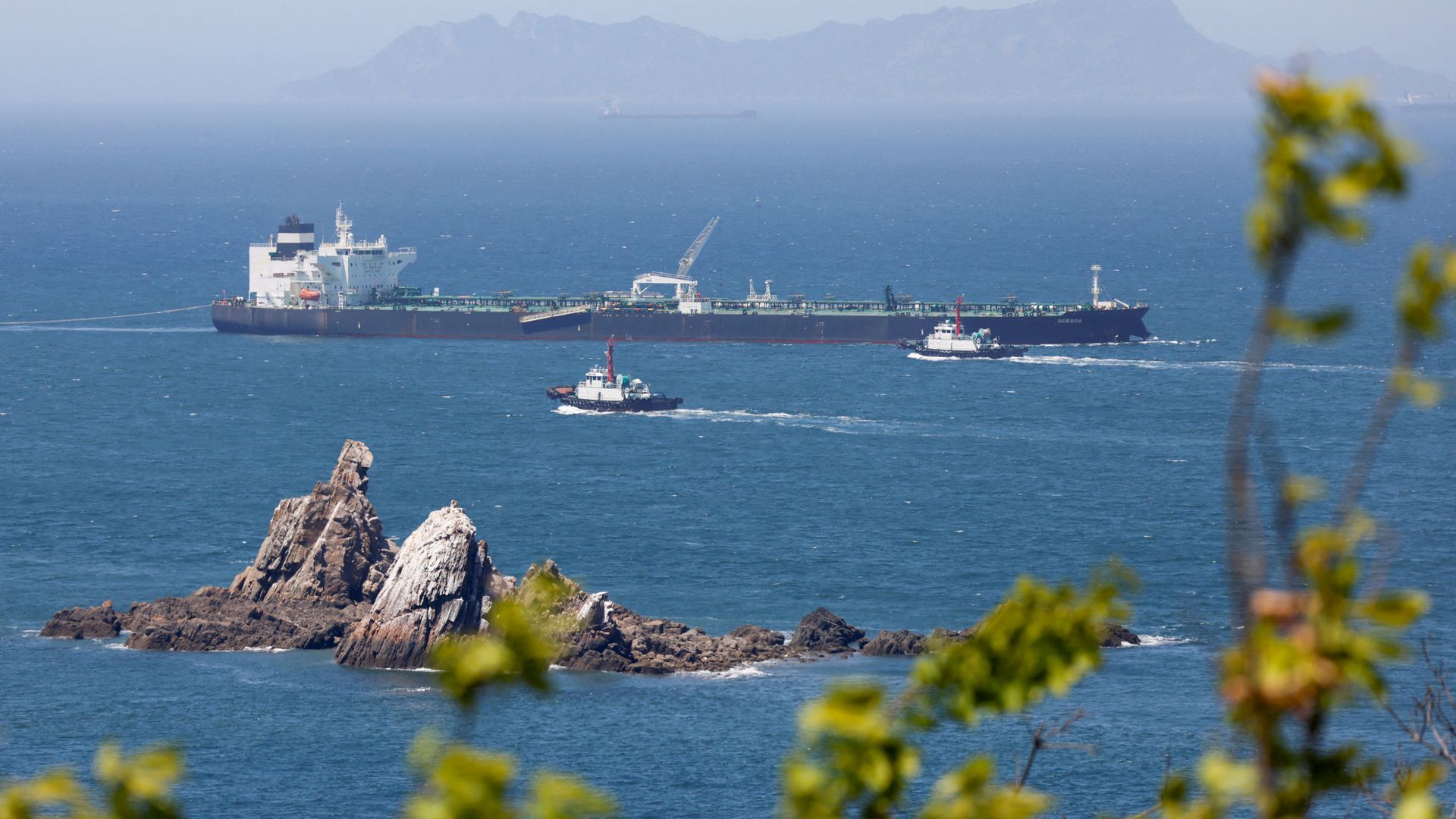
Global stock markets are celebrating a massive victory on the back of a 60-day memorandum of understanding between Washington and Tehran, but the euphoria masking the structural damage to the global energy market is dangerously premature. Brent crude plummeted nearly 5% to $83 a barrel on Monday morning, while Tokyo’s Nikkei 225 index skyrocketed 5% and Wall Street futures pointed to a triple-digit opening surge. On paper, the nightmare of the three-month maritime blockade in the Middle East is fading.
In reality, the celebration is detached from the operational and political friction that lies ahead. Financial algorithms are buying up consumer cyclicals and technology equities based on the headline that the Strait of Hormuz is reopening. However, decades of watching geopolitical standoffs reveal that a 60-day interim framework is not an economic fix. The infrastructure of global energy transit has been fundamentally shaken since the conflict erupted in late February, and a signature in Switzerland will not instantly restore the 10 million barrels per day of oil production that disappeared from the market.
The Mirage of Immediate Crude Normalization
The primary mechanism driving the current market rally is the assumption that energy supplies will instantly normalize. Retail investors and automated trading desks are treating the Strait of Hormuz like a water tap that can be flipped back on with a diplomatic press release.
It does not work that way. When the strait was closed in early March following military strikes, the sudden halt in traffic stranded massive volumes of crude and liquefied natural gas. The International Energy Agency categorized the event as the largest supply disruption in history. While United States Energy Secretary Chris Wright recently noted that roughly 7 million barrels per day have begun creeping through the passage, that is a fraction of the pre-war flow.
The logistical backlog is immense. Shipping insurers are not going to drop their war-risk premiums overnight simply because a temporary ceasefire has been announced. Tanker fleets must be rerouted, crews must be secured, and maritime safety certifications must be reissued.
Furthermore, the physical infrastructure of the Persian Gulf has sustained real damage. Late-night exchanges in southern Iran damaged critical storage and processing utilities. Pumping oil out of the ground requires functioning local infrastructure. The market is pricing in a swift return to a supply glut, but the physical reality dictates a slow, grinding recovery that will keep inventories tight for months.
Central Banks are Still Cornered
Equity markets are surging because traders believe a drop in oil prices will kill off the inflation threat, giving central banks room to slash interest rates. This is a severe miscalculation of monetary policy.
The European Central Bank bumped borrowing costs higher just last week, and the Bank of Japan is preparing to follow suit. While the Federal Reserve may hold rates steady at its upcoming meeting, expectations for significant monetary easing are being pushed further out into the future.
The damage to consumer prices from three months of $110 oil has already worked its way into the supply chain. Manufacturing costs, transport logistics, and agricultural fertilizer expenses have all adjusted upward. A temporary drop in raw crude prices does not mean a company will suddenly slash the price of its finished retail products.
"Any suggestion that war-driven inflation is transitory is bound to face deep skepticism from corporate boards and central bankers who lived through the pandemic supply shocks."
Investors are pushing back their expectations for interest rate cuts because they recognize that the underlying core inflation remains sticky. The structural shifts caused by the conflict—including structural shifts in alternative trade routes and permanent increases in maritime security costs—mean that the era of cheap, friction-free energy distribution is over.
Winners and Losers in the Equity Scramble
The sudden pivot in market sentiment has triggered a violent rotation across sector indices. The winners of the morning are the high-flying technology names and Asian manufacturing hubs that are deeply exposed to energy import costs.
The Technological Surge
In Japan and South Korea, technology benchmarks have surged to historic highs. The buying frenzy has centered on companies critical to the semiconductor supply chain and artificial intelligence infrastructure.
- South Korea’s Kospi gained over 5%, propelled by heavyweights like Samsung Electronics and SK Hynix.
- Japanese tech components manufacturer Kioxia saw its valuation eclipse legacy industrial giants as speculative capital poured back into high-margin tech names.
- Aviation stocks like Japan Airlines experienced a massive relief rally on the expectation that jet fuel availability will normalize, ending a bleak quarter of cancellations.
The Energy Sector Retraction
Conversely, the traditional energy sector is absorbing a severe beating. Major Western oil and gas corporations are leading the decliners on global exchanges.
| Company | Share Price Movement |
|---|---|
| TotalEnergies | Down 4.7% |
| Repsol | Down 4.4% |
| BP | Down 3.6% |
| Shell | Down 3.4% |
This sell-off assumes that the premium on oil is entirely gone. If negotiations stall during the 60-day window, these exact same energy stocks will look heavily underpriced within forty-eight hours.
The Escalation Risk Inside a 60-Day Window
The document agreed upon is an interim framework, not a permanent peace treaty. The foundational disputes that triggered the conflict in the first place—specifically around nuclear enrichment thresholds and regional maritime blockades—have merely been kicked down the road.
The diplomatic strategy currently deployed relies heavily on maximum economic leverage and sudden geopolitical shifts. This approach creates short-term breakthroughs but guarantees long-term volatility. Over the past few months, the market has been subjected to a repeating cycle of aggressive military threats followed by sudden declarations of diplomatic success.
Traders who are betting the house on global stability are ignoring the deep political divisions inside both Washington and Tehran. Hardliners on both sides view the 60-day negotiation window as an opportunity to regroup rather than compromise. If the final signing ceremony faces a single hurdle, the Strait of Hormuz could be locked down again with minimal notice.
The global economy cannot run efficiently when its primary energy artery operates on a month-to-month lease. Businesses cannot plan capital expenditures, shipping lines cannot commit to long-term freight rates, and nations cannot manage their strategic reserves when a single social media post can send crude prices swinging by 10% in a session. The risk premium hasn't been eliminated; it has just been compressed into a two-month ticking clock.